
by
The Point
(editor)
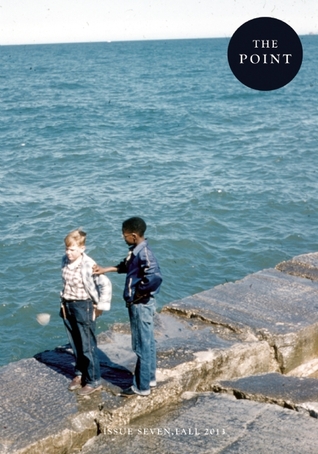
The Point, Issue 7: Fall 2013
The Point, Issue 7: Fall 2013
by
The Point
(editor)
by
The Point
(editor)
The Point, Issue 7: Fall 2013
by
The Point
(editor)
by
The Point
(editor)
185
Enlightened was billed by HBO as a comedy, and at times it can be very funny—especially in the scenes set at Abaddonn, which unspool in the deadpan register of The Office or Office Space. But White has ultimately lit his world with a different kind of light. Consistent with the show’s emphasis on transformation, the camera itself proves capable of converting suburban driveways, office parking lots and chain-restaurant dining rooms into sites for reflection no less provoking than the Pyramids or Walden Pond. (“People drive by here and they see a school and a field,” Levi observes in Season Two, as he and Amy sit in the bleachers of a familiar baseball field near their homes, “I see heaven … and hell.”) Meanwhile, the voiceovers magnetize the episodes up out of the realm of easy sarcasm and into the vicinity of hard and pertinent questions: What is the relation between personal betterment and the betterment of society? Is self-improvement really separable from narcissism? And what anyway is enlightenment?
That last question is addressed, famously, in a short essay by Kant (“An Answer to the Question: What is Enlightenment?”). As usual, and with liberal use of italics, Kant gets right to the point:
Enlightenment is man’s emergence from his self-incurred immaturity. Immaturity is the inability to use one’s own understanding without the guidance of another. This immaturity is self-incurred if its cause is not lack of understanding, but lack of resolution and courage to use it without the guidance of another. The motto of enlightenment is therefore: Sapere Aude! Have courage to use your own understanding.
Enlightened was billed by HBO as a comedy, and at times it can be very funny—especially in the scenes set at Abaddonn, which unspool in the deadpan register of The Office or Office Space. But White has ultimately lit his world with a different kind of light. Consistent with the show’s emphasis on transformation, the camera itself proves capable of converting suburban driveways, office parking lots and chain-restaurant dining rooms into sites for reflection no less provoking than the Pyramids or Walden Pond. (“People drive by here and they see a school and a field,” Levi observes in Season Two, as he and Amy sit in the bleachers of a familiar baseball field near their homes, “I see heaven … and hell.”) Meanwhile, the voiceovers magnetize the episodes up out of the realm of easy sarcasm and into the vicinity of hard and pertinent questions: What is the relation between personal betterment and the betterment of society? Is self-improvement really separable from narcissism? And what anyway is enlightenment?
That last question is addressed, famously, in a short essay by Kant (“An Answer to the Question: What is Enlightenment?”). As usual, and with liberal use of italics, Kant gets right to the point:
Enlightenment is man’s emergence from his self-incurred immaturity. Immaturity is the inability to use one’s own understanding without the guidance of another. This immaturity is self-incurred if its cause is not lack of understanding, but lack of resolution and courage to use it without the guidance of another. The motto of enlightenment is therefore: Sapere Aude! Have courage to use your own understanding.