
by
n+1
11
POLITICS:
Prelude to a Coup
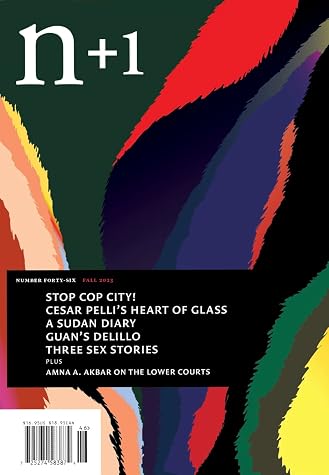
Revolution and counterrevolution in Sudan. By Joshua Craze
(missing author)
Revolution and counterrevolution in Sudan. By Joshua Craze
(missing author)
0
terms
6
notes
11
Growing up, I thought that real politics was collective struggle, but over the past decade I’d begun to fear the era of mass movements had come to an end. My political life had desiccated. I briefed diplomats and wrote angry missives for the United Nations and Swiss NGOs about brutal government military campaigns in South Sudan. Increasingly, I became convinced that the diplomats who were the primary audience for my reports were deeply uninterested in changing their positions. For over a decade, they had backed a predatory government intent on pillaging South Sudan while the country descended into a low-intensity conflict, often fought along ethnic lines. I struggled to know how to position myself—neither ethnic militias nor diplomats are my constituency—and felt expectant about my trip to Sudan. If South Sudan was a land of ethnic violence and indifferent diplomats, Sudan, I told myself, was a country of political parties and street protests—protests so effective they had brought down Bashir. It was in Khartoum, I thought, that I would find the sort of collective politics I could recognize as my own.
Growing up, I thought that real politics was collective struggle, but over the past decade I’d begun to fear the era of mass movements had come to an end. My political life had desiccated. I briefed diplomats and wrote angry missives for the United Nations and Swiss NGOs about brutal government military campaigns in South Sudan. Increasingly, I became convinced that the diplomats who were the primary audience for my reports were deeply uninterested in changing their positions. For over a decade, they had backed a predatory government intent on pillaging South Sudan while the country descended into a low-intensity conflict, often fought along ethnic lines. I struggled to know how to position myself—neither ethnic militias nor diplomats are my constituency—and felt expectant about my trip to Sudan. If South Sudan was a land of ethnic violence and indifferent diplomats, Sudan, I told myself, was a country of political parties and street protests—protests so effective they had brought down Bashir. It was in Khartoum, I thought, that I would find the sort of collective politics I could recognize as my own.
18
We were at Ozone, a café in Khartoum 2, an area of the city popular with expats. I didn’t like the place. It was a well-watered fantasy, full of Khartoum’s favored families and the busy heads of humanitarian agencies. Yet there I was. Everyone wanted to meet at Ozone. The best waffles in the world, people said. Another such café, in a nearby neighborhood, is called Atmosphere, and I couldn’t help but think that the nomenclature reflected a dimly repressed awareness of the vast distance separating these spaces from the world outside. Diplomats often asked me with furrowed brows what “the street” wanted, as if it were a mysterious Sphinx whose motivations were unknowable to mere humans. The street, I wanted to tell them, was literally just beyond the café’s walls—you could walk there, if your driver wasn’t picking you up. At Ozone, politics was a soap opera played out by high-profile individuals, to be gossiped about over lattes. Will Hamdok make a speech? Is Minnawi still high?
We were at Ozone, a café in Khartoum 2, an area of the city popular with expats. I didn’t like the place. It was a well-watered fantasy, full of Khartoum’s favored families and the busy heads of humanitarian agencies. Yet there I was. Everyone wanted to meet at Ozone. The best waffles in the world, people said. Another such café, in a nearby neighborhood, is called Atmosphere, and I couldn’t help but think that the nomenclature reflected a dimly repressed awareness of the vast distance separating these spaces from the world outside. Diplomats often asked me with furrowed brows what “the street” wanted, as if it were a mysterious Sphinx whose motivations were unknowable to mere humans. The street, I wanted to tell them, was literally just beyond the café’s walls—you could walk there, if your driver wasn’t picking you up. At Ozone, politics was a soap opera played out by high-profile individuals, to be gossiped about over lattes. Will Hamdok make a speech? Is Minnawi still high?
19
She was enthusiastic about investing in human rights training for the Sudanese police. Unfortunately, she said, according to the embassy’s local perception studies, “people don’t trust the police, and we don’t want to invest irresponsibly.”
“Imagine,” she said, sighing, “a country where people don’t trust the police.”
“Imagine,” I said.
heh
She was enthusiastic about investing in human rights training for the Sudanese police. Unfortunately, she said, according to the embassy’s local perception studies, “people don’t trust the police, and we don’t want to invest irresponsibly.”
“Imagine,” she said, sighing, “a country where people don’t trust the police.”
“Imagine,” I said.
heh
22
One friend, whom I will call Fatima, told me her answer later, as we sat in the quiet garden at the Ethiopian embassy eating decent kitfo away from prying eyes. It was a fantasy to think that the transition would have gone anywhere without the international community, Fatima told me. Revolution might sound nice to our Marxist friends, but it is a theory from another era. Name a single mass movement in the past twenty years that has successfully taken power and held it, she said. I was silent, and she continued. “When we formed the transitional government, we were facing institutions that were full of kayzan intent on blocking our plans. We needed allies.” If Mohamed thought the Sudanese elite had allied with international financial institutions to continue Bashir’s neoliberal policies, Fatima thought this same alliance was the only way to fight against the persistence of the old regime. It was an almost textbook disagreement. In what aspects of the state did the old regime persist? Was it in the combination of austerity politics and militarized economics that characterized the transitional government? Or was it in the kayzan’s continued dominance of Sudan’s institutions?
One friend, whom I will call Fatima, told me her answer later, as we sat in the quiet garden at the Ethiopian embassy eating decent kitfo away from prying eyes. It was a fantasy to think that the transition would have gone anywhere without the international community, Fatima told me. Revolution might sound nice to our Marxist friends, but it is a theory from another era. Name a single mass movement in the past twenty years that has successfully taken power and held it, she said. I was silent, and she continued. “When we formed the transitional government, we were facing institutions that were full of kayzan intent on blocking our plans. We needed allies.” If Mohamed thought the Sudanese elite had allied with international financial institutions to continue Bashir’s neoliberal policies, Fatima thought this same alliance was the only way to fight against the persistence of the old regime. It was an almost textbook disagreement. In what aspects of the state did the old regime persist? Was it in the combination of austerity politics and militarized economics that characterized the transitional government? Or was it in the kayzan’s continued dominance of Sudan’s institutions?
24
The protest had been the biggest of the transitional period, and Hamdok lost no time in claiming it as his own. That night, he gave a statement. The Sudanese people have made it clear, he said, that there is no going back to the old regime. The next morning, back at Ozone, one diplomat plaintively asked me: “But do they favor Hamdok?” The question seemed absurd. The previous day’s protests had not been about political machinations but about recapturing the energy of the 2019 revolution. Real politics, seen from the perspective of the protest, was not that of institutions but that of movements, of the joyful confidence that comes from a mass of people feeling their own power. Demonstrations, I wanted to tell the diplomats, have their own realism.
The protest had been the biggest of the transitional period, and Hamdok lost no time in claiming it as his own. That night, he gave a statement. The Sudanese people have made it clear, he said, that there is no going back to the old regime. The next morning, back at Ozone, one diplomat plaintively asked me: “But do they favor Hamdok?” The question seemed absurd. The previous day’s protests had not been about political machinations but about recapturing the energy of the 2019 revolution. Real politics, seen from the perspective of the protest, was not that of institutions but that of movements, of the joyful confidence that comes from a mass of people feeling their own power. Demonstrations, I wanted to tell the diplomats, have their own realism.
26
[...] Late one night, over shisha in a half-ruined building, one friend told me, “I am a new species. They cannot take what happened from us. I have no fear. We cannot go back, because we have already come so far. The revolution is still happening.”
[...] Late one night, over shisha in a half-ruined building, one friend told me, “I am a new species. They cannot take what happened from us. I have no fear. We cannot go back, because we have already come so far. The revolution is still happening.”