
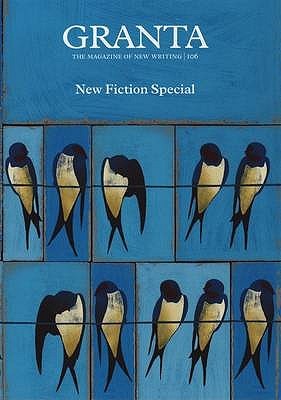
by
Granta
103
'Useless Chaos is What Fiction is About'
Jhumpa Lahiri interviews Mavis Gallant
by
Mavis Gallant
Jhumpa Lahiri interviews Mavis Gallant
by Mavis Gallant
0
terms
8
notes
103
When my parents asked what I wanted for Christmas that year, I told them to get me The Collected Stories of Mavis Gallant, published in 1996. They honoured my request, and for the remainder of the winter I read little else but that volume, a total of 887 pages. The stories were mostly about North Americans and Europeans, many of them rootless either by circumstance or design. They were about uncovering the truth, about enduring disappointment and loss, about the recurrent shock of being alive. I was thirty years old that winter, a time when I was beginning to take the writing of stories seriously, but still lacked the conviction to regard myself as a writer. Reading those stories put an end to the questions, put the summit before me and put me on my path.
:)
When my parents asked what I wanted for Christmas that year, I told them to get me The Collected Stories of Mavis Gallant, published in 1996. They honoured my request, and for the remainder of the winter I read little else but that volume, a total of 887 pages. The stories were mostly about North Americans and Europeans, many of them rootless either by circumstance or design. They were about uncovering the truth, about enduring disappointment and loss, about the recurrent shock of being alive. I was thirty years old that winter, a time when I was beginning to take the writing of stories seriously, but still lacked the conviction to regard myself as a writer. Reading those stories put an end to the questions, put the summit before me and put me on my path.
:)
116
MG: Well, it’s a language you’re able to learn. I mean, I didn’t learn Finnish, I didn’t even try, because it’s not an Indo-European language, not anything I could cope with. I did speak English there, but I didn’t live there. I rented a car, was just travelling along. But I didn’t feel frustrated. It was their country, their language. But Mordecai resented having to speak French. He said, ‘Anyway, what can you do in a country that’s old and rotten and falling down?’ Those were his words. Well at that time, it was burgeoning with writers, French writers. It was really the great period of the twentieth century. Colette was still alive, all these people were still alive, writing, producing. Gide had only just died that year. You breathed the air, the same air as these people I so admired. One day I was sitting reading in a cafe. And Mordecai came drifting over and he sat down and he grabbed the book out of my hand that I was reading. It was The House in Paris, Elizabeth Bowen’s great novel.
JL: Which I just read.
MG: Oh it’s wonderful. And he read some in a mocking voice. A mocking English voice which he didn’t do very well. And he said, ‘You know, if you go on reading this crap you’re never going to get anywhere.’ So I just took the book back.
MG: Well, it’s a language you’re able to learn. I mean, I didn’t learn Finnish, I didn’t even try, because it’s not an Indo-European language, not anything I could cope with. I did speak English there, but I didn’t live there. I rented a car, was just travelling along. But I didn’t feel frustrated. It was their country, their language. But Mordecai resented having to speak French. He said, ‘Anyway, what can you do in a country that’s old and rotten and falling down?’ Those were his words. Well at that time, it was burgeoning with writers, French writers. It was really the great period of the twentieth century. Colette was still alive, all these people were still alive, writing, producing. Gide had only just died that year. You breathed the air, the same air as these people I so admired. One day I was sitting reading in a cafe. And Mordecai came drifting over and he sat down and he grabbed the book out of my hand that I was reading. It was The House in Paris, Elizabeth Bowen’s great novel.
JL: Which I just read.
MG: Oh it’s wonderful. And he read some in a mocking voice. A mocking English voice which he didn’t do very well. And he said, ‘You know, if you go on reading this crap you’re never going to get anywhere.’ So I just took the book back.
120
MG: At fourteen I wrote a poem called ‘Why I am a Socialist’. It began, ‘You ask?’ Of course, no one had ever asked me if I even knew what socialism was. I had got hold of A New Anthology of Modern Poetry, published in 1938. I was fifteen and that was the Depression. Left-wing poetry I admired enormously. I liked the marching rhythm. There was Auden and company. There was Ezra Pound, so they weren’t all left wing. I read this stuff over and over, knew it by heart. Muriel Rukeyser; the gang. And this inspired ‘Why I am a Socialist’. It was a better world. And my mother found this. She wanted to know who I was mixed up with. Mothers then were very interested in preserving their daughters’ sexual purity.
JL: Some mothers now, too.
MG: For the marriage market. She drove me cuckoo. She read everything. I never could keep anything to myself.
lol
MG: At fourteen I wrote a poem called ‘Why I am a Socialist’. It began, ‘You ask?’ Of course, no one had ever asked me if I even knew what socialism was. I had got hold of A New Anthology of Modern Poetry, published in 1938. I was fifteen and that was the Depression. Left-wing poetry I admired enormously. I liked the marching rhythm. There was Auden and company. There was Ezra Pound, so they weren’t all left wing. I read this stuff over and over, knew it by heart. Muriel Rukeyser; the gang. And this inspired ‘Why I am a Socialist’. It was a better world. And my mother found this. She wanted to know who I was mixed up with. Mothers then were very interested in preserving their daughters’ sexual purity.
JL: Some mothers now, too.
MG: For the marriage market. She drove me cuckoo. She read everything. I never could keep anything to myself.
lol
128
MG: She imagines the gardener looking up at her. But you know, she’s not unkind to her husband. I don’t think she’s an unkind woman at all. She sits beside him as he’s dying, she takes his hand. She talks about their future together. The fact that she has a lover doesn’t come into it. She keeps that in another compartment.
MG: She imagines the gardener looking up at her. But you know, she’s not unkind to her husband. I don’t think she’s an unkind woman at all. She sits beside him as he’s dying, she takes his hand. She talks about their future together. The fact that she has a lover doesn’t come into it. She keeps that in another compartment.
130
JL: There’s a moment in this story that’s so powerful. The children have come to see their father in the hospital, and he’s about to die. After the visit, there’s a description of them skipping down the stairway now that the obligation is over with, ‘taking the hospital stairs headlong, at a gallop’. To me it’s an example of why I love short stories. You can compress such enormous emotion and human experience into just a handful of words. It happens very seldom in novels. Novels have a more cumulative effect.
JL: There’s a moment in this story that’s so powerful. The children have come to see their father in the hospital, and he’s about to die. After the visit, there’s a description of them skipping down the stairway now that the obligation is over with, ‘taking the hospital stairs headlong, at a gallop’. To me it’s an example of why I love short stories. You can compress such enormous emotion and human experience into just a handful of words. It happens very seldom in novels. Novels have a more cumulative effect.
132
MG: I never tried to. But there’s a book of her love letters to Charles Ritchie, and I did know him very well. He was Canadian. I knew his whole family. I was married from his aunt’s house in Ottawa. Bowen was married to the head of the BBC and it was an unconsummated marriage. I don’t know what happened. She wouldn’t leave him to go marry Ritchie, the love of her life and her lover for years. And he got fed up with the situation. In the long run he may have felt it was humiliating for him to hang around.
fair :(
MG: I never tried to. But there’s a book of her love letters to Charles Ritchie, and I did know him very well. He was Canadian. I knew his whole family. I was married from his aunt’s house in Ottawa. Bowen was married to the head of the BBC and it was an unconsummated marriage. I don’t know what happened. She wouldn’t leave him to go marry Ritchie, the love of her life and her lover for years. And he got fed up with the situation. In the long run he may have felt it was humiliating for him to hang around.
fair :(
141
MG: La vie en France. I would not have been happy if I had not tried. I had to try and I had to do it before I was thirty. I didn’t want to marry again. I travelled alone most of the time. I liked it. When you’re young you meet people very easily. You stand on a street corner and you have to beat them off with a baseball bat.
heh
MG: La vie en France. I would not have been happy if I had not tried. I had to try and I had to do it before I was thirty. I didn’t want to marry again. I travelled alone most of the time. I liked it. When you’re young you meet people very easily. You stand on a street corner and you have to beat them off with a baseball bat.
heh
142
MG: Oh yes. One thing is, men don’t know how women talk when they’re together, just as we really don’t know how men talk among themselves. You have to rather intuit it from something the man will let drop. And you’ll think, ‘Oh, so they do gossip.’
JL: People often ask me a question I find ridiculous. They ask why the main character of my novel is male. They think it’s something radical I’ve done. And I want to say, ‘Well have you ever read any Mavis Gallant? Every other story is from the point of view of a man.’ Or, ‘Have you read Chekhov, where every other story is from the point of view of a woman?’
MG: Not to speak of Flaubert.
JL: People seem to have no context about the history of writing and what writers have done all along.
or like eavesdrop on them :)
MG: Oh yes. One thing is, men don’t know how women talk when they’re together, just as we really don’t know how men talk among themselves. You have to rather intuit it from something the man will let drop. And you’ll think, ‘Oh, so they do gossip.’
JL: People often ask me a question I find ridiculous. They ask why the main character of my novel is male. They think it’s something radical I’ve done. And I want to say, ‘Well have you ever read any Mavis Gallant? Every other story is from the point of view of a man.’ Or, ‘Have you read Chekhov, where every other story is from the point of view of a woman?’
MG: Not to speak of Flaubert.
JL: People seem to have no context about the history of writing and what writers have done all along.
or like eavesdrop on them :)