
by
New Left Review
(editor)
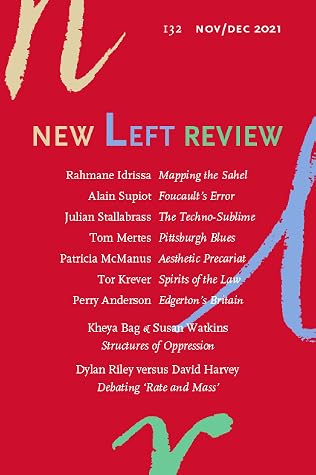
New Left Review 132
New Left Review 132
by
New Left Review
(editor)
by
New Left Review
(editor)
New Left Review 132
by
New Left Review
(editor)
by
New Left Review
(editor)
80
From this perspective, a people may be assimilated, as were many western Jews, or absorbed, like German and Italian immigrants to America, or divided—typically by religion—like the Irish, intermingled like the Brazilians, semi-forged from subordinate nations, like Spaniards or British, or newly minted, like Australians and Israelis. ‘Classes’, entailing a division of labour and of property, are shaped by the development of both. They may mutate, like the English landed gentry, or be expropriated, like the Prussian Junkers, rendered redundant, like the Rustbelt industrial proletariat, or brought into being, like China’s Sunbelt working class. One great advantage of the ‘people-class’ concept over that of ‘caste’, then, is that its double lens can capture a historically developing social reality that is both dynamic and uneven; in which the making and unmaking of social identities and economic functions proceed at different speeds, varying within the turbulent, fast-changing political economy of the us as a whole.
From this perspective, a people may be assimilated, as were many western Jews, or absorbed, like German and Italian immigrants to America, or divided—typically by religion—like the Irish, intermingled like the Brazilians, semi-forged from subordinate nations, like Spaniards or British, or newly minted, like Australians and Israelis. ‘Classes’, entailing a division of labour and of property, are shaped by the development of both. They may mutate, like the English landed gentry, or be expropriated, like the Prussian Junkers, rendered redundant, like the Rustbelt industrial proletariat, or brought into being, like China’s Sunbelt working class. One great advantage of the ‘people-class’ concept over that of ‘caste’, then, is that its double lens can capture a historically developing social reality that is both dynamic and uneven; in which the making and unmaking of social identities and economic functions proceed at different speeds, varying within the turbulent, fast-changing political economy of the us as a whole.