
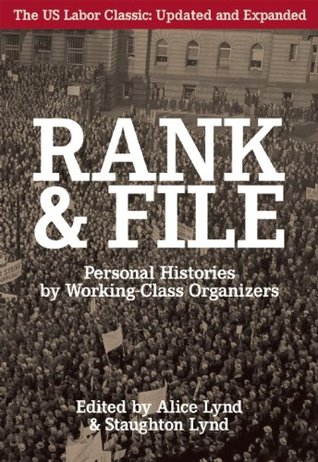
by
Alice Lynd,
Staughton Lynd
(editors)
305
Organizing Farm Workers
by Marshall Ganz
(missing author)
by Marshall Ganz
(missing author)
0
terms
1
notes
312
What we learned in the Schenley boycott was that we weren't going to win boycotts in Delano, we were going to win boycotts in New York and Boston. As long as the struggle was local, there was no way we could win. Farm unions had always been destroyed by fighting it out on local turf. By re-defining the struggle as national, then we had the leverage, because the growers couldn't do much in New York, or Boston, or Chicago, but we could. They could run the police and the courts and everything else in Delano, which they did, but we could get Stop and Shop in Boston to cooperate.
It was exactly the same thing the civil rights movement did: to re-define the arena of struggle. Gandhi did the same thing. South Africa did the same thing. Power is often a lot more unequal locally than it is on a broader scale.
What we learned in the Schenley boycott was that we weren't going to win boycotts in Delano, we were going to win boycotts in New York and Boston. As long as the struggle was local, there was no way we could win. Farm unions had always been destroyed by fighting it out on local turf. By re-defining the struggle as national, then we had the leverage, because the growers couldn't do much in New York, or Boston, or Chicago, but we could. They could run the police and the courts and everything else in Delano, which they did, but we could get Stop and Shop in Boston to cooperate.
It was exactly the same thing the civil rights movement did: to re-define the arena of struggle. Gandhi did the same thing. South Africa did the same thing. Power is often a lot more unequal locally than it is on a broader scale.