
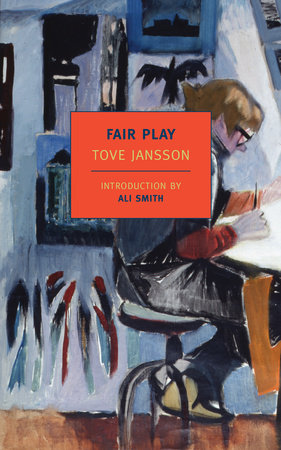
by
Tove Jansson
vii
Introduction
by Ali Smith
(missing author)
by Ali Smith
(missing author)
0
terms
1
notes
xii
But it is, too, a piece of writing about time running out, about the end of living space, about inevitable ends. The chapter called “Cemeteries,” for instance, examines how we helplessly think we can order things and control our fates; Fair Play never ignores real bleakness. Part of its analysis of art knows that art makes a killing in the same way as a pin will through a butterfly. Part of its radicalism comes from the repeated admittance that its main characters are simply getting older. Yet the form of the book suggests there’ll be no stopping. There’s only the journey, the open traveling companionship, the long-running aesthetic argument and agreement between Jonna and Mari, “doing all right,” from the start of the book to its finish.
But it is, too, a piece of writing about time running out, about the end of living space, about inevitable ends. The chapter called “Cemeteries,” for instance, examines how we helplessly think we can order things and control our fates; Fair Play never ignores real bleakness. Part of its analysis of art knows that art makes a killing in the same way as a pin will through a butterfly. Part of its radicalism comes from the repeated admittance that its main characters are simply getting older. Yet the form of the book suggests there’ll be no stopping. There’s only the journey, the open traveling companionship, the long-running aesthetic argument and agreement between Jonna and Mari, “doing all right,” from the start of the book to its finish.