
View all notes
Available query params: commented=1, untagged=1
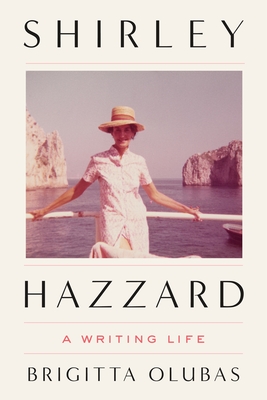
Certainly she was free, for the time being, of her family and, if not cured of, distracted from her broken heart. But even so, daily life was laced with anxiety. While she continued to attract admirers among the expat bureaucrats, she was not interested in romance. She wrote that she pursued, that year, “a collection of silly, pointless affaires,” including, it seems, a dalliance with the American journalist Harold H. Martin, who told her in a letter from early 1957, shortly after leaving Naples, of “memories that were burning more brightly than I could wish,” and wishing that he could “strike that perfect plateau of impersonality which you so happily reached in your first communication.” None of these “affaires” were sustaining or salutary. Shirley hoped “each time” to find “some final diversion of my affections”; however “being with such relentless people I too have learned to be hard, to be selfish.”
She was also despairing about her future. Her lack of national connection was not yet the imaginative boon it would become in later life, when she could pronounce that it was “a privilege to be at home in more than one place.” For now she was unsettled, the pragmatics of living in Italy looking as if they might prove too much for her despite the tangible life to which they gave access. Her insecurity was no doubt fed by her sense of her flimsy status at the UN:
Now it grows near the end of the year of my assignment, I know that I must try the FAO [the Food and Agriculture Organization, a UN agency] in Rome, that my hopeless future—or lack of future—in NY cannot be re-accepted without an attempt elsewhere. Even loving Italy as I do, even so, I’m afraid: I’m afraid to live in a foreign non-Anglo-Saxon country always, to be cut off from my own background irrevocably and forever. But I have had so much need of solitary courage this past year that I believe I’m equal to anything, even to the more and more likely prospect of a barren, single life, working as a secretary or at most a clerk—well, I suppose that’s my fault and one should be glad to have had so much of the things that others covet.
<3
Leone worked in an intelligence office, and Elena found a position first as a cook at a British government-run kitchen, then as a translator and interpreter at the BBC, and later as an artist at Harrods. On the tenth anniversary of her brother’s death, while at the BBC, she broadcast a memorial honouring his poetic act of protest:
So in the secrecy of the soul’s solitude, when one becomes the master of one’s own life, and then gives it up, one must surely draw great joy. They must be happy to know that from the misery of everyday life they could attain such a poor moment of liberty. They must be sustained by the lightness of spirit, similar to that which gladdened the hearts of the saints. My brother must have died with this supreme lightness of spirit. And he was more fortunate than his companions, who were backstabbed by the murderous fascists.
Elena’s words here draw audibly on the futurist-tinged heroics of Lauro de Bosis’s writing, and like his, they also strike a distinctive tone of public responsibility and perhaps provided models for the forceful tone of Shirley’s writings about the United Nations.
Here was the weight of momentous event and of individual self-realisation that had not, Shirley felt, been possible in the country or the family of her birth, nor in the independent adult life she had until then been able to fashion for herself. Elena embodied philosophical and aesthetic principles to which Shirley cleaved: “To have known her was to understand that the human ideal is not a striving for perfection but for wholeness: she was true, vital and entirely human, not a paragon but a criterion. She would have disliked such words, for she repudiated praise with real impatience, not weighing our human need to pay her tribute. More than thirty years after her death, her daughter-in-law Mirella said, of the years at Solaia, ‘We knew then that it was a miracle.’” On the thirtieth anniversary of Elena’s death, Shirley wrote in her diary that her greatest influence was “to make a principled life believable … She had lived it, she was it.”
Perhaps her claims to penury were exaggerated; there was, after all, enough money to travel to Italy for the next several summers, as well as time to spend there, thanks to the UN’s generous allowance of six weeks annual leave: “I went to Italy on the charter flight and came back with $10 which I always reserved. I came back usually on the Friday so that I’d have the weekend to recover from the flight before beginning work and getting my pent-up salary and I got a salary advance to go away too. And I would come back with this $10.” When she finally gathered the courage to leave the UN, she felt that it was a liberation: “I’d been trying to cope with this completely disillusioning bureaucratic life and pretending that it mattered in a way I didn’t believe.” Ever after she would say that “the real risk was to stay.” Her capacity to imagine a departure from, an alternative to, working at the UN had been formed by her experiences in this past year, in Italy, in the values and the joy she had learnt in Naples and in the north. Solaia embodied principles she had tried to accommodate in her life: “It is difficult to convey without solemnity the homage paid in that house to civilised greatness; and the presence, whether invoked or latent, of art and poetry.” The Vivantes made tangible to her not only these values but also something of her own worth: “It was there, and through them, that I was released into a larger life; restored to the measure of belief in myself that the United Nations had eroded.” She would look back to this time and its significance within the story of her life: “My idyllic ‘childhood,’ ‘lost domaine,’ or what takes its place was Solaia. Moments of realised perfection, dreamlike suspension of time and ‘complicity’ of Nature. Perhaps not comparable, because heightened by consciousness; as childhood might instead be boundless with innocence.” She was able, finally now, to inhabit the childhood she had always imagined for herself, to join, imaginatively at least, a family with elevated principles and sensibilities, to be recognised and welcomed by them, and to return from them to the larger world.
Shirley was furious, but the disappointment had been overshadowed even before it happened by a letter from The New Yorker, this time an acceptance. It is not clear whether she had revised those first rejected stories or if this was new work. Either way, she now knew someone on the inside, which changed everything. The previous month, just as he had done the year before with Arturo Vivante, Dwight Macdonald had offered to take one of her stories to the magazine, which meant that it would circumvent the slush pile and go straight to William Maxwell. Maxwell was legendary, by many accounts the most significant editor of short fiction in the United States through the postwar decades; he had worked with J. D. Salinger, Vladimir Nabokov, John Cheever, Mavis Gallant, and Eudora Welty. In a memoir of his friendship with Maxwell, Alec Wilkinson wrote that Maxwell brought to the work of editing “a selfless interest in encouraging talent, and an intimacy with the catalog of technical possibility” and that he simply took pleasure in good writing. The writers Maxwell worked with were “on the whole so accomplished that his position also involved taking delight in what they brought into being.” He was “extremely receptive to women writers,” and his relationship with Shirley in the years that followed was “golden,” a “meeting of minds.” With a devotion—what Wilkinson described as “a near spiritual hunger”—for literature that echoed her own, William Maxwell was surely Shirley’s ideal first reader.
nice
Her second was “Vittorio,” the writing of which had preoccupied her through 1960; she found it difficult to write from the perspective of an older man surprised by love. The upturning of Vittorio’s life comes about when he invites an English couple into his family home—in a town resembling Siena—as paying guests and unexpectedly falls in love with the young wife. The story turns on Vittorio’s realisation that the young woman, too, has fallen in love—with him.
It was with astonishment, more than anything else, that he saw her eyes enlarge with tears before she turned from him toward the house—an unbearable astonishment that called upon all his capacities for comprehension. He followed her in silence. They entered the house together and began to climb the stairs. He was profoundly aware of her, moving slowly and sadly at his side, but it did not occur to him to speak. He felt that he must be alone to think about it, that there must be some rational, disappointing explanation.
yoooooo
The stories she was writing through 1961 and 1962 reflected these complications and sufferings. The young woman in “The Party” endures an evening of her lover’s cold and dismissive manner. As she is leaving his apartment, he comments on her “mournful face. Not tragic, of course—just mournful.” She responds, tearfully, “You should be trying to build up my confidence … instead of doing everything to demolish it.” And he: “‘Confidence is one of those things we try to instill into others and then hasten to dispel as soon as it puts in an appearance.’ ‘Like love,’ she observed, turning to the door. ‘Like love,’ he said. “Exactly.’” She wrote even more directly from life in the twinned stories “A Place in the Country” and “The Picnic,” which tell of a young woman’s affair with her cousin’s husband, the discovery of the affair, and its consequences. These fictional characters are starkly different from the protagonists in Shirley’s real-life drama with Tex and Wicky Goldschmidt. Nonetheless, parts of “A Place in the Country” retrace events described in her diaries. And the story’s climax, the scene where Clem tells Nettie that they must part, is drawn almost verbatim:
“I think I told you I no longer loved my wife.”
“Yes,” she said.
“I only said that once, didn’t I?”
“Several times,” she answered, unaccommodatingly.
“Several times, then,” he agreed, with a touch of impatience. “In any case—I see now that I shouldn’t have said that. I mean, that it wasn’t true.”
oh my god
The mismatches, not-quite-conflicts, both slight and substantial, over the coming months were perhaps inevitable in the face of their very different backgrounds. The age gap of twenty-five years was heightened by the disparity in their professional standing: Shirley’s writing life was just beginning—her first stories had only recently been published—whereas Francis had fourteen books, with another due later that year. And though neither had come from an especially privileged background, Francis had certainly had the kind of formal education that allowed him to move seamlessly into the elevated cultural circles that had opened up to him through his first marriage, while Shirley’s early life had been sorely lacking in such qualities and opportunities, and she had acquired whatever she had much more recently and solely through her own efforts. And yet they were both struck by the connection that sparked between them that first evening; their shared tastes—with Taste itself, honed through assiduous application, so essential to both—and interests, energies, and capacities. They would be married at the end of the year; the complications between them were also perhaps the basis of what would go on to become the only mature and sustained love affair in Shirley’s life. It was, in a sense, what she had always dreamed of.
[...] In the face of this he decided to abandon writing novels. In 1934 he began writing for The New Yorker, mainly “casuals” and Talk of the Town pieces. Soon this undemanding writing also palled; he felt it did not provide him with the opportunity for “accomplishment” that fiction had offered. He later reflected that he “missed the struggle that had accompanied [novel writing]—the hope, as long as I had it—the possibility—that the accomplishment might be large. In my New Yorker work I saw no such possibility. Others in the offices around me, were writing masterpieces—Thurber and Perelman were comic geniuses. I knew that my writing for the magazine was not up to theirs,” and he added disarmingly that “easily though it came it didn’t improve when I tried harder.”
The following spring, when the Steegmullers left for Paris, Francis gave Ralph the keys to the office he kept in a building at 608 Fifth Avenue so he would have a quiet place to work. The office was on the eighth floor in a suite of rooms belonging to the jewellers Samuel and Augusta Mann, who guarded Ralph’s privacy, took him to lunch, and encouraged him to write. It was his until the Steegmullers returned in mid-October. Ralph wrote Francis in late June, “Until today, which is doing its best to smother me, my work has moved ahead with a kind of magic. I have been putting in a fairly full day of writing here at the office then leaving my ms until the next day and if I can continue this way I won’t mind how hot it gets and by October I can present the boys with a big thick headache of a novel.” Fanny too was pleased with the arrangement, writing in August, “Can I tell you what the use of the office has meant to Ralph? No better thing could have happened for him. Last week he had written 50 new pages since he went there the Monday after you’d gone, new pages, not rewritten ones. All of which makes me know that the book might have been finished by now had he had all along a suitable place to work.” Rampersad notes that Ellison’s presence there was unexpected in that white neighbourhood: “To catch the sunlight, Steegmuller had set up his typewriter next to a window that looked across to the roof of Radio City Music Hall. When white people there saw a black man sitting at a typewriter, they sometimes could not hide their curiosity or their alarm.” This might have proved to be a problem, Ellison observed, “had I not been consciously concerned with a fictional character who was bent upon finding his way in areas of society whose manners, motives and rituals were baffling.”
sick