
View all notes
Available query params: commented=1, untagged=1

Treating despair with drugs and alcohol is a time-honored tradition—I’d just advise you to assess honestly if it’s really as bad and as intractable a situation as you think. Not to belabor the point, but if you look around you at the people you work with, many of them are—or will eventually be—alcoholics and drug abusers. All I’m saying is you might ask yourself now and again if there’s anything else you wanted to do in your life.
I haven’t done heroin in over twenty years, and it’s been a very long time as well since I found myself sweating and grinding my teeth to the sound of tweeting of birds outside my window.
There was and is nothing heroic about getting off coke and dope.
There’s those who do—and those who don’t.
I had other things I still wanted to do. And I saw that I wasn’t going to be doing shit when I was spending all my time and all my money on coke or dope—except more coke and dope.
I’m extremely skeptical of the “language of addiction.” I never saw heroin or cocaine as “my illness.” I saw them as some very bad choices that I walked knowingly into. I fucked myself—and, eventually, had to work hard to get myself un-fucked.
Norman Mailer described the desire to be cool as a “decision to encourage the psychopath in oneself, to explore that domain of experience where security is boredom and therefore sickness and one exists in the present, in that enormous present which is without past or future, memory or planned intention.”
lol
The little tuffets for ladies’ bags, the selection of steak knives to choose from, the waiters who put on white gloves to trim fresh herbs tableside. The fucking water cart. The even more painful array of Montblanc pens to choose from so that one might more elegantly sign one’s check. The dark, hideous, and pretentious dining room. All of it conspired to smother any possibility of a good time stone-dead in a long, dreary dirge. Nothing could live in this temple of hubris. The generally excellent food was no match for the forces aligned against it. And it just wasn’t, in the end, excellent enough to prevail against the ludicrousness of what surrounded it.
Like watching Bonfire of the Vanities or Heaven’s Gate—or one of the other great examples of ego gone wild in the movie business—there were so many miscalculations, large and small, that the whole wrongheaded mess added up to something that wasn’t just bad but insulting. You left ADNY angry and offended—that anyone, much less this out-of-touch French guy, would think you were so stupid.
New Yorkers don’t like to be treated like rubes. Tends to leave a bad taste. And the bad taste one left with after ADNY metastasized into something larger—feelings of doubt about the desirability—and even the morality—of that kind of luxury. Few in the hermetic world of Francophile New York foodies had ever really asked those questions before. Now, they were asking.
ick
Six o’clock in the morning is when the pains raisins come out, and already the customers are lining up in the dark outside this tiny Parisian boulangerie waiting for the first batch. The baguettes are ready—piping-hot from the brick oven, fabulously, deliberately ugly and uneven in shape, slashed crudely across the top. They’re too hot to eat but you grab one anyway, tearing it open gingerly, then dropping two fingers full of butter inside. It instantly melts into liquid—running into the grooves and inner spaces of white interior. You grab it like a sandwich and bite, teeth making a cracking sound as you crunch through the crust. You haven’t eaten since yesterday lunch, your palate is asleep and just not ready for so much sensation. The reaction is violent. It hurts. Butter floods your head and you think for a second you’re going to black out.
goddammit now i want this
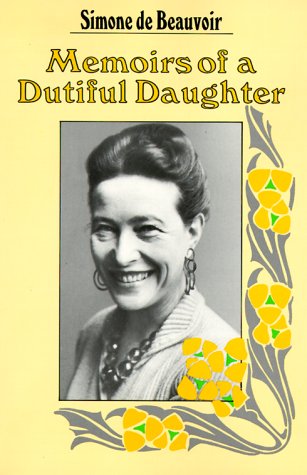
My situation in the family resembled that of my father in his childhood and youth: he had found himself suspended between the airy scepticism of my grandfather and the bourgeois earnestness of my grandmother. In my own case, too, my father’s individualism and pagan ethical standards were in complete contrast to the rigidly moral conventionalism of my mother’s teaching. This imbalance, which made my life a kind of endless disputation, is the main reason why I became an intellectual.
lol
At home, nothing was ever wasted: not a crust, not a wafer of soap, not a twist of string; free tickets and opportunities for free meals were always seized with avidity. My sister and I wore our clothes until they were threadbare, and even after that. My mother never wasted a second; she would knit while she was reading; when she talked to my father or to friends she would be sewing, patching, or embroidering; when she travelled by tram or by the Métro she would crochet miles of ‘tatting’ with which she ornamented our petticoats. In the evenings, she did her accounts; for years, every penny that passed through her hands had been noted down in a big black ledger. I used to think that not only in my own family but everywhere time and money were so exactly measured that they had to be distributed with the greatest economy and strictness: this idea appealed to me, because I wanted to see a world free from all irregularities. Poupette and I often used to play at being explorers lost in a desert or castaways on a desert island; or, in a besieged town, we would be gallant defenders dying of starvation: we used to perform miracles of ingenuity in order to draw the maximum of profit from our most infinitesimal resources; it was one of our favourite themes in our play. Everything must be put to use: I felt I must carry out this command to the letter. In the little notebooks in which I used to write down each week a résumé of my lessons, I began to cover every page with minute script, taking care not to leave the smallest blank space anywhere. My teachers were puzzled: they asked my mother if I had a mean streak. I got over that mania fairly quickly: gratuitous economy is a contradiction in terms, and it isn’t interesting or amusing. But I remained convinced that one must make use of everything, and of one’s self, to the utmost. At La Grillière there were often unoccupied moments before and after meals or at the end of Mass; I would fret and fidget: ‘Can’t that child sit still for just one minute?’ my Uncle Maurice would mutter impatiently. My parents and I used to laugh at him when he talked that way: my father and mother condemned idleness. I found it all the more reprehensible because it bored me so. Duty therefore was mixed with pleasure. That is why, at this period, my existence was such a happy one: I simply had to do just as I liked, and everyone was delighted with me.
[...] in Little Women Jo was superior to her sisters, who were either more virtuous or more beautiful than herself, because of her passion for knowledge and the vigour of her thought; her superiority was as outstanding as that of certain adults, and guaranteed that she would have an unusual life: she was marked by fate. I, too, felt I was entitled to consider my taste for reading and my scholastic successes as tokens of a personal superiority which would be borne out by the future. I became in my own eyes a character out of a novel. I invented all kinds of romantic intrigues that were full of obstacles and setbacks for the heroine. One afternoon I was playing croquet with Poupette, Jeanne, and Madeleine. We were wearing beige pinafores with red scallops and embroidered with cherries. The clumps of laurel were shining in the sun, and the earth smelt good. Suddenly I was struck motionless: I was living through the first chapter of a novel in which I was the heroine; she was still almost a child, but we, too, were growing up. I decided that my sister and my cousins, who were prettier, more graceful, and altogether nicer than myself would be more popular than I; they would find husbands, but not I. I should feel no bitterness about it; people would be right to prefer them to me; but something would happen which would exalt me beyond all personal preference; I did not know under what form, or by whom I should be recognized for what I was. I imagined that already there was someone watching the croquet lawn and the four little girls in their beige pinafores: the gaze rested on me and a voice murmured: ‘She is not as other girls.’ It was utterly ridiculous to compare me with a sister and cousins so lacking in all pretensions. But I aspired, through them, to those higher modes of being where I should be with my equals. I was convinced that I would be, that I was already, one in a million.
I had always been sorry for the grown-ups’ monotonous existence: when I realized that, within a short space of time, it would be my fate too, I was filled with panic. One afternoon I was helping Mama to wash up; she was washing the plates, and I was drying; through the window I could see the wall of the barracks, and other kitchens in which women were scrubbing out saucepans or peeling vegetables. Every day lunch and dinner; every day washing-up; all those hours, those endlessly recurring hours, all leading nowhere: could I live like that? An image was formed in my mind, an image of such desolate clarity that I can still remember it today: a row of grey squares, diminishing according to the laws of perspective, but all flat, all identical, extending away to the horizon; they were the days and weeks and years. Since the day I was born I had gone to bed richer in the evening than I had been the day before; I was steadily improving myself, step by step; but if, when I got up there, I found only a barren plateau, with no landmark to make for, what was the point in it all?
No, I told myself, arranging a pile of plates in the cupboard; my life is going to lead somewhere. Fortunately I was not dedicated to a life of toil at the kitchen sink. My father was no feminist; he admired the wisdom of the novels of Colette Yver in which the woman lawyer, or the woman doctor in the end sacrifice their careers in order to provide their children and husband with a happy home. But after all, necessity knows no law: ‘You girls will never marry,’ he often declared, ‘you have no dowries; you’ll have to work for a living.’ I infinitely preferred the prospect of working for a living to that of marriage: at least it offered some hope. There had been people who had done things: I, too, would do things. I didn’t quite know what; astronomy, archaeology, and palaeontology had in their turn appealed to me, and I was still toying vaguely with the idea of writing. But these projects were all in the air; I didn’t believe enough in any of them to be able to face the future with confidence. Already I was in mourning for my past.
On the other hand I would think of myself as it were from within, as someone who was in the process of being created, and my ambition was to progress to the infinite of perfection; I saw the chosen one from outside, like a complete person; in order that he might always be at my own lofty level, I would provide him from the start with perfections that for me were still unrealized hopes; from the very start he would be the model of all I wished to become; he would, therefore, be superior to me. Yet I was careful not to set too great a distance between us. I could not have accepted a man whose thoughts and work were an enigma to me; love would be a justification, not a limitation. The picture I conjured up in my mind was of a steep climb in which my partner, a little more agile and stronger than myself, would help me up from one stage to the next. I was grasping rather than generous; if I had had to drag someone along behind me, I should have been consumed with impatience. In that case, celibacy was preferable to marriage. A life in common would have to favour and not stand in the way of my fundamental aim, which was to conquer the world. The man destined to be mine would be neither inferior nor different, nor outrageously superior; someone who would guarantee my existence without taking away my powers of self-determination.
i mean same
[...\ In our family, only my cousin Madeleine defied this ban on cosmetics. When she reached the age of sixteen she began to tart herself up discreetly. Papa, Mama, and Aunt Marguerite would point scandalized fingers at her: ‘Madeleine! You’ve been putting powder on!’ ‘No, Aunt, I swear I haven’t!’ she would protest coquettishly, in an affected, babyish tone of voice. Along with the grown-ups, I laughed at her: any kind of artifice was always ‘ridiculous’. Every morning they would harp on the same theme: ‘It’s no use trying to deny it, Madeleine, you’ve been putting powder on again; you can see it a mile off.’ One day – she was then eighteen or nineteen – she got fed-up and retorted: ‘Well, why shouldn’t I?’ She had finally admitted it: triumph for the grown-ups! But her reply gave me something to think about. In any case, we were far from living in a state of nature. In our family, the grown-ups claimed that ‘make-up spoils the complexion’. But my sister and I often remarked to one another when we saw our aunts’ raddled features that their prudence had not brought them any great reward. But I didn’t attempt to argue them into letting me use cosmetics. So I used to arrive at the dancing academy in a dowdy old frock, with badly brushed hair, well scrubbed cheeks, and a shiny nose. I couldn’t do anything with my body; I couldn’t even swim or ride a bicycle: I felt as awkward and self-conscious as the day I had tried to show off my charms in the role of a Spanish dancer. [...]