
by
David Harvey
View all notes
Available query params: commented=1, untagged=1

One of the reasons that a troubled global capitalism survived as well as it did after 2007-8 was because of China's sustained growth of productive consumption. The Communist Party leadership in Beijing almost certainly did not set out to save global capitalism, but this is in effect what they did.
basically the govt pushed for a massive construction boom during the downturn, not necessarily because the country actually needed these new buildings/cities, but because it was the best way of holding economic depression at bay
When the accumulation of wealth is no longer of high social importance, there will be great changes in the code of morals. We shall be able to rid ourselves of many of the pseudo-moral principles which have hag-ridden us for two hundred years, by which we have exalted some of the most distasteful of human qualities into the position of the highest virtues. We shall be able to afford to dare to assess the money motive at its true value. The love of money as a possession--as distinguished from the love of money as a means to the enjoyments and realities of life--will be recognised for what it is, a somewhat disgusting morbidity, one of those semicriminal, semi-pathological propensities which one hands over with a shudder to the specialists in mental disease. All kinds of social customs and economic practices, affecting the distribution of wealth and of economic practices, affecting the distribution of wealth and of economic rewards and penalties, which we now maintain at all costs, however distasteful and unjust they my be in themselves, because they are tremendously useful in promoting accumulation of capital, we shall then be free, at last, to discard.
from Essays in Persuasion
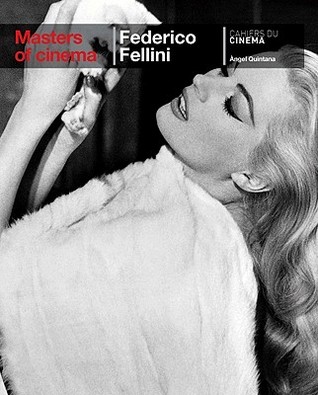
In his colossal biography, Tullio Kezich tells how Fellini, dejected by the tepid response to City of Women (1980), decided to discreetly visit cinemas in Rome to gauge audiences’ reactions for himself. He discovered that ‘the audience had changed planet, it no longer existed’.30 This mournful assessment helps us understand the valedictory yet defiant tone of his last period.
After the success of Amarcord, the public lost interest in Fellini, even though the baroque excesses of the Felliniesque aesthetic had entered the mainstream. The media reduced him to his own caricature while his films were greeted with incom¬ prehension, controversy or even indifference. In the period between Fellini’s Casanova (1976) and La voce della luna (1990) Italian cinema went through a major creative crisis, mainly triggered by the emergence of ‘neo-television’. The appearance of private TV channels — and that of Silvio Berlusconi’s financial and political empire — led to a banalization of the image. This phenomenon was accompanied by a dearth of exemplars in Italian cinema: some directors were working abroad (Bertolucci and Antonioni), the old masters were dead (Rossellini, Pasolini, Visconti) and audiences were deserting cinemas that had failed to keep up with the times. Ensconced within the studios of Cinecitta, Fellini would continue to create startling, visionary images, while resisting a society of spectacle that embraced television to the detriment of any artistic or intellectual standards.
nooo
While Fellini is conjuring up his world in Fellini’s Intervista, Marcello Mastroianni appears once again. For the last time, the creator and his creature are on screen together. The evocation of the glorious Cinecitta of days long gone is counterpointed by the sight of its former splendours. Marcello looks back to the past only to meet up once again with Anita Ekberg, overweight and cruelly aged. The two of them watch the handsome Marcello and the exuberant Anita in the famous Trevi Fountain scene from La Dolce Vita. Nobody can return from the kingdom of the dead: cinema and youth belong to another age, the shipwreck has already taken place.
nooo

In Africa, you want more, I think.
People get avid. This takes different forms in different people, but it shows up in some form in everybody who stays there any length of time. It can be sudden. I include myself.
Obviously I mean whites in Africa and not black Africans. The average black African has the opposite problem: he or she doesn’t want enough. A whole profession called Rural Animation exists devoted to making villagers want more and work harder to get it. Africans are pretty ungreedy — elites excepted, naturally. Elites are elites.
But in Africa you see middleclass white people you know for a fact are highly normal turn overnight into chainsmokers or heavy drinkers or gourmets. Suddenly you find otherwise serious people wedged in among the maids of the truly rich in the throng at the Chinese butchery, their faces clenched, determined to come away with one of the nine or ten half pints of crème fraîche that arrive from Mafikeng on Wednesdays at three. You see people fixate on eating wonderfully despite the derisory palette Botswana offers. Or they may get into quantity sex. Or you can see it strike them there’s no reason they shouldn’t take a stab at getting rich before they have to leave Africa. [...]
stellar intro
I had never allowed myself this kind of hiatus. I was deliberately planless. I was even able to suppress the vague internalized lifetime reading plan that always nags me when I read trash. I decided to let myself read only whatever turned up in my vicinity. Fortunately the shelves in the house were loaded with Simenon. I think it was Denoon who said that the closest you can come in life to experiencing free will is when you do things at random. There is no free will. Everything is still determined when you make random choices, but you stop noticing. Counterfeit freedom is still something you can enjoy in the right frame of mind. It was perfect being in someone else’s house.
It’s an effort to recapture the detail of guilty repose, because what I want is to plunge into Denoon and what followed. But the prelude is important, probably. I feel like someone after the deluge being asked to describe the way it was before the flood while I’m still plucking seaweed out of my hair, Denoon being the deluge. Despite my metaphors, the last thing I want to do is fabulize Denoon and make him more than he was. I hate drama. I hate dramatizers. But it was distinctly like a building falling on me when I met him. Why? Why do we yield, when we don’t have to? I’d like to know, as a woman and a human being, both. What did the sex side of my life in Gabs up to then have to do with it? This is British: Gaborone equals Gabs, Lobatse Lobs, Molepolole Moleps, undsoweiter. If I seem to convey that everyone I was involved with sexually pre-Denoon that summer was a clod or worse, I take it back in advance. That wasn’t it.
He was a professional photographer. The last I heard, he was unknown, although I still think he was very very good. He was someone totally permeated by his vocation. He related to the world compositionally. I was already inclined against the visual arts as a hunting ground for mates, but Giles clinched it. Two women I knew married to painters were supremely unhappy in an identical way. Men whose raison d’être is to wring images out of everything around them range from mute to gaga when they stop doing art, such as at breakfast, lunch, dinner, and bedtime. Giles’s stance was to be always alert to the parade of images that constituted the world, because one of them might be classic, like the Frenchman weeping when the German army marched into Paris. The trick was to never stop taking pictures, which is what he did. He was working on several contracts simultaneously. One was for documentation for the UN, one was for the firm in South Africa that supplied Botswana’s picture postcards, and one was for an unbelievably crude men’s magazine put out in Malta. And then he was always adding to his personal portfolio, which I promised to someday review for possible classics.
The train trip from Gaborone to Victoria Falls is in two stages — a night and half a day to Bulawayo, then a layover until ten and then overnight to the falls. There is no Rhodesia, I had to tell Giles over and over, to grind into his brain that we were going to a country called Zimbabwe and only Zimbabwe. I made up a rhyme to help him.
lmao
We were in an apotheosis of whiteness. The hotel was white inside and out. The white paintwork in our room was like porcelain. When you turned up the white ceiling fan to maximum you were under a white disk that seemed symbolic. Our bedspread was white. At meals there were white sauces to go with the cold meats, the vegetables, the trifle. Later I would see a woman, white, eating spoonfuls of béarnaise sauce directly out of a gravy boat. The cleaners and porters, not kids but mature black men, had to wear juvenilizing white outfits like sailorsuits — shorts, and jumpers with tallywhackers. There were other white statements I forget. Our bed was contained in a trembling white cone of mosquito netting, and delicate white lace curtains were lifting and sinking at the open windows as we dropped our bags. This is practically sacral, I said. But Giles wasn’t hearing me. That should really be asses’ milk, I said as he was drawing his bath. He was so tired he got into the tub with his socks on. I thought I’d await him in bed, having acted tartish enough unpacking to suggest that the gates of paradise were ajar. I felt sorry for Giles so far. I was patient, but where was he? Eventually I found him asleep in the tub.