
by
Jacobin
View all notes
Available query params: commented=1, untagged=1

So while it’s true that many Trump voters do express higher rates of racist or sexist views, this shouldn’t be the end of the conversation. People don’t have pre-packaged ideological beliefs. Their ideas are rooted in an ambiguous set of experiences open
to interpretation and change.
In the Guy Fawkes mask-wearing days of the early Occupy movement, pro-hacker progressives did a great deal to glamorize 4chan because of its leaderlessness and its nonhierarchical form. But as Evgeny Morozov warned, this network fetish could easily cause us to overlook the real content of any movement’s ideas, which in this case remains the lowest form of a vacuous, faux-ironic, sniggering moral imbecilism. Its empty postmodern style has energized and fused with the openly antisemitic and white-supremacist core of the alt-right who mean what they say literally but snobbishly roll their eyes at the normies and “basic bitches” who “don’t get” their sophisticated non-irony as they Sieg Heil and very clearly lay out their vision for a white ethno-state.
The decline of neoliberalism is emphatically not the decline of capitalism, so what does it mean to say neoliberalism is past its sell-by date? Neoliberalism is not, after all, just a set of policies that can be discontinued and replaced with something else — neoliberal capitalism has birthed a complex global economy that isn’t going to change overnight. Moreover, neoliberalism is also an encompassing set of orienting ideas that pervades all spheres of life; its core ethos of faith in private enterprise, ever-expanding commodification, and bootstrap individualism remains robust.
For these opinion makers, the death of the post-Communist liberal world is a terrible thing. For them it represents something great that has been thrown away in a fit of stupidity.
The funeral dirge for the liberal world order goes something like this: After World War II, some forward-thinking Americans began setting up a system of rules and institutions that allowed global trade, investment, and democracy to flourish. This system evolved and improved over the decades, particularly after the collapse of the Soviet Union, giving us container ships full of Poäng chairs and PlayStations, all while boosting wealth and democracy for the global poor.
According to liberals, the linchpin of this awesomeness was the United States unselfishly superintending the global economy and providing a model of democracy that world masses aspired to and authoritarian governments feared. [...]
on people who mourned Clinton's loss because they liked the way things were going
This legitimacy crisis is what has birthed Trump. And the muddled nature of his vision speaks to the impasse that countries find themselves in. The reigning centrist elites and their party alliances are seen as hopelessly bankrupt, and the Left has no power to enact its demands. This leaves the Right to speak to working people’s fears and anger, but that right is itself divided between capitalist elites and social conservatives. Trump simply stepped into a vacancy, an opportunist capitalist speaking the confused language of an angry right-populist vision.
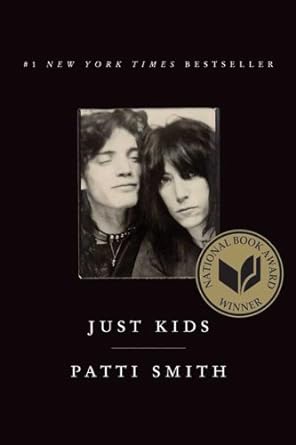
TIME PASSES UNNOTICED, UNTIL THAT MOMENT WHEN we suddenly turn and all seems transformed, even the earth beneath our feet. Sometimes I walk alone, up and down the streets of the city, feeling somewhat estranged. Many of the places I have known are gone. The city I once shared with Robert was a whole other wonderland, albeit a far grittier one. Forty-second Street with its sailors, hustlers, and night girls. Art houses offering Fellini and Bergman movies throughout the afternoon for fifty cents. Pawnshop windows filled with transient treasure, depression-era guitars, and turquoise jewelry, and the glittering Kino parlors and the quarter photo booths.
The psychedelic circus of the East Village is buried deep in the archeology of continuous change, irrevocably altered. Gone are the revolutionaries, nomadic squatters, jazz clubs, and the cheapest rents imaginable. Skid row is unrecognizable, and alone in memory are the burgeoning musicians mingling with homeless men in long overcoats, lighting fires in oilcans, along the Bowery. New fires of prosperity burn, and new stories will be written.
<3
I had found solace in Arthur Rimbaud, whom I had come upon in a bookstall across from the bus depot in Philadelphia when I was sixteen. His haughty gaze reached mine from the cover of Illuminations. He possessed an irreverent intelligence that ignited me, and I embraced him as compatriot, kin, and even secret love. Not having the ninety-nine cents to buy the book, I pocketed it.
Rimbaud held the keys to a mystical language that I devoured even as I could not fully decipher it. My unrequited love for him was as real to me as anything I had experienced. At the factory where I had labored with a hard-edged, illiterate group of women, I was harassed in his name. Suspecting me of being a Communist for reading a book in a foreign language, they threatened me in the john, prodding me to denounce him. It was within this atmosphere that I seethed. It was for him that I wrote and dreamed. He became my archangel, delivering me from the mundane horrors of factory life. His hands had chiseled a manual of heaven and I held them fast. The knowledge of him added swagger to my step and this could not be stripped away. I tossed my copy of Illuminations in a plaid suitcase. We would escape together.
lol
The city was a real city, shifty and sexual. I was lightly jostled by small herds of flushed young sailors looking for action on Forty-second Street, with its rows of X-rated movie houses, brassy women, glittering souvenir shops, and hot-dog vendors. I wandered through Kino parlors and peered through the windows of the magnificent sprawling Grant’s Raw Bar filled with men in black coats scooping up piles of fresh oysters.
The skyscrapers were beautiful. They did not seem like mere corporate shells. They were monuments to the arrogant yet philanthropic spirit of America. The character of each quadrant was invigorating and one felt the flux of its history. The old world and the emerging one served up in the brick and mortar of the artisan and the architects.
I walked for hours from park to park. In Washington Square, one could still feel the characters of Henry James and the presence of the author himself. Entering the perimeters of the white arch, one was greeted by the sounds of bongos and acoustic guitars, protest singers, political arguments, activists leafleting, older chess players challenged by the young. This open atmosphere was something I had not experienced, simple freedom that did not seem to be oppressive to anyone.
It was the summer Coltrane died. The summer of “Crystal Ship.” Flower children raised their empty arms and China exploded the H-bomb. Jimi Hendrix set his guitar in flames in Monterey. AM radio played “Ode to Billie Joe.” There were riots in Newark, Milwaukee, and Detroit. It was the summer of Elvira Madigan, the summer of love. And in this shifting, inhospitable atmosphere, a chance encounter changed the course of my life.
i really need to watch elvira madigan, ive known about it for like 8 years now
I had lived in the world of my books, most of them written in the nineteenth century. Though I was prepared to sleep on benches, in subways and graveyards, until I got work, I was not ready for the constant hunger that gnawed at me. I was a skinny thing with a high metabolism and a strong appetite. Romanticism could not quench my need for food. Even Baudelaire had to eat. His letters contained many a desperate cry for want of meat and porter.
hahaha