
View all notes
Available query params: commented=1, untagged=1

[...] An amicus curiae ("friend of the court") brief deposed by a group of prominent American computer scientists, cryptographers and programmers argued their point:
It cannot seriously be argued that any form of computer code may be regulated without reference to First Amendment doctrine. The path from idea to human language to source code to object code is a continuum. As one moves from one to the other, the levels of precision and, arguably, abstraction increase, as does the level of training necessary to discern the idea from the expression. [...] But each for expresses the same idea, albeit in different ways. (Abelson et al. 2000)
in response to a judge ruling that code is "execution" not free speech (the same way an assassination is not free speech).
just highlights the absurdity of applying the idea of intellectual property to software & its attempts to draw an arbitrary line at some point on the spectrum
[...] Rather than being part of an invisible infrastructure that allowed people to communicate or consume through the Internet, or being a form of expression of ideas, code, Lessig argues, is the sociolegal fabric of cyberspace: "In real space we recognise how laws regulate--through constitutions, statutes, and other legal codes. In cyberspace we must understand how code regulates--how the software and hardware that make cyberspace what it is regulate cyberspace as it is" (Lessig 1999, 6). He goes on to say, "We live life in real space, subject to the effects of code. We live ordinary lives, subject to the effects of code. We live social and political lives, subject to the effects of code. Code regulates all these aspects of our lives, more pervasively over time than other regulatory in our life" (Lessig 1999, 233). [...]
There's probably a typo in the last quote (missing an "any" maybe?). Need to check the source to confirm
[...] Algorithms are not neutral formal procedures. [...] Algorithms themselves are animated: they induce movement between inputs and outputs, and are themselves caught up in diagonal movements between biological knowledge and property value, movements characteristic of the new media biotechnology economy.
[...] the experience of programming seems to be somewhat different. Ellen Ullman (1997) expresses it this way: "You write some code, and suddenly there are dark, unspecified areas. All the pages of careful documents, and still, between the sentences, something is missing" (21). Rather than becoming mechanical or predictable, over the course of time the flows of information managed by software become more dynamic, complex and unstable. Increasingly, programmers interact with worlds that are not abstract, mechanical, formalized, or in any simple sense, globalized [...]
[...] The production of software has for decades been seen as resistant to industrial or Fordist techniques (e.g., Brooks 1995; see Aneesh 2001). The very term "software developer" conveys a certain open-endedness that software development methodologies attempt to close off. [...]
thought: the job of the software developer is precisely the limit of attempts to Taylorize it. like if something can be automated, then that doesn't take really take away from the software developer's job so much as add a tool to their arsenal. all the automatable stuff (as the result of trying to apply Fordist/Taylorist techniques) gets subsumed, submerged; the developer then works on top and treats it as a deeper, more solid base from which they can reach greater heights
at least, that's the way it SHOULD be treated. management may view it differently. it also depends on the capacity of the developer for climbing the metaphorical scaffold of tools (maybe at a certain point it's just beyond their ability, or desire)
idk just a thought (need to find someone who has written about this)
[...] More generally, code as expression and code as action never coincide fully. In terms of the software ontology explored here, code, the material that lies at the core of software, is unstable because it is both expression and action, neither of which are materially nor socially stable. In saying something, code also does something, but never exactly what it says, despite all its intricate formality.

Our theoretical point of departure lies in the tradition of autonomist Marxism, so called because of its emphasis on workers’ power to challenge and break their subordination to capital (Cleaver 1979; Dyer-Witheford 1999; Eden 2012). In this tradition analysis starts with class struggles, ‘their content, their direction, how they develop and how they circulate’ (Zerowork Collective 1975).
It was therefore a surprise when in 2000 one of the leading operaismo theorists, Antonio Negri, with co-author Michael Hardt, proposed a dramatic reinterpretation of social conflict in a digital era. Their Empire (2000) suggested that a fully global capital now confronted not so much a working class as a ‘multitude’ immersed in ‘immaterial labour’ involving the communicational and affective dimensions of networked production. Attuned to the excitement of the World Wide Web, open source software, and music piracy, and echoing the earlier work of Donna Haraway (1985), who had shaken feminist techno-pessimism by insisting on radical ‘cyborg’ potentials, Hardt and Negri, rather than emphasizing capital’s cybernetic domination, declared the possibility of its digital subversion and supersession.
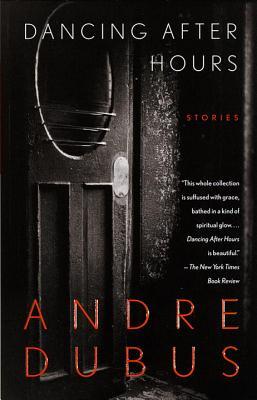
CALL HER CATHERINE. WHEN HER HEART truly broke, she was thirty-seven years old, she had two teenaged girls, and her husband loved another woman. She smelled the woman’s love on his clothes; it was a perfume she could name but did not. Even the woman’s name, when she learned it from her husband’s lips, was not large enough, only two words for the breath and flesh and voice and blood of only a woman, only part of what she had traced by smell on his sweater one night, his jacket another, and traced by intuition and memory when he was with her and when he was away at his normal times and when he was away on the evenings and weekend days he lied about; and what she had not traced but simply known long before she smelled another’s love on him. Had simply known, as a person with a disease may know without giving it a name or even notice, long before its actual symptoms and detection.
oh no
He was with her every night and, before her rehearsals started, they met for lunch and drank martinis and he was out of his office for two hours. On weekends he made picnic lunches and drove with her to the ocean. The water was cold, but the sun was warm and they wore sweatshirts and sat on the beach. At night they ate in restaurants and they made love and slept in her apartment or his. When she started rehearsals, she did not have time for lunch, and all day as he worked, he waited to see her. “I’m easy,” she had said, and when he imagined her living in New York, working as a waitress, rehearsing with men, he could not bear it. He knew she loved him and he believed she wanted to be faithful to him; but she was beautiful and a hedonist and there would be men trying to make love with her, and she would feel something for some of them. Without telling her, he tried to give her license, tried to imagine a situation he could accept: if she were drunk one night in New York and it happened only that night.
But it would not be one night with one man. By now he had seen her in the new play. [...] Susan made Beth erotic and lonely and brave, and you knew she would have a lover, in time, when she was ready, when she chose to; and Ted knew that, unless Susan was very unlucky, she would work in New York and in Hollywood. So it would not be one night drunk with one man; Susan was going on the road for the rest of her life.