
by
Matt Bucher
View all notes
Available query params: commented=1, untagged=1
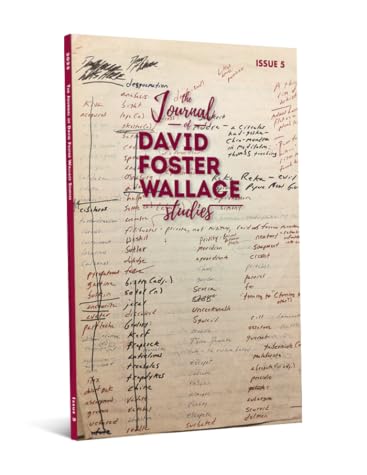
In a recent article, Tim Yu gives a good overview of Wallace's
"deeply ambivalent" relationship to professionalization and the pro-fessionalization of creative writing!' As Yu notes, Wallace's writing repeatedly features top professionals and professional-like figures who specialize in incredibly narrow domains, whose specialization is both key to their wild vocational successes and the very things that degrade their full humanities. The path to virtuoso mastery, it turns out, is also the royal road away from personhood. The troubled figure of the professional is best exemplified, for Yu's Wallace, by the professional athlete. Wallace wrote extensively about the amazing capacities which also are, at the same time, the amazing incapacities of the figure of the tennis pro. Recall how Wallace argues that Tracy Austin is great not despite the vapidity and seeming banal flatness of her memoir, but because of it. The thing that allows the great ge-nius-level tennis pro to be great and genius-level, as Wallace puts it in the case of Austin, is being able to think "nothing at all?"& So one extreme solution to what Jon Baskin calls the "Cartesian trap" of pathological self-consciousness is evacuating yourself of any sense of self in the first place.
Another illuminating metaphor for the simultaneous capacity and incapacity of the professional athlete is Orin Incandenza's "oversized left arm and big left leg." At one point in Infinite Jest, Wallace's narrator describes Orin's "tennis arm" as "roughly churn-sized," and the other arm as having "dimensions" that are merely "human." Again, specialization and professionalization stand in stark opposition to the "human." In this particular case, the distortion of the human happens not because of any lack of consciousness Orin is nothing if not self-aware but as a byproduct of doing one thing over and over again, of radically leaning into some capacities, and of systematically ignoring others.
Creative writing, at least as Wallace saw it in the late 1980s, is no oasis from the perils of professionalization. On Wallace's account, the literary professional seems fated to suffer from what Guillory wants to call a "déformation professionnelle" by virtue of being a professional in the first place. The term "déformation professionnelle" designates the idea that professionals have a tendency to see the world in a partial way, through the lens of their training, rather than from a general or human perspective. Such deformation is not, on Guillory's account, a personal failing of the individual person—or even a negative phenomenon!— but is rather "an unavoidable by-product of the assertion of that autonomy enabling the cultivation of professional expertise to begin with" and a disposition "that insulates such expertise to some extent from the tyranny of the market and from the draconian interventions of the political system."
In laying out this argument, Guillory draws on the famous portrait of the scholar that Friedrich Nietzsche evokes in The Gay Science:
In a scholar's book [Nietzsche writes] there is nearly always something oppressive, oppressed: the "specialist" emerges somehow-his eagerness, his seriousness, his ire, his overestimation of the nook in which he sits and spins, his hunchback every specialist has his hump. Every scholarly book also reflects a soul that has become crooked; every craft makes crooked.
And
One pays dearly for any kind of mastery on earth, where perhaps one pays too dearly for everything; one is master of one's trade at the price of also being its victim.
Of course, in many ordinary cases of professionalization, becoming more specialized wouldn't seem to be that much of a problem, spiritual or otherwise. Sure, you can't write a compelling memoir, but you'll have a prodigious near-miraculous backhand. In the case of the fiction-writer, however, becoming professionalized threatens to take you away from the lived experience of humanity whose careful observation is the very raw material you use to write fiction in the first place. Unfortunately, if you want to be an ambitious fiction-writer, the academy is one of the safer routes to continued survival, if not necessarily flourishing. You might find yourself in a sort of academic prison, yes, but as D. T. Max quotes Wallace telling Steven Moore, "The thing I like about my own prison... is I have tenure in my prison. "
Across these reviews, Wallace consistently prosecutes his own emerging aesthetic project. He engages largely with experimental and postmodern texts that, in one way or another, lose the plot, become too self-involved, too inward-looking. As his review of Acker suggests, there are certain literary artifacts that only an academic could love, and who could love a text that only academics love? Wallace is clearly doing the thinking that will pave the way for Infinite Jest.
Would a book like Infinite Jest only meet the approval of "professional readers," graduate students in everything but name, festooned with guidebooks and eager to do online detective work, or is the form of a book like Infinite fest a route not to a cartoonishly large "churn-like" emotional and intellectual life, but rather a perfectly normal-sized-fully and merely human existence?
eg the negative review of kathy acker

The boy’s quest is, in a sense, quixotic, doomed to fail in advance, yet in his determined refusal to settle for a bad father we can see the core dialectic of The Last Samurai. One must, the book suggests, face reality honestly but never submit to that reality. We must judge what exists, what is given, what we unthinkingly take as natural or necessary or conventional by the most stringent standards of analysis—not by the standard of what exists but by the standard of what might become possible in a better, more rational world. When we marry our wildest desires to the highest standards, we thereby test our reality.
A good reality will parry the blow.
She quit and planned to live off her savings. She would write full time.
But after quitting, it proved difficult to make progress. Her hard drive was already a graveyard of unfinished and abandoned projects. Weeks passed, and she found she wasn’t getting much writing done. Instead, she sat on the floor for long stretches of time, alone in her flat. One day, during this period of paralysis and growing despair, she talked to her father in the United States. Over the long-distance line, he began hectoring her for not being sufficiently hopeful about her life—which, DeWitt told me, did little to kindle hope in her.
Her father had a unique talent, she recalled, of reminding you that— however depressed you might think you were— deeper basements of hopelessness were available to you. Nearing a new bottom, DeWitt reflected on the fact that you can’t pick your parents. Certainly, if she had ever been given the chance, she would have chosen someone different. Sitting on the floor of the flat, back against the wall, brooding on her miserable relationship with her father and the creative impasse she had reached, something was dislodged within her.
What would it mean, she wondered, for a child to select his father? It was “a completely preposterous idea,” but one that captured her, blooming in her mind, filling her with enthusiasm. What sort of adult would be a plausible candidate for surrogate fatherhood? What education might allow the child to make an informed decision? And at what age would this lucky child, on the one hand, be capable of making a serious choice while, on the other, be young enough to have that choice be meaningful? After all, the point of choosing one’s father should be, at the very least, to be raised by that father, to discover who you were, who you might become, through the medium of good parenting.
Rigorously well balanced, stately paragraphs shred into spindly fragments. The mother is trying to explain something but is constantly being interrupted. The boy recombines Greek numerical prefixes to create new adjectives. The son’s incessant questions—Who was X? Who was Y? Why don’t you Z?— create a tempo of agitation and interruption not only for the mother but also for the reader. Greek-derived numerical prefixes bludgeon the listener. The mind of this new version of Ludo’s mother can barely sustain a thought, let alone explain everything. In the contrast between these two versions of the same passage, we see the difference between writing “as if for an intelligent six-year-old” and writing while doing the unpaid reproductive labor of taking care of an intelligent sixyear-old, the difference between writing without interruption and writing while having to do other work.
[...] The Last Samurai has largely been written about as if it were part of the postmodern tradition. It’s often taken as an example of one of the most prestigious postmodern genres, encyclopedic narrative, “an almost super-canonical form, yet one that is virtually unread.” Sam Anderson has called The Last Samurai a “meganovel.” The Last Samurai was the subject of a group read at Veronica Esposito’s literary blog Conversational Reading (in the manner of Infinite Summer, dedicated to David Foster Wallace, or #OccupyGaddis). Contemporary encyclopedic narrative is typically defined by its length, its eager incorporation of technological and scientific rhetoric, its formal difficulty, and its ambition to make an all-encompassing artistic statement about the character of contemporary life. And it is overwhelmingly assumed to be a masculine genre.
Critics who celebrate the encyclopedic novel have argued that DeWitt not only belongs to this tradition but has broadened its gender profile. Steven Moore begins his Washington Post review, for example, by explaining that “the learned novel is mostly a guy thing.” DeWitt has, he suggests, “crashed this boys club,” and “The Last Samurai will crown DeWitt this year’s It Girl of postmodernism.” Sven Birkerts highlights DeWitt as a writer who is “writing determinedly outside the domestic pigeonhole (old stereotypes live on)” and can “match their male colleagues in inventiveness and a willingness to take on the zeitgeist.” Stephen Burn has suggested that The Last Samurai is an emblem of the “broadening” of the encyclopedic tradition to include authors other than straight white men. The all-male panel of judges who shortlisted the book for the Orange Prize describe the book in similar terms. The book is, according to one summary of the deliberations for the prize, a “bravura grandstand of intellectualism, which eschews plot and character to revel in the sheer delight of languages and obscure learning.” The Last Samurai is “a witty, smart, cerebral book” that “appeals to the brains and a sense of the absurd rather than to the heart and reader/character empathy.” “Pack[ing] an emotional punch,” we learn, is “not DeWitt’s game.” DeWitt is also passive-aggressively praised for being, perhaps, too much like male novelists who are guilty of “show[ing] off in their writing, putting their logo on the text, never allowing the reader to forget them.”
These are not incorrect assessments—DeWitt does have encyclopedic ambitions—but there are problems with this line of interpretation. First, these critics generally ignore or minimize important encyclopedic works by women such as Gertrude Stein’s The Making of Americans (1925), Doris Lessing’s The Golden Notebook (1962), Margaret Young’s Miss Macintosh, My Darling (1965), Leslie Marmon Silko’s Almanac of the Dead (1991), Gayl Jones’s Mosquito (1999), and Karen Tei Yamashita’s I Hotel (2010). [...]
[...] And as reviewers have frequently pointed out, DeWitt is as interested in writing fiction as she is in discussing information theory and linguistics and classical scholarship. One critic suggests that The Last Samurai is “a rare work of knowledge porn that actually conveys knowledge.” Unlike other recent novels such as The Secret History or Special Topics in Calamity Physics, the intellectual content of The Last Samurai “actually” matters to its author— and, by extension, is supposed to matter to us readers. What if, DeWitt seems to ask, our intellectual lives weren’t so alienated? What if novels could produce and disseminate knowledge?