
View all notes
Available query params: commented=1, untagged=1

HE: You were bored in a way that makes men want to know a woman.
lol
SHE (softly, as if in an aside): What is your wife like?
HE (purposefully): Beautiful. I'm a man who's happy with his wife.
(Pause.)
SHE: So am I. I'm a woman who's happy with her husband.
(This exchange charged with real emotion, which the ensuing moment covers.)
oof
(The proprietress of the bar turns out a light. The record stops playing. They're in semi-darkness. The late but eluctable hour when the cafes close is fast approaching. They both close their eyes, as if seized by a feeling of modesty. The well-ordered world has thrown them out, for their adventure has no place in it. No use fighting. She suddenly understands this. When they raise their eyes again, they literally smile "in order not to cry". She gets up. He does nothing to restrain her. They are outside, in the night, in front of the cafe. She stands facing him.)
SHE: It's sometimes necessary to keep from thinking about these difficulties the world makes. If we didn't we'd suffocate.
He's not really a dandy, but neither is he careless about his appearance. He is not a libertine. He has a wife he loves, and two children. And yet he likes women. But he's never made a career as a "lady's man." He believes that that sort of career is a career of contemptible "substitution" and most suspect. That anyone who has never known the love of a single woman has never really known what it is to love, has perhaps never even attained real manhood.
It's for this very reason that his affair with the young French woman is a real love affair, even though it's a chance adventure. It's because he doesn't believe in the virtue of chance affairs that he can live this one with such sincerity, with such violence.
from the portrait of the Japanese

[...] My mother says, This one will never be satisfied with anything. I think I'm beginning to see my life. From now on I treat that word and my life as inseparable. I think I have a vague desire to be alone, just as I realize I've never been alone any more since I left childhood behind, and the family of the hunter. I'm going to write. That's what I see beyond the present moment, in the great desert in whose form my life stretches out before me.
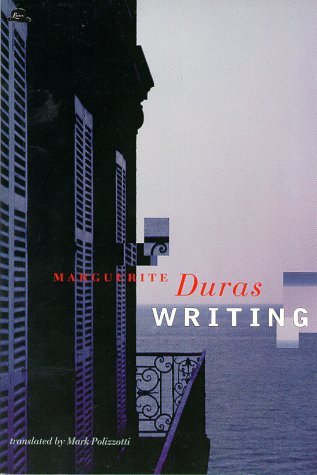
Here, when I’m alone, I don’t play the piano. I play fairly well, but I don’t play much because I don’t think I can play when I’m alone, when there’s no one but me in the house. It’s hard to endure. Because it seems to make sense all of a sudden. But only writing makes sense in certain personal cases. Since I manipulate it, practice it. Whereas the piano is a distant object, inaccessible now and (for me) forever. I think that if I had played piano professionally, I would never have written books. But I’m not sure. Actually, I think that’s false. I think I would have written books no matter what, even with music running parallel. Unreadable books, but whole nonetheless. As distant from words as the unknown object of an objectless love. Like the love of Christ or of J. S. Bach—the two of them breathtakingly equivalent.
:)
Finding yourself in a hole, at the bottom of a hole, in almost total solitude, and discovering that only writing can save you. To be without the slightest subject for a book, the slightest idea for a book, is to find yourself, once again, before a book. A vast emptiness. A possible book. Before nothing. Before something like living, naked writing, like something terrible, terrible to overcome. I believe that the person who writes does not have any ideas for a book, that her hands are empty, her head is empty, and that all she knows of this adventure, this book, is dry, naked writing, without a future, without echo, distant, with only its elementary golden rules: spelling, meaning.
In life there comes a moment, and I believe that it’s unavoidable, that one cannot escape it, when everything is put in doubt: marriage, friends, especially friends of the couple. Not children. Children are never put in doubt. And this doubt grows around one. This doubt is alone, it is the doubt of solitude. It is born of solitude. We can already speak the word. I believe that most people couldn’t stand what I’m saying here, that they’d run away from it. This might be the reason why not everyone is a writer. Yes. That’s the difference. That is the truth. No other. Doubt equals writing. So it also equals the writer. And for the writer, everyone writes. We’ve always known this.
I think that what I blame books for, in general, is that they are not free. One can see it in the writing: they are fabricated, organized, regulated; one could say they conform. A function of the revision that the writer often wants to impose on himself. At that moment, the writer becomes his own cop. By being concerned with good form, in other words the most banal form, the clearest and most inoffensive. There are still dead generations that produce prim books. Even young people: charming books, without extension, without darkness. Without silence. In other words, without a true author. Books for daytime, for whiling away the hours, for traveling. But not books that become embedded in one’s thoughts and toll the black mourning for all life, the commonplace of every thought.
Every book, like every writer, has a difficult, unavoidable passage. And one must consciously decide to leave this mistake in the book for it to remain a true book, not a lie. I don’t yet know what happens to solitude after that. I can’t talk about it yet. What I believe is that the solitude becomes banal; eventually it becomes commonplace, and so much the better.