
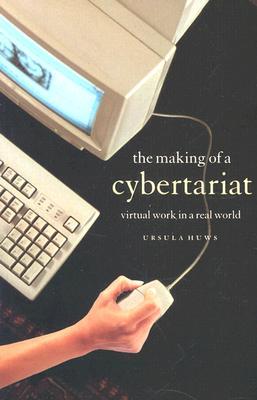
by
Ursula Huws
33
It seems possible to draw several tentative conclusions from the above analysis. Firstly, it has become apparent that socialization of domestic labor does not in itself bring about women’s liberation. Just as paid workers have discovered that socialization of the means of production does not liberate them from oppressive and alienating conditions of work, and have begun to demand workers’ control over the work process as a means to liberation, so women must demand some form of control over the means of consumption, and of service, to be liberated from the oppressive and alienating conditions of domestic work. New technology is capital’s instrument for bringing more and more areas of our lives within its orbit, but unless its control is challenged—not just at the point of production—it can only lead to intensified oppression. In other words, there are implications for the demands we make—inside and outside the workplace.
It seems possible to draw several tentative conclusions from the above analysis. Firstly, it has become apparent that socialization of domestic labor does not in itself bring about women’s liberation. Just as paid workers have discovered that socialization of the means of production does not liberate them from oppressive and alienating conditions of work, and have begun to demand workers’ control over the work process as a means to liberation, so women must demand some form of control over the means of consumption, and of service, to be liberated from the oppressive and alienating conditions of domestic work. New technology is capital’s instrument for bringing more and more areas of our lives within its orbit, but unless its control is challenged—not just at the point of production—it can only lead to intensified oppression. In other words, there are implications for the demands we make—inside and outside the workplace.
39
Dependence on the “expert” is also increased. We no longer understand what things are made of and how they work. In the workplace, this leads to a polarization between the few high-status jobs at the top and the many unskilled jobs at the bottom. In the home, women experience increased helplessness and dependence. When the warning on the aerosols says, “Caution, do not use near pets or foodstuffs; keep away from children,” the homemaker has no alternative but to follow the directions slavishly, abandoning any possibilty of creative improvisation with the materials to hand. She also spends ever-increasing amounts of frustrating time waiting for the “expert” repairman or installer.
Dependence on the “expert” is also increased. We no longer understand what things are made of and how they work. In the workplace, this leads to a polarization between the few high-status jobs at the top and the many unskilled jobs at the bottom. In the home, women experience increased helplessness and dependence. When the warning on the aerosols says, “Caution, do not use near pets or foodstuffs; keep away from children,” the homemaker has no alternative but to follow the directions slavishly, abandoning any possibilty of creative improvisation with the materials to hand. She also spends ever-increasing amounts of frustrating time waiting for the “expert” repairman or installer.
53
This control is exercised in several ways. Firstly, it is strengthened by the atomization of the workforce. Isolated in their individual homes, it is increasingly difficult for them to combine to defend their interests, whether these are as consumption workers or as employees (or, indeed, in any other capacity—as women, as disabled people, as parents, as members of a specific ethnic group). Secondly, in relation to new technology for homeworkers, control is designed into the very form of the machines and systems used. It is now a standard component of any software package used for data entry, for instance, to closely monitor the performance of its operator, by counting the number of keystrokes per minute, the error rate, the number of items dealt with, the length and frequency of breaks, or any other variable useful to the employer. This can be used to police workers quite as effectively as many more traditional methods of supervision. Some companies have brought such remote control to a fine art, even exploiting the solidarity among workers in the drive to boost productivity. One hire-purchase company operates a scheme whereby workers are monitored both as individuals and as work groups. Only the latter records are made available to the women who operate the terminals processing loan repayments. The group that performs best over a period of time is rewarded by being given what is regarded as more pleasant work to do for a time—chasing up defaulting debtors over the telephone. Loyalty to other group members is the main mechanism that prevents slackening the work pace.
This control is exercised in several ways. Firstly, it is strengthened by the atomization of the workforce. Isolated in their individual homes, it is increasingly difficult for them to combine to defend their interests, whether these are as consumption workers or as employees (or, indeed, in any other capacity—as women, as disabled people, as parents, as members of a specific ethnic group). Secondly, in relation to new technology for homeworkers, control is designed into the very form of the machines and systems used. It is now a standard component of any software package used for data entry, for instance, to closely monitor the performance of its operator, by counting the number of keystrokes per minute, the error rate, the number of items dealt with, the length and frequency of breaks, or any other variable useful to the employer. This can be used to police workers quite as effectively as many more traditional methods of supervision. Some companies have brought such remote control to a fine art, even exploiting the solidarity among workers in the drive to boost productivity. One hire-purchase company operates a scheme whereby workers are monitored both as individuals and as work groups. Only the latter records are made available to the women who operate the terminals processing loan repayments. The group that performs best over a period of time is rewarded by being given what is regarded as more pleasant work to do for a time—chasing up defaulting debtors over the telephone. Loyalty to other group members is the main mechanism that prevents slackening the work pace.
58
Internationally, there has been some transfer of technical work between countries using online telecommunications links. This has included the use of facsimile transmission to enable typesetting of newspapers to be carried out in one country while printing is done elsewhere; a specializing of certain data-processing functions in particular countries enabling, for instance, a database in Italy or the United States to be accessed from the other side of the world; and an increasing use of telecommunications for internal communications within large corporations, enabling different parts of a production process to be internationally coordinated. It is now possible for designers in one country to directly program production machinery in another. Most of these technical processes involve small numbers of staff, so that the net employment effect is not great, although the implications for control of production processes and for technology transfer are considerable. More important in terms of numbers of jobs affected has been the growth of offshore information processing, whereby satellite links are used to transfer routine data-entry functions to third world countries. U.S.-based companies, some of them specialist data-preparation subcontractors, are already known to be operating in this way in Barbados, Jamaica, Singapore, and parts of India for work involving the use of the English-language, and in Brazil and the Chinese mainland for number work. Generally the raw materials, such as airline ticket stubs, completed “special offer” forms from product packaging, or other labor-intensive routine paperwork are airfreighted out in large sacks to be keyed in by women working round-the- clock shifts on very low wages, in conditions that have earned their workplaces the epithet “electronic sweatshops.”
Internationally, there has been some transfer of technical work between countries using online telecommunications links. This has included the use of facsimile transmission to enable typesetting of newspapers to be carried out in one country while printing is done elsewhere; a specializing of certain data-processing functions in particular countries enabling, for instance, a database in Italy or the United States to be accessed from the other side of the world; and an increasing use of telecommunications for internal communications within large corporations, enabling different parts of a production process to be internationally coordinated. It is now possible for designers in one country to directly program production machinery in another. Most of these technical processes involve small numbers of staff, so that the net employment effect is not great, although the implications for control of production processes and for technology transfer are considerable. More important in terms of numbers of jobs affected has been the growth of offshore information processing, whereby satellite links are used to transfer routine data-entry functions to third world countries. U.S.-based companies, some of them specialist data-preparation subcontractors, are already known to be operating in this way in Barbados, Jamaica, Singapore, and parts of India for work involving the use of the English-language, and in Brazil and the Chinese mainland for number work. Generally the raw materials, such as airline ticket stubs, completed “special offer” forms from product packaging, or other labor-intensive routine paperwork are airfreighted out in large sacks to be keyed in by women working round-the- clock shifts on very low wages, in conditions that have earned their workplaces the epithet “electronic sweatshops.”
59
Secondly, although it would be perfectly feasible for local entrepreneurs or co-operatives to set up as data-entry subcontractors, the evidence suggests that up to now it has been U.S-based companies that have dominated this field. Even with local ownership, autonomy would be difficult to achieve, given the high degree of centralized control that the online telecommunications link vests in the organization from which the contract originates. The computer systems used for data entry are capable of extremely sophisticated work monitoring, keeping records of the numbers of keystrokes per minute, error rates, numbers of items dealt with, and duration of work breaks of each individual worker, and comparing the productivity of one subcontractor with another, leaving little room for the development of more humane working methods and improved pay and conditions for the workers. Finally, it should be noted that this sort of work does not create permanent jobs. The need for bulk data entry is essentially transitional. The combination of increasingly sophisticated optical character recognition and voice recognition technology with the spread of user-friendly, online systems enabling users to access and input their own data is likely to make the job of the specialist keypunch or data-preparation operator obsolescent within the next decade.
very relevant to AI data collection
62
In an abstract, moralizing way, socialists have long been aware of the need for an alternative to this topsy-turvy value system, variously labeled as “materialism” or “consumerism,” and have devoted much rhetoric to attacking it, generally in a tone of sentimental regret for the lost warmth of “close-knit” working-class communities before the Second World War. Yet when they come to the business of devising concrete plans for the future, the emphasis is firmly on alternative products. Although factory work is widely regarded as monotonous, deskilled, degraded, and dangerous, the solution proposed to the closing of factories is to reopen them or build new ones, not to think of alternatives to the factory system altogether. Why is it that the Left seems so reluctant to step outside capitalism's fixation with commodities? Why is the present socialist challenge to the primacy of profit so halfhearted and ambiguous?
A cluster of different, but related factors seems to be involved: the sexual division of labor that relegates women to the “service” jobs and leads to the perception that factory work is male; narrow and distorted definitions of skill that are the products of defensive struggles to sustain “craft” wage rates rather than any rational analysis of job content; a blind faith in science and technology as neutral heralds of a progress that will ultimately be beneficial to all; a belief that working-class consciousness and militancy are the exclusive preserve of operatives directly involved in the commodity manufacturing process.
70
In manufacturing, the situation is very different. Asmany commentators have noted, the overall tendency has been inexorably in one direction—the incorporation of as much of the skill content and control of the work as possible into machines and systems and the rendering of the vast majority of workers into an undifferentiated, unskilled, interchangeable mass. In relation to skills, a dual process takes place: on the one hand, the creation of a few extremely highly skilled controlling and designing positions, and on the other, the development of a larger number of repetitive jobs each involving carrying out one small fragmented part of the production process. The gulf between the two is unbridgeable. Most workers now lack any overall view of the labor process and only fully understand their own small part of it. The chemicals with which they must work, the computerized control systems, and the other products of a mystified “science” have been made incomprehensible to them, which means that their hazards cannot be understood, either. Often, it is only when workers begin dying that any suspicion arises to their dangers. Work is paced by machines, taking from the individual worker not only the power to pace the speed of the job but even, very often, the ability to argue about it with a human supervisor.
In manufacturing, the situation is very different. Asmany commentators have noted, the overall tendency has been inexorably in one direction—the incorporation of as much of the skill content and control of the work as possible into machines and systems and the rendering of the vast majority of workers into an undifferentiated, unskilled, interchangeable mass. In relation to skills, a dual process takes place: on the one hand, the creation of a few extremely highly skilled controlling and designing positions, and on the other, the development of a larger number of repetitive jobs each involving carrying out one small fragmented part of the production process. The gulf between the two is unbridgeable. Most workers now lack any overall view of the labor process and only fully understand their own small part of it. The chemicals with which they must work, the computerized control systems, and the other products of a mystified “science” have been made incomprehensible to them, which means that their hazards cannot be understood, either. Often, it is only when workers begin dying that any suspicion arises to their dangers. Work is paced by machines, taking from the individual worker not only the power to pace the speed of the job but even, very often, the ability to argue about it with a human supervisor.
71
Far from liberating women from housework, then, we can see that the increasing commodification of household and service activities has had the opposite effect, transforming it into stressful drudgery. It has had a similar effect on factory work, each wave of automation eliminating more skill and satisfaction from the work. The development of information technology has also had the effect of commodifying large areas of service employment, not only creating new manufacturing industries but also spreading some of the social relations of the factory into the office, shop, hospital, and bank. Fragmentation and machine pacing are now becoming characteristics even of some service jobs.
In the face of this knowledge, how can socialists argue uncritically for more commodification as a way of creating worthwhile jobs and a better society? Do they really believe that it is more pleasant to work in an electronic alarm factory than to sit and talk to a frightened old lady? Or to stand at a conveyor belt making trolleys than to help her carry her shopping? Is it really less rewarding to be a hospital porter or a nurse than a packer in a drug factory? And which of these jobs has the most potential for change, for transforming the social relations within an industry to give workers more involvement and control in their daily life?
82
It seems the notion that one’s own health doesn’t matter is not job specific but part of the general condition of femininity. Although ostensibly the obverse of the macho notion that true masculinity involves risk taking (and that it is “feminine” to worry about dangers to one’s health), conventional notions of what is feminine appear, ultimately, to produce the same result. While men don't complain about dangerous working conditions because it is “unmanly” to be vulnerable, women don't because it is “unfeminine” to be selfish. Thus are the hazards perpetuated.
It seems the notion that one’s own health doesn’t matter is not job specific but part of the general condition of femininity. Although ostensibly the obverse of the macho notion that true masculinity involves risk taking (and that it is “feminine” to worry about dangers to one’s health), conventional notions of what is feminine appear, ultimately, to produce the same result. While men don't complain about dangerous working conditions because it is “unmanly” to be vulnerable, women don't because it is “unfeminine” to be selfish. Thus are the hazards perpetuated.
97
Manufacturing companies that had survived the crises of profitability and great shakeouts of labor in the late 1970s and early 1980s were now reinvesting and looking for ways to expand without committing themselves to a large, permanent workforce. Some service industries, like retailing, were reorganizing, using automated point-of-sale technology to make themselves more sensitive to market changes, while others were seeking ways to reduce their fixed costs. Flexibility was presented as the means of achieving these goals. And flexibility was construed as flexibility for the employer: flexibility to change working hours, to switch workers from task to task, or to take staff on or drop them in response to demand. Managers were presented with a menu of options to choose from to bring about such flexibility: new shift patterns; annual hours contracts; multitasking agreements; temporary or fixed-term contracts; part-time work; subcontracting (in the public sector this was encouraged by means of privatization and compulsory competitive tendering); the increased use of part-time workers; and the use of homeworkers. Telework was perceived simply as one of these options.
Manufacturing companies that had survived the crises of profitability and great shakeouts of labor in the late 1970s and early 1980s were now reinvesting and looking for ways to expand without committing themselves to a large, permanent workforce. Some service industries, like retailing, were reorganizing, using automated point-of-sale technology to make themselves more sensitive to market changes, while others were seeking ways to reduce their fixed costs. Flexibility was presented as the means of achieving these goals. And flexibility was construed as flexibility for the employer: flexibility to change working hours, to switch workers from task to task, or to take staff on or drop them in response to demand. Managers were presented with a menu of options to choose from to bring about such flexibility: new shift patterns; annual hours contracts; multitasking agreements; temporary or fixed-term contracts; part-time work; subcontracting (in the public sector this was encouraged by means of privatization and compulsory competitive tendering); the increased use of part-time workers; and the use of homeworkers. Telework was perceived simply as one of these options.