
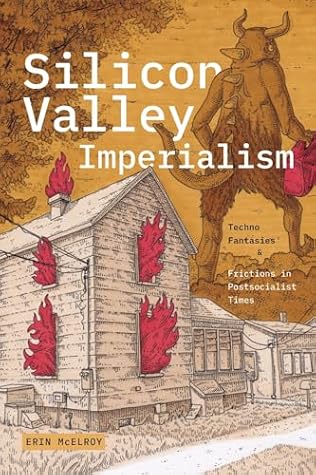
by
Erin McElroy
60
Up to 30 percent of the country’s housing stock was nationalized during socialism, but less than 2 percent of housing is public today.130 This means that the very concept of social housing has been gentrified out of the public imaginary—but not for all. Upon restitution, many evictees advocate for social housing alternatives. This, they argue, would be better than winding up h ouseless or in a shelter. While shelters are better than nothing, they often segregate families by gender and sever communities. There are also far too few. Irina Zamfirescu and Liviu Chelcea observe that in Bucharest, there were 22,000 applications for social housing in 2017, but only twenty apartments available.131 Contexts such as this have animated the p olitical strategies of housing justice collectives such as the Frontul Comun pentru Dreptul la Locuire (fcdl/Common Front for the Right to Housing) in Bucharest and Căși Sociale acum! in Cluj,132 both advocating for dignified social housing production and against racist restitution evictions.
damn
Up to 30 percent of the country’s housing stock was nationalized during socialism, but less than 2 percent of housing is public today.130 This means that the very concept of social housing has been gentrified out of the public imaginary—but not for all. Upon restitution, many evictees advocate for social housing alternatives. This, they argue, would be better than winding up h ouseless or in a shelter. While shelters are better than nothing, they often segregate families by gender and sever communities. There are also far too few. Irina Zamfirescu and Liviu Chelcea observe that in Bucharest, there were 22,000 applications for social housing in 2017, but only twenty apartments available.131 Contexts such as this have animated the p olitical strategies of housing justice collectives such as the Frontul Comun pentru Dreptul la Locuire (fcdl/Common Front for the Right to Housing) in Bucharest and Căși Sociale acum! in Cluj,132 both advocating for dignified social housing production and against racist restitution evictions.
damn
66
Despite the ongoing violence of deracinated dispossession as it compounds Silicon Valley imperialism, Orientalist fantasy, and presocialist property geographies, the fight against racial banishment endures. Over a decade after the 2010 Coastei Street eviction, residents are still wastelanded in Pata Rât. In December 2021, amid the covid-19 pandemic and increased housing precarity, Căși Sociale acum! convened another of what have become annual commemorations of the Coastei Street eviction—this one specifically highlighting the incongruities of Cluj having been branded a smart city. A banner and light displays were hung from Elisabeta Bridge, spelling out, “I miss social housing,” and “Me too.” An “online march” was also convened entitled, “To whom does the smart city belong?” Tenants and activists w ere encouraged to share photos on social media about the smart city’s failure to address housing. Hundreds participated, displaying photos of signs being held with messages questioning: “To whom does the smart city belong, if public interest is only for profit?” “To whom does the smart city belong, if hundreds of people live without electricity and hot water in Pata Rât (near the landfills)?” “To whom does the smart city belong, if it is allowed to evict the most vulnerable ones?” “To whom does the smart city belong, if in the last five years there have been less than ten social housing units allocated (each year) for several hundred applications?”151 A group of activists gathered next to a new “smart” bus stop on Memorandumului Street, holding a placard questioning, “To whom does the smart city belong, if you need to leave the city, because you cannot afford a home?” Indeed, among the hollowed-out Siliconized city, marked by the tower ing ntt Data tower, new luxury condos, and now even a Wizard of Oz nursery where the Coastei Street home used to be, to whom does the smart city belong?
cool
Despite the ongoing violence of deracinated dispossession as it compounds Silicon Valley imperialism, Orientalist fantasy, and presocialist property geographies, the fight against racial banishment endures. Over a decade after the 2010 Coastei Street eviction, residents are still wastelanded in Pata Rât. In December 2021, amid the covid-19 pandemic and increased housing precarity, Căși Sociale acum! convened another of what have become annual commemorations of the Coastei Street eviction—this one specifically highlighting the incongruities of Cluj having been branded a smart city. A banner and light displays were hung from Elisabeta Bridge, spelling out, “I miss social housing,” and “Me too.” An “online march” was also convened entitled, “To whom does the smart city belong?” Tenants and activists w ere encouraged to share photos on social media about the smart city’s failure to address housing. Hundreds participated, displaying photos of signs being held with messages questioning: “To whom does the smart city belong, if public interest is only for profit?” “To whom does the smart city belong, if hundreds of people live without electricity and hot water in Pata Rât (near the landfills)?” “To whom does the smart city belong, if it is allowed to evict the most vulnerable ones?” “To whom does the smart city belong, if in the last five years there have been less than ten social housing units allocated (each year) for several hundred applications?”151 A group of activists gathered next to a new “smart” bus stop on Memorandumului Street, holding a placard questioning, “To whom does the smart city belong, if you need to leave the city, because you cannot afford a home?” Indeed, among the hollowed-out Siliconized city, marked by the tower ing ntt Data tower, new luxury condos, and now even a Wizard of Oz nursery where the Coastei Street home used to be, to whom does the smart city belong?
cool
72
These sharing economy imaginaries, alongside social media discourses of public forums owned by private companies, highlight a novel aspect of Silicon Valley imperialism in which racial capitalist processes are cloaked by technoliberalism. By technoliberalism, I invoke Neda Atanasoski and Kalindi Vora’s critique of a postracial and postgendered version of universal humanity enabled by technology, one in which fantasies of progress for the liberal rights-bearing subject mask colonial mechanisms of seizure, exploitation, appropriation, and degradation that technologies reproduce.9 Technoliberalism also gets at how, amid the fourth industrial revolution and second machine age, not only have racialized and gendered differentiations been accelerated, but also sharing economy grammars have appropriated socialist understandings of communalism in order to advance capitalist expropriation. Postsocialist analytics rooted in an understanding of multiply existing social and communal projects that exceed confinement by state socialist spatiotemporality help elucidate the mechanics of this predation.
These sharing economy imaginaries, alongside social media discourses of public forums owned by private companies, highlight a novel aspect of Silicon Valley imperialism in which racial capitalist processes are cloaked by technoliberalism. By technoliberalism, I invoke Neda Atanasoski and Kalindi Vora’s critique of a postracial and postgendered version of universal humanity enabled by technology, one in which fantasies of progress for the liberal rights-bearing subject mask colonial mechanisms of seizure, exploitation, appropriation, and degradation that technologies reproduce.9 Technoliberalism also gets at how, amid the fourth industrial revolution and second machine age, not only have racialized and gendered differentiations been accelerated, but also sharing economy grammars have appropriated socialist understandings of communalism in order to advance capitalist expropriation. Postsocialist analytics rooted in an understanding of multiply existing social and communal projects that exceed confinement by state socialist spatiotemporality help elucidate the mechanics of this predation.
82
But police violence wasn’t the only source of strife in Hunters Point—toxicity due to contaminants from the nearby shipyard began wreaking havoc. Upon relocation, Marie first obtained a job in the neighborhood’s shipyard, unaware that the “little white stuff ” from ship sandblasting drums scattered on her clothes, hair, and community was carcinogenic asbestos. As she describes, “A lot of people, upon the hill, have died from one thing or another. From asthma, cancers, you name it. Our asthma rates, our cancer rates, our heart disease rates, the premature babies—there’s something going on that’s not right. . . . On my block alone, on Quesada . . . before my husband died, there had been eight men who died from two types of cancer.”62 Marie soon after became one of Bayview-Hunters Point’s fiercest environmental justice advocates, organizing with groups like Greenaction against environmental racism before passing away due to the carcinogenic particles she began breathing at the age of seventeen.
In what is often portrayed as one of the most progressive, technologically advanced, and environmentally friendly US cities, health is only afforded to those who can purchase or rent from some of the country’s most expensive properties. This is in part why Savannah Shange describes San Francisco as a “progressive dystopia” or “a city where industry and state development schemes collided to produce a racialized, uneven distribution of life and death.”63 Cold War visions of progress and renewal posit technology as a remedy for spatial improvement, but only for those already privileged through the ongoing project of enclosing the commons for those worthy of private “non-nuisance” space.
But police violence wasn’t the only source of strife in Hunters Point—toxicity due to contaminants from the nearby shipyard began wreaking havoc. Upon relocation, Marie first obtained a job in the neighborhood’s shipyard, unaware that the “little white stuff ” from ship sandblasting drums scattered on her clothes, hair, and community was carcinogenic asbestos. As she describes, “A lot of people, upon the hill, have died from one thing or another. From asthma, cancers, you name it. Our asthma rates, our cancer rates, our heart disease rates, the premature babies—there’s something going on that’s not right. . . . On my block alone, on Quesada . . . before my husband died, there had been eight men who died from two types of cancer.”62 Marie soon after became one of Bayview-Hunters Point’s fiercest environmental justice advocates, organizing with groups like Greenaction against environmental racism before passing away due to the carcinogenic particles she began breathing at the age of seventeen.
In what is often portrayed as one of the most progressive, technologically advanced, and environmentally friendly US cities, health is only afforded to those who can purchase or rent from some of the country’s most expensive properties. This is in part why Savannah Shange describes San Francisco as a “progressive dystopia” or “a city where industry and state development schemes collided to produce a racialized, uneven distribution of life and death.”63 Cold War visions of progress and renewal posit technology as a remedy for spatial improvement, but only for those already privileged through the ongoing project of enclosing the commons for those worthy of private “non-nuisance” space.
83
There w ere also antiwar movements that specifically mobilized against Silicon Valley nuclear technologies. Student movements across the country mean- while found targets in military-industrial labs on their college campuses, such as the Applied Electronics Laboratory at Stanford.64 There was also Computer People for Peace (cpp), whose “Project ibm” protested the police use of ibm computers to track Black people in Apartheid South Africa (not so dissimilar from ibm’s punch card project used in the racializing of Roma and Jewish people in presocialist Romania, as I describe in chapter 4). Project ibm also grew out of cpp’s attempts to raise bail funds for bpp member Sundiata Acoli, who had been a computer programmer with nasa for twelve years prior to becoming politicized by the murder of Martin Luther King Jr. In 1969, after having become finance minister for the bpp, he was arrested as part of the Panther 21 case, in which bpp members were framed for acts later revealed to be linked to undercover agents.65 As cCPP cofounder Joan Greenbaum recounts of bail-raising tactics, “We talked about racism wherever we went, including computer conferences, demonstrations and discussions inside the companies we worked for.”66 She notes that much like today, tech companies of the time were feudalistic, with women and people of color often relegated to menial tasks such as keypunch operation. Part of the cpp goal, then, was to build feminist, antiracist, and anti-imperial power within the companies themselves in order to transform technoculture. Such tactics continued to inspire organizing efforts against racial technocapitalism in Cold War aftermaths.
<3
There w ere also antiwar movements that specifically mobilized against Silicon Valley nuclear technologies. Student movements across the country mean- while found targets in military-industrial labs on their college campuses, such as the Applied Electronics Laboratory at Stanford.64 There was also Computer People for Peace (cpp), whose “Project ibm” protested the police use of ibm computers to track Black people in Apartheid South Africa (not so dissimilar from ibm’s punch card project used in the racializing of Roma and Jewish people in presocialist Romania, as I describe in chapter 4). Project ibm also grew out of cpp’s attempts to raise bail funds for bpp member Sundiata Acoli, who had been a computer programmer with nasa for twelve years prior to becoming politicized by the murder of Martin Luther King Jr. In 1969, after having become finance minister for the bpp, he was arrested as part of the Panther 21 case, in which bpp members were framed for acts later revealed to be linked to undercover agents.65 As cCPP cofounder Joan Greenbaum recounts of bail-raising tactics, “We talked about racism wherever we went, including computer conferences, demonstrations and discussions inside the companies we worked for.”66 She notes that much like today, tech companies of the time were feudalistic, with women and people of color often relegated to menial tasks such as keypunch operation. Part of the cpp goal, then, was to build feminist, antiracist, and anti-imperial power within the companies themselves in order to transform technoculture. Such tactics continued to inspire organizing efforts against racial technocapitalism in Cold War aftermaths.
<3
86
The dot-com boom busted shortly after it began due to overconfidence and failed investment strategies (perhaps something akin to the mass tech layoffs transpiring at the time of this writing in 2023). While the crash led to a decrease in rental and home prices in the Bay Area, it also impelled the restructuring of surviving companies into more robust capitalist machines led by Apple, Cisco, and Intel. Google and Facebook became rising stars, and then—in the aftermath of the foreclosure crisis which wrecked the slow gains made by people of color to build equity and secure stable housing across the region—Airbnb, Uber, Lyft, and sharing economy start-ups headquartered in San Francisco blossomed overnight. Twitter/X also launched in San Francisco, nestled into what soon became known as the Twitter Tax Break Zone, where tech companies avoid paying city taxes. As Wendy Liu offers of Tech 2.0 dreams:
Silicon Valley is more than a region in northern California that has become synonymous with the high-tech industry. It is a dream. It is the dream of a world with new rules and new rulers, based on the principles of meritocracy and efficiency and hacking your way to the top. It is the dream of the win-win: innovation that generates profit through frictionless experiences and synergistic efficiencies, not exploitation. It is the dream that a hacker playground with unimaginable wealth and minimal outside supervision is indisputably making the world a better place. But what may be a dream for a select few is steadily becoming a nightmare for everyone else.
this was kind of like a jump scare because i had totally forgotten that i was mentioned in this book lmao
The dot-com boom busted shortly after it began due to overconfidence and failed investment strategies (perhaps something akin to the mass tech layoffs transpiring at the time of this writing in 2023). While the crash led to a decrease in rental and home prices in the Bay Area, it also impelled the restructuring of surviving companies into more robust capitalist machines led by Apple, Cisco, and Intel. Google and Facebook became rising stars, and then—in the aftermath of the foreclosure crisis which wrecked the slow gains made by people of color to build equity and secure stable housing across the region—Airbnb, Uber, Lyft, and sharing economy start-ups headquartered in San Francisco blossomed overnight. Twitter/X also launched in San Francisco, nestled into what soon became known as the Twitter Tax Break Zone, where tech companies avoid paying city taxes. As Wendy Liu offers of Tech 2.0 dreams:
Silicon Valley is more than a region in northern California that has become synonymous with the high-tech industry. It is a dream. It is the dream of a world with new rules and new rulers, based on the principles of meritocracy and efficiency and hacking your way to the top. It is the dream of the win-win: innovation that generates profit through frictionless experiences and synergistic efficiencies, not exploitation. It is the dream that a hacker playground with unimaginable wealth and minimal outside supervision is indisputably making the world a better place. But what may be a dream for a select few is steadily becoming a nightmare for everyone else.
this was kind of like a jump scare because i had totally forgotten that i was mentioned in this book lmao
87
As in prior eras, technocapitalist appropriation of socialist space has not been met without dissent. In 2014, for instance, what became known as the “Dropbox Dudes” video went viral. Titled “Mission Playground Is Not For Sale,” the homemade YouTube clip features a group of white Airbnb and Dropbox employees mostly new to the city attempting to kick out Black and Latinx youth from the public Mission Playground to hold an informal corporate match.88 At the time, Dropbox was in the process of expanding to a space large enough to hold an indoor soccer field, while Airbnb, also headquartered nearby, was facilitating the transformation of long-term affordable housing into short-term profitable vacation rentals under the veneer of “Fair to Share” marketing. In the viral video, the corporate employees pressure youth of color, most of whom had been playing pickup soccer in the playground for years, to abdicate the field. One of the youth, Kai (who has been evicted multiple times in the city), attempts to negotiate with the white men. One man, donning a Dropbox T-shirt, claims that the tech employees have the right to the field because his friend, Conor, reserved it through a new app. After some suspense, Conor enters the scene and waves a printed permit obtained through the app in the air as if it were a colonial flag. Generously, one of Kai’s friends attempts to educate Conor that people have played soccer on that field without a permit for years. It makes no sense that they are now being asked to vacate the park because of an unheard-of app. As it turns out, the app had been created through a public/private partnership between the Recreation and Park Department and the City Fields Foundation run by the Fishers from the Gap company and the global capital firm, Charles Schwab. The app hadn’t been made public yet, but it was available for tech companies such as Dropbox and Airbnb to test. Their access to the app—as privileged users effectively able to displace those foreclosed from being able to download it—highlights the contradictions of technoliberalism whereby technologies wedded to liberal conceptions of universality and freedom are applied only to those already benefiting from racial technocapitalist innovations.
interesting backstory
As in prior eras, technocapitalist appropriation of socialist space has not been met without dissent. In 2014, for instance, what became known as the “Dropbox Dudes” video went viral. Titled “Mission Playground Is Not For Sale,” the homemade YouTube clip features a group of white Airbnb and Dropbox employees mostly new to the city attempting to kick out Black and Latinx youth from the public Mission Playground to hold an informal corporate match.88 At the time, Dropbox was in the process of expanding to a space large enough to hold an indoor soccer field, while Airbnb, also headquartered nearby, was facilitating the transformation of long-term affordable housing into short-term profitable vacation rentals under the veneer of “Fair to Share” marketing. In the viral video, the corporate employees pressure youth of color, most of whom had been playing pickup soccer in the playground for years, to abdicate the field. One of the youth, Kai (who has been evicted multiple times in the city), attempts to negotiate with the white men. One man, donning a Dropbox T-shirt, claims that the tech employees have the right to the field because his friend, Conor, reserved it through a new app. After some suspense, Conor enters the scene and waves a printed permit obtained through the app in the air as if it were a colonial flag. Generously, one of Kai’s friends attempts to educate Conor that people have played soccer on that field without a permit for years. It makes no sense that they are now being asked to vacate the park because of an unheard-of app. As it turns out, the app had been created through a public/private partnership between the Recreation and Park Department and the City Fields Foundation run by the Fishers from the Gap company and the global capital firm, Charles Schwab. The app hadn’t been made public yet, but it was available for tech companies such as Dropbox and Airbnb to test. Their access to the app—as privileged users effectively able to displace those foreclosed from being able to download it—highlights the contradictions of technoliberalism whereby technologies wedded to liberal conceptions of universality and freedom are applied only to those already benefiting from racial technocapitalist innovations.
interesting backstory
93
Strategically, these dystopic ai conversations also obviate that it continues to be corporations rather than magical machines amassing technocapitalist power and reanimating decades-old computing techniques. In the words of Meredith Whittaker and Lucy Suchman, “The term ‘artificial intelligence’ is widely recognized by researchers as less a technically precise descriptor than an aspirational project that comprises a growing collection of data-centric technologies.”107 In this sense, conversations about the ai boom fictionalize that something new is at play rather than acknowledge that companies such as Google, Microsoft, Amazon, and Facebook are continuing to amass computation power even if masqueraded in openness.
Strategically, these dystopic ai conversations also obviate that it continues to be corporations rather than magical machines amassing technocapitalist power and reanimating decades-old computing techniques. In the words of Meredith Whittaker and Lucy Suchman, “The term ‘artificial intelligence’ is widely recognized by researchers as less a technically precise descriptor than an aspirational project that comprises a growing collection of data-centric technologies.”107 In this sense, conversations about the ai boom fictionalize that something new is at play rather than acknowledge that companies such as Google, Microsoft, Amazon, and Facebook are continuing to amass computation power even if masqueraded in openness.
150
Today, the notion of hacking has had its own blood sucked through Western liberalism, with corporate hackathons a mainstay of corporate technoculture.56 Most, if not all, of the so-called hackathons that I have attended in Romania still resemble Penn’s 1995 slideshow edifying the merits of capitalism. I have sat in on countless of these sessions in coworking spaces, conferences, and tech hubs alike, where after an hour or so, the w hole thing becomes dizzying. . . . In Bucharest, a German CyberGhost entrepreneur delivers talks on the benefits of outsourcing and geographic arbitrage in Romania. “My company could never have succeeded had I gone to Silicon Valley,” he exclaims. Romania is where it’s at. Then, Uber’s Pierre-Dimitri Gore-Coty arrives in Cluj for the first time and delivers a talk on the need to innovate old industries in Bucharest’s TechHub to a room packed full of nicely dressed workers. “Bus stops are too analog!” he excitingly exclaims, promoting Uber’s new driverless cars. Pizza is delivered, and the aroma of hipster coffee seeps through the air. . . . Two days later, I find myself in TechFest nearby, where a man from a small Cluj-Berlin start-up markets the company’s new smart home security device, which is becoming especially popular in Western Europe with “this new immigrant problem.” No one in the room seems to mind, or to consider that it is often Romanians perceived by the West as part of this problem to be technologically solved through surveillance. He goes on about how the device can detect the gender of voices, so that if you are a w oman and ask to watch a movie, it w ill go through “chick-flick and rom-com” options first. Applause. Yet the security device, while produced in Romania, only recognizes English and German. More artisanal coffee. No, the code is not open source, as they must run a business after all. . . . I could be in San Francisco. But I’m in Cluj’s new it building, unironically called “The Office.” Sitting on the ruins of a socialist-era textiles factory, one would be hard-pressed to imagine the former mode of production in the now glimmering glass building. Rents have gone up around it, and the food court and wine bar underneath boast prices comparable with Silicon Valley.
oh god
Today, the notion of hacking has had its own blood sucked through Western liberalism, with corporate hackathons a mainstay of corporate technoculture.56 Most, if not all, of the so-called hackathons that I have attended in Romania still resemble Penn’s 1995 slideshow edifying the merits of capitalism. I have sat in on countless of these sessions in coworking spaces, conferences, and tech hubs alike, where after an hour or so, the w hole thing becomes dizzying. . . . In Bucharest, a German CyberGhost entrepreneur delivers talks on the benefits of outsourcing and geographic arbitrage in Romania. “My company could never have succeeded had I gone to Silicon Valley,” he exclaims. Romania is where it’s at. Then, Uber’s Pierre-Dimitri Gore-Coty arrives in Cluj for the first time and delivers a talk on the need to innovate old industries in Bucharest’s TechHub to a room packed full of nicely dressed workers. “Bus stops are too analog!” he excitingly exclaims, promoting Uber’s new driverless cars. Pizza is delivered, and the aroma of hipster coffee seeps through the air. . . . Two days later, I find myself in TechFest nearby, where a man from a small Cluj-Berlin start-up markets the company’s new smart home security device, which is becoming especially popular in Western Europe with “this new immigrant problem.” No one in the room seems to mind, or to consider that it is often Romanians perceived by the West as part of this problem to be technologically solved through surveillance. He goes on about how the device can detect the gender of voices, so that if you are a w oman and ask to watch a movie, it w ill go through “chick-flick and rom-com” options first. Applause. Yet the security device, while produced in Romania, only recognizes English and German. More artisanal coffee. No, the code is not open source, as they must run a business after all. . . . I could be in San Francisco. But I’m in Cluj’s new it building, unironically called “The Office.” Sitting on the ruins of a socialist-era textiles factory, one would be hard-pressed to imagine the former mode of production in the now glimmering glass building. Rents have gone up around it, and the food court and wine bar underneath boast prices comparable with Silicon Valley.
oh god
210
Caro had recently moved back to Cluj to be closer to her family while in the midst of finishing her dissertation on interwar feminist labor histories. Struggling to pay her expenses, she had managed to land a night shift job at an Office call center. She thought it was just some regular tech outsourcing firm from the United States. Soon though, she discovered that it was in fact the property technology firm, Yardi. Her job also entailed serving one of Yardi’s major clients, Invitation Homes—the United States’ largest landlord of single-family homes. A former subsidiary of the half-trillion-dollar multinational company the Blackstone Group, Invitation Homes owns over eighty thousand properties and has been rapidly expanding throughout the covid-19 pandemic under the logics of crisis capitalism. It employs unique-sounding shell companies to purchase its properties, often making it impossible for tenants to even know who or what their landlord is.1 Invitation Homes also mobilizes surrogate labor and digital platforms to perform property management, creating new technocultural and technopolitical abstractions for its tenants. At the same time, those working for Invitation Homes through Yardi struggle to understand who their employer actually is. “It’s all confusing,” Caro explained while we w ere having lunch one day. “I don’t know, do I work for Invitation Homes, or for Yardi, or maybe for their clients? Maybe if Invitation Homes is Yardi’s client, then I work for the clients of the client?” she puzzled.
Yardi first emerged in 1984 in California, yet, like much of the so-called proptech industry, it really blossomed in the aftermaths of the subprime crisis amid the rise of corporate landlordism.2 Yardi is but one of countless proptech companies today reshaping the provision, consumption, and management of rental property. Proptech, or what tenants might better understand as “landlord technologies,” includes everything from tenant screening software to bio- metric facial recognition building access systems, from landlord-and property manager–controlled rental payment platforms to automated eviction notifications.3 Desiree Fields nominates this turn the rise of the “automated landlord,” 4 where corporate landlords effectively mobilize data capitalism in order to expand and manage their portfolios.
ackkk
Caro had recently moved back to Cluj to be closer to her family while in the midst of finishing her dissertation on interwar feminist labor histories. Struggling to pay her expenses, she had managed to land a night shift job at an Office call center. She thought it was just some regular tech outsourcing firm from the United States. Soon though, she discovered that it was in fact the property technology firm, Yardi. Her job also entailed serving one of Yardi’s major clients, Invitation Homes—the United States’ largest landlord of single-family homes. A former subsidiary of the half-trillion-dollar multinational company the Blackstone Group, Invitation Homes owns over eighty thousand properties and has been rapidly expanding throughout the covid-19 pandemic under the logics of crisis capitalism. It employs unique-sounding shell companies to purchase its properties, often making it impossible for tenants to even know who or what their landlord is.1 Invitation Homes also mobilizes surrogate labor and digital platforms to perform property management, creating new technocultural and technopolitical abstractions for its tenants. At the same time, those working for Invitation Homes through Yardi struggle to understand who their employer actually is. “It’s all confusing,” Caro explained while we w ere having lunch one day. “I don’t know, do I work for Invitation Homes, or for Yardi, or maybe for their clients? Maybe if Invitation Homes is Yardi’s client, then I work for the clients of the client?” she puzzled.
Yardi first emerged in 1984 in California, yet, like much of the so-called proptech industry, it really blossomed in the aftermaths of the subprime crisis amid the rise of corporate landlordism.2 Yardi is but one of countless proptech companies today reshaping the provision, consumption, and management of rental property. Proptech, or what tenants might better understand as “landlord technologies,” includes everything from tenant screening software to bio- metric facial recognition building access systems, from landlord-and property manager–controlled rental payment platforms to automated eviction notifications.3 Desiree Fields nominates this turn the rise of the “automated landlord,” 4 where corporate landlords effectively mobilize data capitalism in order to expand and manage their portfolios.
ackkk