
5
But when I spoke a moment ago of the depicting of the disposition of fantastic sums of money I did not mean that the sums had necessarily to be large but that large or small the amounts had to be significant. In It Happened One Night Clark Gable is not interested in a $10,000 reward but he insists on beng reimbursed in the amount of $39.60, his figure fully itemized. The economic issues in these films, with all their ambivalence and irresolution, are invariably tropes for spiritual issues. (Which is not to deny that they can be interpreted the other way around too, the spiritual conflicts as tropes for the economic. These conflicts are bound up with the conflict over the direction of interpretation, the question, say, of what money, and how you get it, can make you do.) This is what we might expect of American romantic, or Utopian, works. The figure Gable claims is owed to him is of the same order as the figure, arrived at with similar itemization, Thoreau claimed to have spent in building his house, $ 28.12 1/2. The purpose of these men in both cases is to distinguish themselves, with poker faces, from those who do not know what things cost, what life costs, who do not know what counts. It is as essential for the settings of our films to be such that we can expect the characters in them to take the time, and take the pains, to converse intelligently and playfully about themselves and about one another as it is essential for the settings and characters of classical tragedy to be such that we can expect high poetry from them. Our critical task is to discover why they use their time as they do, why they say the things they say. Without taking up the details of the films we should not expect to know what they are, to know what causes them.
But when I spoke a moment ago of the depicting of the disposition of fantastic sums of money I did not mean that the sums had necessarily to be large but that large or small the amounts had to be significant. In It Happened One Night Clark Gable is not interested in a $10,000 reward but he insists on beng reimbursed in the amount of $39.60, his figure fully itemized. The economic issues in these films, with all their ambivalence and irresolution, are invariably tropes for spiritual issues. (Which is not to deny that they can be interpreted the other way around too, the spiritual conflicts as tropes for the economic. These conflicts are bound up with the conflict over the direction of interpretation, the question, say, of what money, and how you get it, can make you do.) This is what we might expect of American romantic, or Utopian, works. The figure Gable claims is owed to him is of the same order as the figure, arrived at with similar itemization, Thoreau claimed to have spent in building his house, $ 28.12 1/2. The purpose of these men in both cases is to distinguish themselves, with poker faces, from those who do not know what things cost, what life costs, who do not know what counts. It is as essential for the settings of our films to be such that we can expect the characters in them to take the time, and take the pains, to converse intelligently and playfully about themselves and about one another as it is essential for the settings and characters of classical tragedy to be such that we can expect high poetry from them. Our critical task is to discover why they use their time as they do, why they say the things they say. Without taking up the details of the films we should not expect to know what they are, to know what causes them.
8
[...] Malcolm Cowley, sifting his attentive experience of the period and of its writing, picks out three features for emphasis that our films may be seen to share. The transcendentalist possibility I was noticing seems to be what Cowley calls the period's millennialism, as if under the depression an ecstasy were discernible; he also mentions the presence in a number of the period's good novels of the theme of death and rebirth; and he finds a chorus of witnesses to the dignity of man. As we progress these themes will be found to play curiously sensitive roles in our set of films. But to see this we will have to develop a certain skepticism about appearances. For example, it will be a virtue of our heroes to be willing to suffer a certain indignity, as if what stands in the way of change, psychologically speaking, is a false dignity; or, socially speaking, as if the dignity of one part of society is the cause of the opposite part's indignity, a sure sign of a disordered state of affairs.
[...] Malcolm Cowley, sifting his attentive experience of the period and of its writing, picks out three features for emphasis that our films may be seen to share. The transcendentalist possibility I was noticing seems to be what Cowley calls the period's millennialism, as if under the depression an ecstasy were discernible; he also mentions the presence in a number of the period's good novels of the theme of death and rebirth; and he finds a chorus of witnesses to the dignity of man. As we progress these themes will be found to play curiously sensitive roles in our set of films. But to see this we will have to develop a certain skepticism about appearances. For example, it will be a virtue of our heroes to be willing to suffer a certain indignity, as if what stands in the way of change, psychologically speaking, is a false dignity; or, socially speaking, as if the dignity of one part of society is the cause of the opposite part's indignity, a sure sign of a disordered state of affairs.
18
What is it about the conversation of just these films that makes it so perfectly satisfy the appetite of talking pictures? Granted the fact, the question can only be answered by consulting the films. Evidently their conversation is the verbal medium in which, for example, questions of human creation and the absence of mothers and the battle between men and women for recognition of one another, and whatever matters turn out to entail these, are given expression. So it is not sufficient that, say, the conversation be sexually charged. If it were sufficient then the genre would begin in 1931, with Noel Coward's Private Lives, a work patently depicting the divorce and remarrying of a rich and sophisticated pair who speak intelligently and who infuriate and appreciate one another more than anyone else. But their witty, sentimental, violent exchanges get nowhere; their makings up never add up to forgiving one another (no place they arrive at is home to them); and they have come from nowhere (their constant reminiscences never add up to a past they can admit together). They are forever stuck in an orbit around the foci of desire and contempt. This is a fairly familiar perception of what marriage is. The conversation of what I call the genre of remarriage is, judging from the films I take to define it, of a sort that leads to acknowledgment; to the reconciliation of a genuine forgiveness; a reconciliation so profound as to require the metamorphosis of death and revival, the achievement of a new perspective on existence; a perspective that presents itself as a place, one removed from the city of confusion and divorce. One moral to draw from the structure of Private Lives is that no one feature of the genre is sufficient for membership in the genre, not even the title feature of remarriage itself. Another moral is that the fact that Private Lives seems closer than our comedies do to the spirit of Restoration comedy is a good reason not to look to Restoration comedy (as I have periodically, for obvious reasons, found myself tempted to do) as a central source of the comedy of remarriage.
What is it about the conversation of just these films that makes it so perfectly satisfy the appetite of talking pictures? Granted the fact, the question can only be answered by consulting the films. Evidently their conversation is the verbal medium in which, for example, questions of human creation and the absence of mothers and the battle between men and women for recognition of one another, and whatever matters turn out to entail these, are given expression. So it is not sufficient that, say, the conversation be sexually charged. If it were sufficient then the genre would begin in 1931, with Noel Coward's Private Lives, a work patently depicting the divorce and remarrying of a rich and sophisticated pair who speak intelligently and who infuriate and appreciate one another more than anyone else. But their witty, sentimental, violent exchanges get nowhere; their makings up never add up to forgiving one another (no place they arrive at is home to them); and they have come from nowhere (their constant reminiscences never add up to a past they can admit together). They are forever stuck in an orbit around the foci of desire and contempt. This is a fairly familiar perception of what marriage is. The conversation of what I call the genre of remarriage is, judging from the films I take to define it, of a sort that leads to acknowledgment; to the reconciliation of a genuine forgiveness; a reconciliation so profound as to require the metamorphosis of death and revival, the achievement of a new perspective on existence; a perspective that presents itself as a place, one removed from the city of confusion and divorce. One moral to draw from the structure of Private Lives is that no one feature of the genre is sufficient for membership in the genre, not even the title feature of remarriage itself. Another moral is that the fact that Private Lives seems closer than our comedies do to the spirit of Restoration comedy is a good reason not to look to Restoration comedy (as I have periodically, for obvious reasons, found myself tempted to do) as a central source of the comedy of remarriage.
22
The intimacy of the connection between these excerpts and the themes of the films of remarriage will not, I think, make itself felt unforgettably until one is well into the studies of the individual films; certainly, as I indicated, I did not see the intimacy until I was just about through composing them. A Doll House is a structure in which an apparently orderly life shatters into fragments which assemble with raging velocity an argument concerning the concepts of forgiveness, inhabitation, conversation, happiness, playtime, becoming human, fathers and husbands, brother and sister, education, scandal, fitness for teaching, honor, becoming strangers, the miracle of change, and the metaphysics of marriage. The argument of a comedy of remarriage requires, with others, each of these concepts. In A Doll House a woman climactically discovers that her eminently legal marriage is not comprehensible and therefore, before her own conscience, that she is dishonored. She demands an education and leaves to seek one that she says her husband is not the man to provide. They could find a life together (and so perhaps find or create marriage between them) only on the condition that a miracle of change take place. I have described the genre of remarriage in effect as undertaking to show how the miracle of change may be brought about and hence life together between a pair seeking divorce become a marriage. A Doll House thus establishes a problematic to which the genre of remarriage constitutes a particular direction of response, for which it establishes the conditions or costs of a solution.
The intimacy of the connection between these excerpts and the themes of the films of remarriage will not, I think, make itself felt unforgettably until one is well into the studies of the individual films; certainly, as I indicated, I did not see the intimacy until I was just about through composing them. A Doll House is a structure in which an apparently orderly life shatters into fragments which assemble with raging velocity an argument concerning the concepts of forgiveness, inhabitation, conversation, happiness, playtime, becoming human, fathers and husbands, brother and sister, education, scandal, fitness for teaching, honor, becoming strangers, the miracle of change, and the metaphysics of marriage. The argument of a comedy of remarriage requires, with others, each of these concepts. In A Doll House a woman climactically discovers that her eminently legal marriage is not comprehensible and therefore, before her own conscience, that she is dishonored. She demands an education and leaves to seek one that she says her husband is not the man to provide. They could find a life together (and so perhaps find or create marriage between them) only on the condition that a miracle of change take place. I have described the genre of remarriage in effect as undertaking to show how the miracle of change may be brought about and hence life together between a pair seeking divorce become a marriage. A Doll House thus establishes a problematic to which the genre of remarriage constitutes a particular direction of response, for which it establishes the conditions or costs of a solution.
24
There is in these closing pages of the play an unfolding of actions amounting to what I should like to call continual poetic justice. The intellectual or spiritual succession of concepts,’ dismantling the doll house, have this quality as certainly as the more obviously Ibsenist gesture in which Nora refers to her changing her clothes as her being changed, or the final sound of the slamming door of the house, which counts not as the interruption of an argument but as its continuation by other means, and specifically its ending. Her action is not the preventing but the abandoning of words, and of the house of words. The actions and words of our films characteristically work with these poetic densities — the subverted embrace at the close of Bringing Up Baby; the darkening screen, empty of figures, at the close of It Happened One Night; the photographs that close The Philadelphia Story; sitting down together in His Girl Friday; a song and dance in The Awful Truth . . . The Ibsen, and these films, declare that our lives are poems, their actions and words the content of a dream, working on webs of significance we cannot or will not survey but merely spin further. In everyday life the poems often seem composed by demons who curse us, wish us ill; in art by an angel who wishes us well, and blesses us.
:)
There is in these closing pages of the play an unfolding of actions amounting to what I should like to call continual poetic justice. The intellectual or spiritual succession of concepts,’ dismantling the doll house, have this quality as certainly as the more obviously Ibsenist gesture in which Nora refers to her changing her clothes as her being changed, or the final sound of the slamming door of the house, which counts not as the interruption of an argument but as its continuation by other means, and specifically its ending. Her action is not the preventing but the abandoning of words, and of the house of words. The actions and words of our films characteristically work with these poetic densities — the subverted embrace at the close of Bringing Up Baby; the darkening screen, empty of figures, at the close of It Happened One Night; the photographs that close The Philadelphia Story; sitting down together in His Girl Friday; a song and dance in The Awful Truth . . . The Ibsen, and these films, declare that our lives are poems, their actions and words the content of a dream, working on webs of significance we cannot or will not survey but merely spin further. In everyday life the poems often seem composed by demons who curse us, wish us ill; in art by an angel who wishes us well, and blesses us.
:)
52
I have sometimes found it useful to think of the nature of film by comparing what camera and projection bring to a script with what music brings to a libretto. Whatever the strains of the comparison its point here would be to locate what it is, in any medium that can film, seriously be thought of as maintaining a connection with Shakespeare's plays, that bears the brunt of his poetry. The signal weakness in comparing the poetry of the camera (of, so to speak, the photogenetic poetry of film itself) with the music of opera is that this misses, as the comparison of film with theater generally misses, the mode of uniqueness of the events on the screen. Plays may be variously produced, and productions may or may not change in the course of a run, and may be revived; films can only be rerun or remade. You can think of the events on a screen equally as permanent and as evanescent. The poetry of the final appeals for forgiveness in The Lady Eve is accordingly a function of the way just this man and this woman half walk, half run down a path of gangways, catching themselves in an embrace on each landing, and how just this sequence of framings and attractions of the camera follow these bodies as they inflect themselves to a halt before a closed door, and just the way these voices mingle their breaths together. These moments are no more repeatable than a lifetime is. [...]
I have sometimes found it useful to think of the nature of film by comparing what camera and projection bring to a script with what music brings to a libretto. Whatever the strains of the comparison its point here would be to locate what it is, in any medium that can film, seriously be thought of as maintaining a connection with Shakespeare's plays, that bears the brunt of his poetry. The signal weakness in comparing the poetry of the camera (of, so to speak, the photogenetic poetry of film itself) with the music of opera is that this misses, as the comparison of film with theater generally misses, the mode of uniqueness of the events on the screen. Plays may be variously produced, and productions may or may not change in the course of a run, and may be revived; films can only be rerun or remade. You can think of the events on a screen equally as permanent and as evanescent. The poetry of the final appeals for forgiveness in The Lady Eve is accordingly a function of the way just this man and this woman half walk, half run down a path of gangways, catching themselves in an embrace on each landing, and how just this sequence of framings and attractions of the camera follow these bodies as they inflect themselves to a halt before a closed door, and just the way these voices mingle their breaths together. These moments are no more repeatable than a lifetime is. [...]
53
[...] In comedies of remarriage the fact of virginity is evidently not what is at stake. Yet all the more, it seems to me, is the concept of virginity still at stake, or what the fact meant is at stake something about the possession of chasteness or innocence, whatever one's physically determinable condition, whatever one's physically determinable condition, andabout whether one's valuable intactness, one's individual exclusiveness, has been well lost, that is, given over for something imaginably better, for the exclusiveness of a union. The overarching question of the comedies of remarriage is precisely the question of what constitutes a union, what makes these two into one, what binds, you may say what sanctifies in marriage. When is marriage an honorable estate? In raising this question these films imply not only that the church has lost its power over this authentication but that society as a whole cannot be granted it. In thus questioning the legitimacy of marriage, the question of the legitimacy of society is simultaneously raised, even allegorized.
[...] In comedies of remarriage the fact of virginity is evidently not what is at stake. Yet all the more, it seems to me, is the concept of virginity still at stake, or what the fact meant is at stake something about the possession of chasteness or innocence, whatever one's physically determinable condition, whatever one's physically determinable condition, andabout whether one's valuable intactness, one's individual exclusiveness, has been well lost, that is, given over for something imaginably better, for the exclusiveness of a union. The overarching question of the comedies of remarriage is precisely the question of what constitutes a union, what makes these two into one, what binds, you may say what sanctifies in marriage. When is marriage an honorable estate? In raising this question these films imply not only that the church has lost its power over this authentication but that society as a whole cannot be granted it. In thus questioning the legitimacy of marriage, the question of the legitimacy of society is simultaneously raised, even allegorized.
131
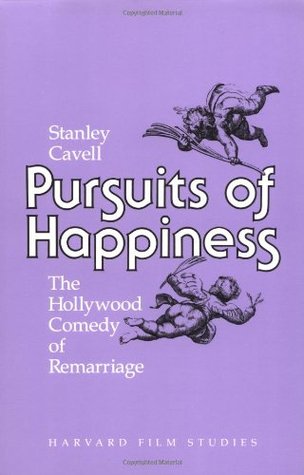
[...] such comedies invite us to think again, what it is Nietzsche sees when he speaks of our coming to doubt our right to happiness, to the pursuits of happiness. In the Genealogy of Morals, he draws a consequence of this repressed right as the construction of the ascetic ideal, our form of the thinker. He calls for us to have the courage of our sensuality, emblematized for him by Luther's wedding. For this priest to marry, the idea of marriage, as much as that of ordination, is brought into question. I do not say that the genre of remarriage thinks as deeply about the idea of marriage as does, say, the Pagan Servitude of the Church. Doubtless our public discourse is not as deep on these matters as it once was. I do say that a structure depicting people looking to remarry inevitably depicts people thinking about the idea of marriage. This is declared by a passage in each of these films in which one or both of the principals try a hand at an abstract theoretical formulation of their predicament. (Among the central members of our genre. The Awful Truth contains the most elaborated instance of this, with its concluding philosophical dialogue on sameness and difference, answering to its opening pronouncement about the necessity for faith in marriage.) It is why their conclusions have that special form of inconclusiveness I characterized as aphoristic. Nothing about our lives is more comic than the distance at which we think about them. As to unfinished business, the right to happiness, pictured as the legitimacy of marriage, is a topic that our nation wished to turn to as Hollywood learned to speak — though our publicly deas clared right to pursue happiness was not self-evident after all.
[...] such comedies invite us to think again, what it is Nietzsche sees when he speaks of our coming to doubt our right to happiness, to the pursuits of happiness. In the Genealogy of Morals, he draws a consequence of this repressed right as the construction of the ascetic ideal, our form of the thinker. He calls for us to have the courage of our sensuality, emblematized for him by Luther's wedding. For this priest to marry, the idea of marriage, as much as that of ordination, is brought into question. I do not say that the genre of remarriage thinks as deeply about the idea of marriage as does, say, the Pagan Servitude of the Church. Doubtless our public discourse is not as deep on these matters as it once was. I do say that a structure depicting people looking to remarry inevitably depicts people thinking about the idea of marriage. This is declared by a passage in each of these films in which one or both of the principals try a hand at an abstract theoretical formulation of their predicament. (Among the central members of our genre. The Awful Truth contains the most elaborated instance of this, with its concluding philosophical dialogue on sameness and difference, answering to its opening pronouncement about the necessity for faith in marriage.) It is why their conclusions have that special form of inconclusiveness I characterized as aphoristic. Nothing about our lives is more comic than the distance at which we think about them. As to unfinished business, the right to happiness, pictured as the legitimacy of marriage, is a topic that our nation wished to turn to as Hollywood learned to speak — though our publicly deas clared right to pursue happiness was not self-evident after all.
154
No work of serious social criticism was more on the minds of thinking Americans in the period preceding and during the thirties than Veblen's Theory of the Leisure Class. One can take The Philadelphia Story as a head-on attempt to discredit Veblen's assessment of aristocratic culture as characterized by its conspicuousness and emulation of leisure, of consumption, of waste, which is to say, by an avoidance of productive labor and hence an ignorance of or indifference to the genuine quality of the things in our lives. To the demonstration that Tracy Lord has a horror of the conspicuous, and that one cannot imagine her wishing to emulate anyone, certainly not in what they consume, one might reply on Veblen's behalf in either of two ways: that Tracy's horror of the conspicuous is really a further proof of his point, or that if you are one of the vanishing few who have as much money as the Lords of Philadelphia, and your money is as old, then this theory of leisure may not perfectly apply to you. When Tracy, alone with George for the single time in the film, at poolside after Dexter has departed, having explained George what "yare" means, cries out, "Oh, to be useful in the world," George responds by saying that he's going to build her an ivory tower and worship her from a distance. This is an especially chilling response exactly because it understands, by denying, both sources of her heartfelt cry, that it is a wish for freedom from her condition of, let me say, enforced or virginal leisure, which she understands as a condition simultaneously of inconsequence or immaturity both in sex and in work. She finds a virginal or narcissistic leisure no longer supportable; but empirical leisure, the kind that has to be chosen for oneself, and that alternates with real work, still maddeningly beyond reach. But however we come to understand how best to join work and love in a satisfying human existence, it seems clear enough to me that Veblen's book is quite deaf to the rights of the sensuous or erotic side of human nature and that it draws too simple, or angry, a picture of the line between the necessary and the luxurious, or the join between the utilitarian and the beautiful.
cool
No work of serious social criticism was more on the minds of thinking Americans in the period preceding and during the thirties than Veblen's Theory of the Leisure Class. One can take The Philadelphia Story as a head-on attempt to discredit Veblen's assessment of aristocratic culture as characterized by its conspicuousness and emulation of leisure, of consumption, of waste, which is to say, by an avoidance of productive labor and hence an ignorance of or indifference to the genuine quality of the things in our lives. To the demonstration that Tracy Lord has a horror of the conspicuous, and that one cannot imagine her wishing to emulate anyone, certainly not in what they consume, one might reply on Veblen's behalf in either of two ways: that Tracy's horror of the conspicuous is really a further proof of his point, or that if you are one of the vanishing few who have as much money as the Lords of Philadelphia, and your money is as old, then this theory of leisure may not perfectly apply to you. When Tracy, alone with George for the single time in the film, at poolside after Dexter has departed, having explained George what "yare" means, cries out, "Oh, to be useful in the world," George responds by saying that he's going to build her an ivory tower and worship her from a distance. This is an especially chilling response exactly because it understands, by denying, both sources of her heartfelt cry, that it is a wish for freedom from her condition of, let me say, enforced or virginal leisure, which she understands as a condition simultaneously of inconsequence or immaturity both in sex and in work. She finds a virginal or narcissistic leisure no longer supportable; but empirical leisure, the kind that has to be chosen for oneself, and that alternates with real work, still maddeningly beyond reach. But however we come to understand how best to join work and love in a satisfying human existence, it seems clear enough to me that Veblen's book is quite deaf to the rights of the sensuous or erotic side of human nature and that it draws too simple, or angry, a picture of the line between the necessary and the luxurious, or the join between the utilitarian and the beautiful.
cool
157
The fullest description of what I take him to have in mind is given in, of all things, Matthew Arnold's Culture and Anarchy, in which Mill's praise of liberty is contested and from which, I suppose, Veblen got his characterization of the leisure class as the Barbarians (distinguishing these from the middle and lower classes, which Arnold calls the Philistines and the Populace). Arnold also wishes to reconceive the idea of the aristocracy. He wishes to work out the rule of the best to mean the rule of the best self, something he understands as existing in each of us. It is of course common not to know of this possibility, but more natures are curious about their best self than one might imagine, and this curiosity Arnold calls the pursuit of perfection. "Natures with this bent," Arnold says, "emerge in all classes . . . and this bent tends to take them out of their class, and to make their distinguishing characteristic not their Barbarianism or their Philistinism, but their humanity.
interesting
The fullest description of what I take him to have in mind is given in, of all things, Matthew Arnold's Culture and Anarchy, in which Mill's praise of liberty is contested and from which, I suppose, Veblen got his characterization of the leisure class as the Barbarians (distinguishing these from the middle and lower classes, which Arnold calls the Philistines and the Populace). Arnold also wishes to reconceive the idea of the aristocracy. He wishes to work out the rule of the best to mean the rule of the best self, something he understands as existing in each of us. It is of course common not to know of this possibility, but more natures are curious about their best self than one might imagine, and this curiosity Arnold calls the pursuit of perfection. "Natures with this bent," Arnold says, "emerge in all classes . . . and this bent tends to take them out of their class, and to make their distinguishing characteristic not their Barbarianism or their Philistinism, but their humanity.
interesting