
by
n+1
198
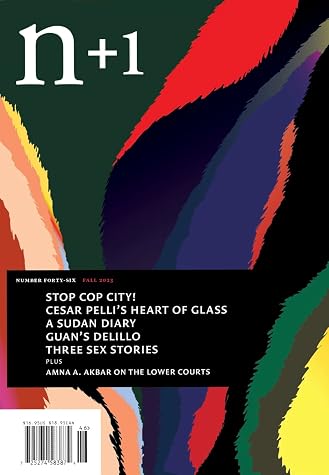
The artists of the Eighties acted fast. They had to: there would be no future otherwise. But in battling the retrograde Reaganite look of the System, they knew they were its bastards nonetheless. They took on organized religion by altering its iconography, not destroying it. Consensus uncoolness, delivered through media, was countered by coolness more media-fluent. Faced with dead forms, they formed live ones in their image. You, too, have become a zombie; all the more reason to dance better than the others. I’m a government man. I am chairman of the department of Hitler studies at the College-on-the-Hill. The evil Frank Booth, in Blue Velvet, looks straight at the camera: “You’re like me,” he says. You’re part of what you fight: it’s the acceptance of this fact that breathes a spirit of unsqueamishness, engagement, and humility—the beauty of a dark truth brought to light—into the best art of the flagrant Eighties.
The artists of the Eighties acted fast. They had to: there would be no future otherwise. But in battling the retrograde Reaganite look of the System, they knew they were its bastards nonetheless. They took on organized religion by altering its iconography, not destroying it. Consensus uncoolness, delivered through media, was countered by coolness more media-fluent. Faced with dead forms, they formed live ones in their image. You, too, have become a zombie; all the more reason to dance better than the others. I’m a government man. I am chairman of the department of Hitler studies at the College-on-the-Hill. The evil Frank Booth, in Blue Velvet, looks straight at the camera: “You’re like me,” he says. You’re part of what you fight: it’s the acceptance of this fact that breathes a spirit of unsqueamishness, engagement, and humility—the beauty of a dark truth brought to light—into the best art of the flagrant Eighties.
199
As if in compensation for how politics today amounts to little more than slow-mo sumo between liberal and reactionary capitalist parties, people have more access to great art than ever. The problem, however, is that we possess more Jack Gladneys than ever as well. Jack is a creature constituted by his insecurities, and neoliberalism means nothing if not insecurity for all. After many decades of the white man in America losing ground—in society quite slowly, in culture much faster—DeLillo’s latent archetype, his patient zero of American secular fascism, has spawned into real life, is becoming a nation of millions. Jack’s ludicrous symptoms, his ghoulish temptations now grow ever more common and prominent. His fantasies of a transcendent death, framed as the closing shots of a TV biography of Attila the Hun, are moronic; yet insipid holograms of a historical fantasy held up as glorious ideals (the Bronze Age, Tolkien, traditionalist Catholicism, the cold war) are intellectual currency in general circulation now. “Not everyone spoke English at the cash terminals, or near the fruit bins and frozen foods, or out among the cars in the lot”—coming from a late-middle-aged Hitler scholar terrified of his impending permanent demise, this already encapsulated, decades in advance, the future politics of neoliberal immigration. Jack’s unwarranted wariness in front of Asian kids, professionals, and industrial products is absurd; still, it presages all the envious, whinging hostility toward “the Chinese” typical of fascist ideologues today. (Why can’t we have an efficient dictator to battle theirs?) It’s beyond preposterous when Jack attempts to take shelter from his own inadequacies by kneeling at the image of a garrulous secular racist celebrity who’s also a historically proven, capital-L Loser. Fashioning facsimiles of cool through allusions to Nazi insignia. Reconciling liberty and structure through sadistic plots. Blending faith and secular identity in a materialist cult of personality. Hiding from death by inflicting it. It’s all too hysterical to make up real life, and still part of our world.
As if in compensation for how politics today amounts to little more than slow-mo sumo between liberal and reactionary capitalist parties, people have more access to great art than ever. The problem, however, is that we possess more Jack Gladneys than ever as well. Jack is a creature constituted by his insecurities, and neoliberalism means nothing if not insecurity for all. After many decades of the white man in America losing ground—in society quite slowly, in culture much faster—DeLillo’s latent archetype, his patient zero of American secular fascism, has spawned into real life, is becoming a nation of millions. Jack’s ludicrous symptoms, his ghoulish temptations now grow ever more common and prominent. His fantasies of a transcendent death, framed as the closing shots of a TV biography of Attila the Hun, are moronic; yet insipid holograms of a historical fantasy held up as glorious ideals (the Bronze Age, Tolkien, traditionalist Catholicism, the cold war) are intellectual currency in general circulation now. “Not everyone spoke English at the cash terminals, or near the fruit bins and frozen foods, or out among the cars in the lot”—coming from a late-middle-aged Hitler scholar terrified of his impending permanent demise, this already encapsulated, decades in advance, the future politics of neoliberal immigration. Jack’s unwarranted wariness in front of Asian kids, professionals, and industrial products is absurd; still, it presages all the envious, whinging hostility toward “the Chinese” typical of fascist ideologues today. (Why can’t we have an efficient dictator to battle theirs?) It’s beyond preposterous when Jack attempts to take shelter from his own inadequacies by kneeling at the image of a garrulous secular racist celebrity who’s also a historically proven, capital-L Loser. Fashioning facsimiles of cool through allusions to Nazi insignia. Reconciling liberty and structure through sadistic plots. Blending faith and secular identity in a materialist cult of personality. Hiding from death by inflicting it. It’s all too hysterical to make up real life, and still part of our world.