
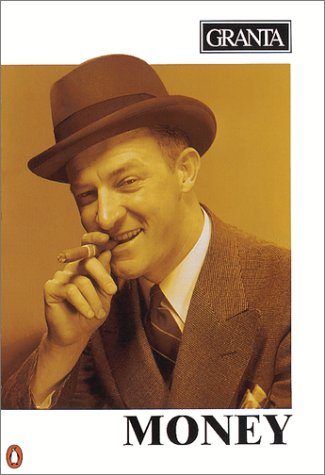
by
Granta
11
In fact the trouble I was having with ethics was that I’d never thought about them before–in any sense. I had opinions on almost every subject, could argue any position and believed in almost nothing. I grew up, not necessarily with the belief, but with the feeling powerfully impressed on me, that life was a question of surviving, of making it through, not getting caught. I wasn’t interested in politics. When people told me that England was, and always had been, in the throes of a class war to the death, I listened with a smile. I wasn’t waiting for a revolution. I was waiting for romantic love. My ideas of art and beauty came from Blake, Byron and Emily Brontë, not to mention the gorgeous third movement of Mahler’s Sixth Symphony, a recording of which I’d stolen from the public library. I was waiting for happiness, and at Cambridge I was happier than I’d ever been.
lol
In fact the trouble I was having with ethics was that I’d never thought about them before–in any sense. I had opinions on almost every subject, could argue any position and believed in almost nothing. I grew up, not necessarily with the belief, but with the feeling powerfully impressed on me, that life was a question of surviving, of making it through, not getting caught. I wasn’t interested in politics. When people told me that England was, and always had been, in the throes of a class war to the death, I listened with a smile. I wasn’t waiting for a revolution. I was waiting for romantic love. My ideas of art and beauty came from Blake, Byron and Emily Brontë, not to mention the gorgeous third movement of Mahler’s Sixth Symphony, a recording of which I’d stolen from the public library. I was waiting for happiness, and at Cambridge I was happier than I’d ever been.
lol
19
I had in fact stolen my first book when I was fourteen–a paperback edition of Dracula; the second was Nik Cohn’s Awopbopaloobopalapbamboom, the Paladin edition, a lovely thing with a Guy Peellart illustration of Elvis on the jacket. But now I couldn’t be stopped. I stole a first edition of Scoop–Waugh had done the jacket art himself–priced at seventy-five pounds by the Heffers second-hand and antiquarian department. I stole the sturdy and solemn-looking Yale edition of the works of Samuel Johnson, one volume at a time. I walked away with Heinemann firsts of Enderby Outside, Tremor of Intent and A Clockwork Orange. The Collected Poems of A. E. Housman, Cape, 1939, buckram-bound. A cased, Cassell edition of The Father Brown Stories. Harold Nicolson’s biography of George V; A. J .P. Taylor’s English History 1914–1945; Ian McEwen’s First Love, Last Rites; Crash by J. G. Ballard–those angular, oddly austere Cape jackets by Mon Mohan. I stole books every day. I went on expeditions first thing in the morning and again late in the afternoon, wearing a baggy jacket and marching out with books tucked in the armpit. The elegant John Murray edition of Byron’s correspondence–I stole two at a time, Byron being slimmer than Johnson. I stole the war memoirs of David Lloyd George, brick-heavy, but I thought I’d better give them a whirl. The Neville Spearman first of A Walk on the Wild Side by Nelson Algren was daftly underpriced at twenty-five pence on one of the stalls in the Market Square. I stole it anyway. I made the acquaintance of Saul Bellow, Norman Mailer, Philip Roth in the shape of various firsts stolen from all over town. I stole first editions of John Stuart Mill’s autobiography, Bleak House by Dickens and Ariel by Sylvia Plath. Black Mischief, an old Chapman & Hall first, no dust-jacket, but handsome with mottled brown boards. A 1788 three-volume reprint of Johnson’s Rambler essays, leather-bound, black, with gilt lettering. I loved those things. I stole Webster’s Collegiate Thesaurus. The First Raymond Chandler Omnibus (Hamish Hamilton). Finnegans Wake. The Penguin P. G. Wodehouse novels, a rare excursion into paperback because I liked the artwork. Nabokov’s Ada, Lolita and The Gift, as well as the four hardback volumes of his annotated translation of Eugene Onegin, boldly boosted in a Routledge boxed set from Bowes & Bowes.
damn lol
I had in fact stolen my first book when I was fourteen–a paperback edition of Dracula; the second was Nik Cohn’s Awopbopaloobopalapbamboom, the Paladin edition, a lovely thing with a Guy Peellart illustration of Elvis on the jacket. But now I couldn’t be stopped. I stole a first edition of Scoop–Waugh had done the jacket art himself–priced at seventy-five pounds by the Heffers second-hand and antiquarian department. I stole the sturdy and solemn-looking Yale edition of the works of Samuel Johnson, one volume at a time. I walked away with Heinemann firsts of Enderby Outside, Tremor of Intent and A Clockwork Orange. The Collected Poems of A. E. Housman, Cape, 1939, buckram-bound. A cased, Cassell edition of The Father Brown Stories. Harold Nicolson’s biography of George V; A. J .P. Taylor’s English History 1914–1945; Ian McEwen’s First Love, Last Rites; Crash by J. G. Ballard–those angular, oddly austere Cape jackets by Mon Mohan. I stole books every day. I went on expeditions first thing in the morning and again late in the afternoon, wearing a baggy jacket and marching out with books tucked in the armpit. The elegant John Murray edition of Byron’s correspondence–I stole two at a time, Byron being slimmer than Johnson. I stole the war memoirs of David Lloyd George, brick-heavy, but I thought I’d better give them a whirl. The Neville Spearman first of A Walk on the Wild Side by Nelson Algren was daftly underpriced at twenty-five pence on one of the stalls in the Market Square. I stole it anyway. I made the acquaintance of Saul Bellow, Norman Mailer, Philip Roth in the shape of various firsts stolen from all over town. I stole first editions of John Stuart Mill’s autobiography, Bleak House by Dickens and Ariel by Sylvia Plath. Black Mischief, an old Chapman & Hall first, no dust-jacket, but handsome with mottled brown boards. A 1788 three-volume reprint of Johnson’s Rambler essays, leather-bound, black, with gilt lettering. I loved those things. I stole Webster’s Collegiate Thesaurus. The First Raymond Chandler Omnibus (Hamish Hamilton). Finnegans Wake. The Penguin P. G. Wodehouse novels, a rare excursion into paperback because I liked the artwork. Nabokov’s Ada, Lolita and The Gift, as well as the four hardback volumes of his annotated translation of Eugene Onegin, boldly boosted in a Routledge boxed set from Bowes & Bowes.
damn lol
21
In the Cambridge market square, there was an old brass fountain, tarnished with age and gummed up with drinking straws and cigarette butts and always smelling of urine. Drunks lolled on its steps, cradling tins of Carlsberg Special Brew or bottles of Anglia Sherry. The story was that one of them was a former don, an eccentric figure with his paunch and wild, grey hair and one of those plaid American hunting caps with the flaps at the sides. He was always shaking, as if shivering away some attack, or perhaps it was the DTs. Reputedly he’d been a brilliant philosophy lecturer, the protégé of Wittgenstein himself. Now, for the price of a pint, the master’s one-time heir would recite the first five pages of Tractatus-Logico-Philosophicus.
I believed the story while finding it at the same time utterly unfeasible. I didn’t see how anyone could snap so absolutely: at least I wouldn’t. The world was there to be conquered, if you were any good. Failure could be handled, indeed must be handled; as Noël Coward had said, success was merely the infinite capacity for dealing with it. I was against moral slipping or any seepage of morale. I didn’t believe in leaky boats.
I owed the college £652.75.
In the Cambridge market square, there was an old brass fountain, tarnished with age and gummed up with drinking straws and cigarette butts and always smelling of urine. Drunks lolled on its steps, cradling tins of Carlsberg Special Brew or bottles of Anglia Sherry. The story was that one of them was a former don, an eccentric figure with his paunch and wild, grey hair and one of those plaid American hunting caps with the flaps at the sides. He was always shaking, as if shivering away some attack, or perhaps it was the DTs. Reputedly he’d been a brilliant philosophy lecturer, the protégé of Wittgenstein himself. Now, for the price of a pint, the master’s one-time heir would recite the first five pages of Tractatus-Logico-Philosophicus.
I believed the story while finding it at the same time utterly unfeasible. I didn’t see how anyone could snap so absolutely: at least I wouldn’t. The world was there to be conquered, if you were any good. Failure could be handled, indeed must be handled; as Noël Coward had said, success was merely the infinite capacity for dealing with it. I was against moral slipping or any seepage of morale. I didn’t believe in leaky boats.
I owed the college £652.75.
62
Back in the early sixties, when I first started out, insolvency spelt glamour. It was OK to be broke – more than OK, since money was well-known to be the super-foe of books. It was Mammon v. the Muses: take your pick. In those days, if a writer owned up to caring about money, he was instantly branded a dud. ‘He’s got a what? A mortgage? Well, I have to say I always had my doubts. I mean, his line-breaks did seem a bit arbitrary.‘ The avowed aim was to treat money rather as money seemed likely to treat us: with altitudinous contempt.
heh
Back in the early sixties, when I first started out, insolvency spelt glamour. It was OK to be broke – more than OK, since money was well-known to be the super-foe of books. It was Mammon v. the Muses: take your pick. In those days, if a writer owned up to caring about money, he was instantly branded a dud. ‘He’s got a what? A mortgage? Well, I have to say I always had my doubts. I mean, his line-breaks did seem a bit arbitrary.‘ The avowed aim was to treat money rather as money seemed likely to treat us: with altitudinous contempt.
heh
63
There was, then, a near-priestly kind of romance in the idea that a high-purposed literary career would be profitless, at least in terms of cash. Here was the Thorny Way, the way of deprivation. And for a period, I went along with this, nose in the air. At the same time, though, I knew I could handle only so much deprivation. That painting of the dead Chatterton sprawled on his pallet never made me want to be like him. Nor, come to that, did I want to be like Keats and Shelley. And the then-recent cult of Dylan Thomas left me cold. Thomas’s whipped-dog act when he was cadging the price of his next drink seemed horribly demeaning. And look at the way he carried on when he had swallowed his next drink: all that intoning-from-above, that bardic blethering. He too was like a priest. He seemed to think the world owed him a living.
With attitudes like these, I was clearly in something of a fix. On the one hand, it was contemptible to have a mortgage; on the other, a fellow ought to be able to pay for the next round. What did that leave? It left the Cobbled Way, the way of compromise. And my compromise was to start up a small poetry magazine. How better to reconcile the importunities of art and commerce?
There was, then, a near-priestly kind of romance in the idea that a high-purposed literary career would be profitless, at least in terms of cash. Here was the Thorny Way, the way of deprivation. And for a period, I went along with this, nose in the air. At the same time, though, I knew I could handle only so much deprivation. That painting of the dead Chatterton sprawled on his pallet never made me want to be like him. Nor, come to that, did I want to be like Keats and Shelley. And the then-recent cult of Dylan Thomas left me cold. Thomas’s whipped-dog act when he was cadging the price of his next drink seemed horribly demeaning. And look at the way he carried on when he had swallowed his next drink: all that intoning-from-above, that bardic blethering. He too was like a priest. He seemed to think the world owed him a living.
With attitudes like these, I was clearly in something of a fix. On the one hand, it was contemptible to have a mortgage; on the other, a fellow ought to be able to pay for the next round. What did that leave? It left the Cobbled Way, the way of compromise. And my compromise was to start up a small poetry magazine. How better to reconcile the importunities of art and commerce?
93
AAs a child and teenager, I had little to do with money. I was educated on scholarships and state hand-outs and the kindness of strange adults, and this money passed over my head. I started thinking seriously about money only in 1978, in the city of Jeddah on the Red Sea.
I had come to Jeddah to delay my induction into the money society at home, to postpone the passage into adulthood.
I had got a job working at a newspaper I’ll call the Saudi News. It was in a plywood building at the end of the airport runway. The newspaper, the building and the airport have all since vanished, for they were embarrassing physical reminders of an earlier age in Saudi history, the years before 1973, before money. The quadruple rise in the price of crude oil at the end of that year had detonated the world’s trading system, and money was streaming into Saudi Arabia as nowhere and never before, trailing its usual baggage of power and influence. The burden of history had passed to a few pale, fat men gliding like phantoms at noon into their Lincolns. The Muslim civilizations of Egypt and India, with their ancient architecture and worldly cultures, had become worthless; Europeans and Americans waited for days in the ante-rooms of dozing assistant deputy under-secretaries of state; the British, who had once set up and knocked down these princelings, wheedled and bribed with the best of them.
cool
AAs a child and teenager, I had little to do with money. I was educated on scholarships and state hand-outs and the kindness of strange adults, and this money passed over my head. I started thinking seriously about money only in 1978, in the city of Jeddah on the Red Sea.
I had come to Jeddah to delay my induction into the money society at home, to postpone the passage into adulthood.
I had got a job working at a newspaper I’ll call the Saudi News. It was in a plywood building at the end of the airport runway. The newspaper, the building and the airport have all since vanished, for they were embarrassing physical reminders of an earlier age in Saudi history, the years before 1973, before money. The quadruple rise in the price of crude oil at the end of that year had detonated the world’s trading system, and money was streaming into Saudi Arabia as nowhere and never before, trailing its usual baggage of power and influence. The burden of history had passed to a few pale, fat men gliding like phantoms at noon into their Lincolns. The Muslim civilizations of Egypt and India, with their ancient architecture and worldly cultures, had become worthless; Europeans and Americans waited for days in the ante-rooms of dozing assistant deputy under-secretaries of state; the British, who had once set up and knocked down these princelings, wheedled and bribed with the best of them.
cool
98
At about this time, a further change came over my life. The money from Jeddah began to breed, convulsively. While I slept, or was drunk, or made love, or smoked a Benson on the porch, my money worked and, as far as I could tell, for greater reward than I did. I felt a regret: the lightness which comes with empty pockets, the airy, tremulous sense of self which had been mine throughout my teens, the alienation from even the fabric of commercial society, its street corners and bullying office blocks and lighted shops, was now lost to me, possibly for ever. I felt obscurely disabled. It was as if the subject of my enquiry, while relieving me of labour and care, were also mocking me.
In analysing this new situation, I thought perhaps there was some quality about my labour from 1978 to 1980, some particular virtue that gave it uncommon power in commanding the labour of others. I once accosted a man in the South Seas who was planting some taro root; he told me that this action, which took up a full twenty minutes of a rainy morning, was enough to keep his family in food and grog and cash for a year. No doubt at the depths of every rentier’s existence, from duke to retiree, there is the faint shadow cast by some dead labour, but it is lost in the glitter of possession and present income.
At about this time, a further change came over my life. The money from Jeddah began to breed, convulsively. While I slept, or was drunk, or made love, or smoked a Benson on the porch, my money worked and, as far as I could tell, for greater reward than I did. I felt a regret: the lightness which comes with empty pockets, the airy, tremulous sense of self which had been mine throughout my teens, the alienation from even the fabric of commercial society, its street corners and bullying office blocks and lighted shops, was now lost to me, possibly for ever. I felt obscurely disabled. It was as if the subject of my enquiry, while relieving me of labour and care, were also mocking me.
In analysing this new situation, I thought perhaps there was some quality about my labour from 1978 to 1980, some particular virtue that gave it uncommon power in commanding the labour of others. I once accosted a man in the South Seas who was planting some taro root; he told me that this action, which took up a full twenty minutes of a rainy morning, was enough to keep his family in food and grog and cash for a year. No doubt at the depths of every rentier’s existence, from duke to retiree, there is the faint shadow cast by some dead labour, but it is lost in the glitter of possession and present income.
99
In this, I was fortunate. The disesteem of money, symbolized by inflation, existed alongside a new and exaggerated esteem for money. In Britain, Germany, the states of central Europe, Russia, Latin America–indeed, everywhere I went, but particularly in Britain–money was quickly displacing all other psychological goals. Duty, religion, public service, liberty, equality, justice or aristocracy, the cultural flesh that clothed the bones of money for those that possessed it, all became suspect: only money, it seemed, was to be trusted. In Britain, at least, this undoubtedly had to do with the frustrations of those dynamic social groups– young people, immigrants, women–who had had it up to here with the senile prattle of a society they thought ripe for the boneyard. In Russia and Eastern Europe, money took on the character of emancipation and modernity more comprehensively than even the early paper money of the United States or the first issues of assignats in revolutionary Paris: it was Dostoevsky, after all, who described money as ‘coined liberty’, and in the Manifesto of the Communist Party of 1848, Marx and Engels showed a healthy respect for capitalism:
The bourgeoisie, by the rapid improvement of all instruments of production, by the immensely facilitated means of communication, draws all, even the most barbarian, nations into civilization. The cheap prices of its commodities are the heavy artillery with which it batters down all Chinese walls, with which it forces the barbarians’ intensely obstinate hatred of foreigners to capitulate.
Only money could measure success or failure, happiness or misery. Only money could reward or punish. States and governments must just stand back, and money–which contains all knowledge and reconciles all clashes of human will–would see us right. Money was good.
In this, I was fortunate. The disesteem of money, symbolized by inflation, existed alongside a new and exaggerated esteem for money. In Britain, Germany, the states of central Europe, Russia, Latin America–indeed, everywhere I went, but particularly in Britain–money was quickly displacing all other psychological goals. Duty, religion, public service, liberty, equality, justice or aristocracy, the cultural flesh that clothed the bones of money for those that possessed it, all became suspect: only money, it seemed, was to be trusted. In Britain, at least, this undoubtedly had to do with the frustrations of those dynamic social groups– young people, immigrants, women–who had had it up to here with the senile prattle of a society they thought ripe for the boneyard. In Russia and Eastern Europe, money took on the character of emancipation and modernity more comprehensively than even the early paper money of the United States or the first issues of assignats in revolutionary Paris: it was Dostoevsky, after all, who described money as ‘coined liberty’, and in the Manifesto of the Communist Party of 1848, Marx and Engels showed a healthy respect for capitalism:
The bourgeoisie, by the rapid improvement of all instruments of production, by the immensely facilitated means of communication, draws all, even the most barbarian, nations into civilization. The cheap prices of its commodities are the heavy artillery with which it batters down all Chinese walls, with which it forces the barbarians’ intensely obstinate hatred of foreigners to capitulate.
Only money could measure success or failure, happiness or misery. Only money could reward or punish. States and governments must just stand back, and money–which contains all knowledge and reconciles all clashes of human will–would see us right. Money was good.
138
I once asked my boss if we shouldn’t be out helping the poor and the sick, rather than searching for the meaning of a dot inside a bug that was almost too small to see.
‘The poor and the sick will always be with us,’ he said, ‘but we will change the way people think about the world.’
He had a point, I suppose. But when I looked around me and saw a lab full of people muttering recondite gene-speak under their breath like prayers, it all began to seem very strange.
I once asked my boss if we shouldn’t be out helping the poor and the sick, rather than searching for the meaning of a dot inside a bug that was almost too small to see.
‘The poor and the sick will always be with us,’ he said, ‘but we will change the way people think about the world.’
He had a point, I suppose. But when I looked around me and saw a lab full of people muttering recondite gene-speak under their breath like prayers, it all began to seem very strange.
157
Our group of Americans looked up to this man, but I don’t know how he felt about us. He told us, perhaps only partly in jest, that they talk about two kinds of Aids in Uganda: slim Aids and fat Aids. People with slim Aids get thinner and thinner and thinner until they finally waste away. Fat Aids afflicts doctors and bureaucrats who get enormous research grants and fly around the world to exotic places and get fatter and fatter and fatter. Fat Aids has become so common in Uganda, he told us, that if you say you are working on HIV people think you are a thief.
Our group of Americans looked up to this man, but I don’t know how he felt about us. He told us, perhaps only partly in jest, that they talk about two kinds of Aids in Uganda: slim Aids and fat Aids. People with slim Aids get thinner and thinner and thinner until they finally waste away. Fat Aids afflicts doctors and bureaucrats who get enormous research grants and fly around the world to exotic places and get fatter and fatter and fatter. Fat Aids has become so common in Uganda, he told us, that if you say you are working on HIV people think you are a thief.