
project/stunt-story
Jennifer Egan,
Percival Everett,
James Salter,
Miranda July,
Vladimir Nabokov,
Ingmar Bergman,
Mavis Gallant,
Clifford Odets,
Jenny Erpenbeck,
Jay McInerney

I recall you within a chance patch of sunlight. You had sharp elbows and pale, dusty-looking eyes. When you spoke, you would carve the air with the riblike edge of your little hand and the glint of a bracelet on your thin wrist. Your hair would melt as it merged with the sunlit air that quivered around it. You smoked copiously and nervously. You exhaled through both nostrils, obliquely flicking off the ash. Your dove-gray manor was five versts from ours. Its interior was reverberant, sumptuous, and cool. A photograph of it had appeared in a glossy metropolitan magazine. Almost every morning, I would leap onto the leather wedge of my bicycle and rustle along the path, through the woods, then along the highway and through the village, then along another path toward you. You counted on your husband’s not coming in September. And we feared nothing, you and I—not your servants’ gossip, not my family’s suspicions. Each of us, in a different way, trusted fate.
ahhh
[just the style, a little bit, not the content, though this is more disaffected than i want stunt to be]
In your misty bedroom, the sunlight, having penetrated the lowered Venetian blinds, formed two golden ladders on the floor. You said something in your muted voice. Outside the window, the trees breathed and dripped with a contented rustle. And I, smiling at that rustle, lightly and unavidly embraced you.
When we had left the village, crossed the bridge, and were climbing the path toward your house, I took you under the elbow, and you flashed that special sidelong smile that told me you were happy. Suddenly I had the desire to tell you about Pal Palych’s little wrinkles, about the spangled St. Isaac’s, but, as soon as I began, I had a feeling the wrong words were coming out, bizarre words, and when you tenderly said, “Decadent,” I changed the subject. I knew what you needed: simple feelings, simple words. Your silence was effortless and windless, like the silence of clouds or plants. All silence is the recognition of a mystery. There was much about you that seemed mysterious.
I looked you straight in the face. I looked with all my soul, directly. I collided with you. Your eyes were limpid, as if a pellicle of silken paper had fluttered off them—the kind that sheathes illustrations in precious books. And, for the first time, your voice was limpid too. “You know what I’ve decided? Listen. I cannot live without you. That’s exactly what I’ll tell him. He’ll give me a divorce right away. And then, say in the fall, we could …”
I interrupted you with my silence. A spot of sunlight slid from your skirt onto the sand as you moved slightly away.
What could I say to you? Could I invoke freedom, captivity, say I did not love you enough? No, that was all wrong.
An instant passed. During that instant, much happened in the world: somewhere a giant steamship went to the bottom, a war was declared, a genius was born. The instant was gone.
[...] regardless of what happened to me or to her, in between, we never discussed anything, as we never thought of each other during the intervals in our destiny, so that when we met the pace of life altered at once, all its atoms were recombined, and we lived in another, lighter time-medium, which was measured not by the lengthy separations but by those few meetings of which a short, supposedly frivolous life was thus artificially formed. And with each new meeting I grew more and more apprehensive; no—I did not experience any inner emotional collapse, the shadow of tragedy did not haunt our revels, my married life remained unimpaired, while on the other hand her eclectic husband ignored her casual affairs although deriving some profit from them in the way of pleasant and useful connections. I grew apprehensive because something lovely, delicate, and unrepeatable was being wasted: something which I abused by snapping off poor bright bits in gross haste while neglecting the modest but true core which perhaps it kept offering me in a pitiful whisper. I was apprehensive because, in the long run, I was somehow accepting Nina’s life, the lies, the futility, the gibberish of that life. Even in the absence of any sentimental discord, I felt myself bound to seek for a rational, if not moral, interpretation of my existence, and this meant choosing between the world in which I sat for my portrait, with my wife, my young daughters, the Doberman pinscher (idyllic garlands, a signet ring, a slender cane), between that happy, wise, and good world … and what? Was there any practical chance of life together with Nina, life I could barely imagine, for it would be penetrated, I knew, with a passionate, intolerable bitterness and every moment of it would be aware of a past, teeming with protean partners. No, the thing was absurd. And moreover was she not chained to her husband by something stronger than love—the staunch friendship between two convicts? Absurd! But then what should I have done with you, Nina, how should I have disposed of the store of sadness that had gradually accumulated as a result of our seemingly carefree, but really hopeless meetings?
aaaahhh. this one lodges deep in my soul

He had seen Caro from a distance and altered his course to intersect. Had observed, as he drew near, that her walk turned the progress of other women to a thump or shuffle. He would have said her delicate dark strength was virile--a sombre glow that might distinguish some young man. He remembered dark, vigorous young men who kept somewhat to themselves, yet retained this vibrancy of adventure. Then he thought how such youths often ended feebly, how quickly they grew sour or cautious, or became the foils of bitter women--their energies turned to blame or bluster, their pride morose. He had already seen that; and supposed that in the case of women such beings dwindled entirely, or at most passed some shred of their lost impetus to children.
Paul Ivory had also noted penalties of impulse. Had seen how men provide themselves, before their taste or character is formed, with wife and children--committed and condemned thereafter to the fixtures of an outgrown fancy. He was satisfied his own prospective marriage would preclude such dangers. An accusation of dispassion would not have troubled him. He was not convinced that passion was essential, or that the world had properly defined it.
the description of her
"Or the best." He smiled. His hound-face had lines, at eyelids and mouth, that were now at rest but might be put to use. His dark hair, greying, fell loose over his forehead. His body, too heavy and indolent for the precise little chair, was that of an active man who had taught himself to wait: an incongruous patience that could trouble those who wondered what might be restrained. He said, "Men go through life telling themselves a moment must come when they will show what they're made of. And the moment comes, and they do show. And they spend the rest of their days explaining that it was neither the moment nor the true self."
She took up a parched sandwich whose lifting corners bared a scaled sardine. She left the tough crusts with the half-gherkin on her plate. When they went out the man at the bar looked at her openly, tenderly, ignoring Christian's claim or seeing through it.
In the street Christian said, "You had an admirer in there." He did not mean himself.
"Yes."
Having drawn the man to her attention, he was displeased to find she had seen him. In no time obviously she will take up with someone else. You iron your hair, you nickname God's creatures, go thy ways.
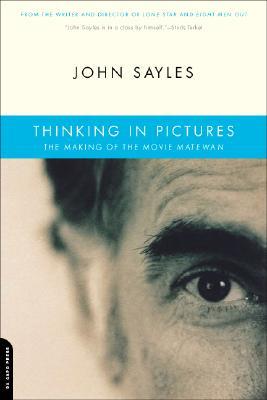
Nowhere in movie-making is the balance between practical concerns and creative process more in evidence than in production scheduling. Even large-budget movies have to make compromises here. Movies are rarely shot in sequence, though that would seem best for the actors. Instead, an actor may do his death scene in the first week of production, get married in the fourth and meet his future wife in the eighth. On low-budget features this is usually done without the benefit of rehearsal before shooting starts (since the Screen Actors Guild requires that actors be paid for rehearsal time).
lol

Prince (suddenly turning, hand on door knob, pointing his cane at Stark and lowering his voice to a near whisper): Iceberg, listen ... why don't you come up and see the world, the sea gulls and the ships to Europe? (Coming back into the room.) When did you look at another woman last? The year they put the buffalo nickel on the market? Why don't you suddenly ride away, an airplane, a boat! Take a rocket to the moon! Explode! What holds you back? You don't want to hurt Belle's feelings? You'll die soon enough --
Stark: I'll just have to laugh at that!
Prince: Laugh ... But make a motto for yourself: "Out of the coffin by Labor Day!" Have an affair with -- with -- with this girl ... this Miss Cleo. She'll make you a living man again.