
project/stunt-story
Jennifer Egan,
Percival Everett,
James Salter,
Miranda July,
Vladimir Nabokov,
Ingmar Bergman,
Mavis Gallant,
Clifford Odets,
Jenny Erpenbeck,
Jay McInerney

One night, as he left the Doctors’ Club with his partner – a civil servant – he was unable to hold back any more and said:
‘If you only knew what an enchanting woman I met in Yalta!’
The civil servant climbed into his sledge and drove off. But then he suddenly turned round and called out:
‘Dmitry Dmitrich!’
‘What?’
‘You were right the other day – the sturgeon was off!’
This trite remark for some reason suddenly nettled Gurov, striking him as degrading and dirty. What barbarous manners, what faces! What meaningless nights, what dismal, unmemorable days! Frenetic card games, gluttony, constant conversations about the same old thing. Those pointless business affairs and perpetual conversations – always on the same theme – were commandeering the best part of his time, his best strength, so that in the end there remained only a limited, humdrum life, just trivial nonsense. And it was impossible to run away, to escape – one might as well be in a lunatic asylum or a convict squad!

First sighting: tall, proud, shapely, with very black hair and a white dress; suave, elegant, warm and educated. Accompanied by a tall, proud, athletic, elegant and educated man. They came into the place where I worked, in the period following the episode with the green-eyed girl – the period of films, books, alcohol and prostitutes. We talked for a while, and after they left, my business partner and I fell silent, looking at the place where she’d stood. My business partner was having a mild attack of asthma. As the minutes went by, the invisible pedestal holding her aloft grew higher and higher without us noticing. After a while, my business partner and I dared to exchange a glance. Then we looked up and down but with our chins tilted a little to the right, somewhere between nodding and shaking our heads, our lower lips pushed slightly forward to simulate disappointment. What a shame, we were trying to say to each other, that a woman like that could never be ours. In the days that followed, we began to reminisce about her out loud. My business partner, who was very observant, or had an overactive imagination, always added some new detail I’d overlooked or forgotten: the tasteful patterning on her embossed belt, how well the strip of white wool peeping over the top of her dainty leather boots suited her, or the lock of jet-black hair nestling behind her left ear. And after a few more days we’d forgotten her, at least to a certain extent.
How can we say whether anything’s good or bad for us? Are we capable of judging an ordinary event, sure of not being mistaken? [...]

Sometimes I really feel the loss of everything and everyone concerned. I understand what Fellini means when he says filming to him is a way of life and I also understand his little story about Anita Ekberg. Her last scene in La Dolce Vita took place in a car erected in the studio. When the scene had been taken and filming was over as far as she was concerned, she started crying and refused to leave the car, gripping firmly onto the wheel. She had to be carried out of the studio with gentle force.
Sometimes there is a special happiness in being a film director. An unrehearsed expression is born just like that, and the camera registers that expression. That was exactly what happened that day. Unprepared and unrehearsed, Alexander turned very pale, a look of sheer agony appearing on his face. The camera registered the moment. The agony, the intangible, was there for a few seconds and never returned. Neither was it there earlier, but the strip of film caught the moment. That is when I think days and months of predictable routine have paid off. It is possible I live for those brief moments.
Like a pearl fisher.
Film as dream, film as music. No form of art goes beyond ordinary consciousness as film does, straight to our emotions, deep into the twilight room of the soul. A little twitch in our optic nerve, a shock effect: twenty-four illuminated frames a second, darkness in between, the optic nerve incapable of registering darkness. At the editing table, when I run the strip of film through, frame by frame, I still feel that dizzy sense of magic of my childhood: in the darkness of the wardrobe, I slowly wind on one frame after another, see the almost imperceptible changes, wind faster —a movement.
I didn’t know what was happening. Gun was four months’ pregnant. I behaved like a jealous child. She was alone, deserted. There are moving pictures with sound and light which never leave the projector of the soul but run in loops throughout life with unchanging sharpness, unchanging objective clarity. Only one’s own insight inexorably and relentlessly moves inwards towards the truth.
ahhhhh
Suddenly she took off her concealing sunglasses and said, ‘This is what I look like, Mr Bergman.’ Her smile was swift and dazzling, teasing.
It is hard to say whether great myths are unremittingly magical because they are myths or whether the magic is an illusion, created by us consumers; but at that particular instant there was no doubt. In the half-light in that cramped room, her beauty was imperishable. If she had been an angel from one of the gospels, I would have said her beauty floated about her. It existed like a vitality around the big pure features of her face, her forehead, the intersection of her eyes, the nobly-shaped chin, the sensitivity of her nostrils. She immediately registered my reaction, was exhilarated and started talking about her work on Selma Lagerlof’s Gosta Berling’s Saga.
he's very harsh on her later on in this section but i do like this paragraph
The truth in our interpretations is bound by time. Our theatre productions do indeed disappear into merciful obscurity. But individual moments of greatness or misery are still illuminated by a mild light. And the films still exist and bear witness to the cruel fickleness of artistic truth. A few steles rise above the crushed pebbles.
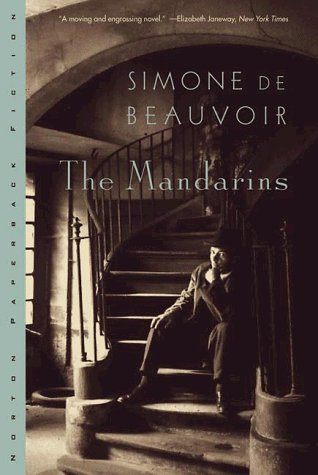
When Henri opened his eyes, he saw, in the half light of dawn, a pale-green tufted wall. The happiness of being alive on this morning made his heart jump with joy. It called for brisk, salty pleasures - cold water, a rough bath glove. He slipped out of bed without awakening Josette, and when he came out of the bathroom, washed, dressed, and starving, she was still asleep. He crossed the room on tiptoe and bent over her; she was lying there wrapped in her dampness, in her fragrance, with her bright locks flowing over her eyes, and he felt wonderfully happy to have that woman for himself, and to be a man. She half-opened an eye, just one, as if she were trying to retain her sleep in the other.

Nothing whatever had been agreed upon between us, but when the carriage turned into the park I could not refrain from getting out, perhaps simply because I did not want to drive up to the house like any stranger. Summer was already at its height. I headed into one of the side paths and toward a laburnum tree. And there was Abelone. Beautiful, beautiful Abelone.
I shall never forget how it was when you looked at me. How you wore that gaze of yours, holding it up, like something that was not fixed, upon your back-tilted face.
Ah, did not the climate change at all, did it not grow milder round about Ulsgaard with all our warmth? Do not certain roses bloom longer in the park now, even in December?
I shall tell nothing about you, Abelone. Not because we deluded one another: since you loved someone, even then, whom you have never forgotten, you lover, and I loved all women; but because only wrong is done in the telling.
<3

Okay to switch the final two scenes? Because Ray had a hard out at three. Settlement meeting with divorce attorneys.
Lynn had sprained her wrist skateboarding—could costume come up with some way to hide the wrist guard?
The twins’ mother was complaining that the wigs were digging into their scalps—did we have the budget to replace?
Everyone looked to Carter, awaiting Daddy’s guidance.
Eight years in, Carter knew this little dance: when to flatter, when to discipline, how to calm the daily tantrums. How did they even function in their actual lives without him around?
When he started to speak, the gathered crowd got quiet, reverent.
“Yes,” Carter said, “switch the scenes. Tell Ray no more wives.”
(Pause for laughter.)
lol