
project/stunt-story
Jennifer Egan,
Percival Everett,
James Salter,
Miranda July,
Vladimir Nabokov,
Ingmar Bergman,
Mavis Gallant,
Clifford Odets,
Jenny Erpenbeck,
Jay McInerney

Yet each disappointment Ted felt in his wife, each incremental deflation, was accompanied by a seizure of guilt; many years ago, he had taken the passion he felt for Susan and folded it in half, so he no longer had a drowning, helpless feeling when he glimpsed her beside him in bed: her ropy arms and soft, generous ass. Then he’d folded it in half again, so when he felt desire for Susan, it no longer brought with it an edgy terror of never being satisfied. Then in half again, so that feeling desire entailed no immediate need to act. Then in half again, so he hardly felt it. His desire was so small in the end that Ted could slip it inside his desk or a pocket and forget about it, and this gave him a feeling of safety and accomplishment, of having dismantled a perilous apparatus that might have crushed them both. Susan was baffled at first, then distraught; she’d hit him twice across the face; she’d run from the house in a thunderstorm and slept at a motel; she’d wrestled Ted to the bedroom floor in a pair of black crotchless underpants. But eventually a sort of amnesia had overtaken Susan; her rebellion and hurt had melted away, deliquesced into a sweet, eternal sunniness that was terrible in the way that life would be terrible, Ted supposed, without death to give it gravitas and shape. He’d presumed at first that her relentless cheer was mocking, another phase in her rebellion, until it came to him that Susan had forgotten how things were between them before Ted began to fold up his desire; she’d forgotten and was happy—had never not been happy—and while all of this bolstered his awe at the gymnastic adaptability of the human mind, it also made him feel that his wife had been brainwashed. By him.
You must be logged in to see this comment.

I stood holding the note with that funny little abandoned feeling one gets a million times a day in a domestic setting. I could have cried, but why? It’s not like I need to dish with my husband about every little thing; that’s what friends are for. Harris and I are more formal, like two diplomats who aren’t sure if the other one has poisoned our drink. Forever thirsty but forever wanting the other one to take the first sip.
I sat in the car while he filled the tank and a young man cleaned my windshield, which was unnecessary but I guessed part of the service. The guy with the squeegee had a Huckleberry Finn/Gilbert Blythe look that I used to flip out over as a teenager but with more closely cropped hair and a downy little mustache that kind of ruined the effect. He was sliding the rubber edge across the glass with long, sure, steady strokes. It was hypnotic, like being bathed. I fell into a sort of lazy trance and for this reason I was slow to realize we had made eye contact. How embarrassing. But to look away would make it seem as if I cared what this person thought—he should look away. He didn’t, so we remained locked together like this as he made his way down the window. In moments he seemed to be smiling faintly at our predicament and at other times he grew deeply serious, as if this thing between us was no joke. And I could feel my own face mirroring his, sunny and then somber, grave. I felt a little disoriented. What had I gotten myself into? Would this never end? And at the same time I had a growing anxiety about the end. I feared it would be too abrupt or that I would somehow be unprepared. It took a long time for me to notice the earbuds in his ears. He was listening to something, that’s why the serious then smiling face. Probably a podcast. Could he even really see me through the glass? No, the way the light hit it made that impossible; I was just a dark shape. No matter. I’d already forgotten him by the time I pulled back onto the freeway.
You must be logged in to see this comment.
I drove to Fontana’s listening to Portishead at a very loud volume. This had been my main album in the midnineties when my ex-girlfriend and ex–best friend were living together in the apartment next door to me and loudly consummating their new love. The lovemaking involved some kind of hitting followed by a hoarse uh. It was a kind of arousal that I hadn’t experienced—I’d never been hit, I’d never gone uh. When they had sex like this I’d put on my Walkman and listen to Portishead and try to imagine a time when this would all just be a funny story. Now was that time. My young agony was the funny part; it made me smile as I drove. Twenty years ago I’d been in my twenties; twenty years from now I’d be in my sixties. I was no closer to being sixty-five than twenty-five, but since time moved forward, not backward, sixty-five was tomorrow and twenty-five was moot. I didn’t think a lot about death, but I was getting ready to. I understood that death was coming and that all my current preoccupations were kind of naïve; I still operated as if I could win somehow. Not the vast and total winning I had hoped for in the previous decades, but a last chance to get it together before winter came, my final season.
But this was no good, this line of thought. This was the thinking that had kept every woman from her greatness. There did not have to be an answer to the question why; everything important started out mysterious and this mystery was like a great sea you had to be brave enough to cross. How many times had I turned back at the first ripple of self-doubt? You had to withstand a profound sense of wrongness if you ever wanted to get somewhere new. So far each thing I had done in Monrovia was guided by a version of me that had never been in charge before. A nitwit? A madwoman? Probably. But my more seasoned parts just had to be patient, hold their tongues—their many and sharp tongues—and give this new girl a chance.
does the girl in stunt think this?
“Okay, here’s my take,” she said. “Just ride it out. A lot of women destroy their lives in their forties and then one day they wake up with no periods and no partner and only themselves to blame.”
That had the ring of truth to it.
“So, you think I should just smooth things over?”
“I know that’s not the hip thing to say, but yes.”
“I don’t know if I”—I gasped—“can physically do that. Swallow my desires like that.”
Cassie sighed.
“Remember the Simone de Beauvoir quote,” she said, “ ‘You can’t have everything you want but you can want everything you want.’ ”
You must be logged in to see this comment.

I sat at the bar and had a scotch. The ashtray in front of me was full of pared fingernails. I was on the third drink when she arrived. The way she walked made her skirt sway lightly across her legs and I felt lucky and full of improvisation, a nice loose music in my head, and I knew the auto mechanics were watching her but not with sludge and crankcase lust; rather with a small joy, I thought, a tiny leap of flesh, the light lucky feeling of seeing a pretty girl with bare legs walking across a room behind a smile that says she likes being a woman being watched. I tried not to look so pleased. She glanced at my drink and asked for the same.
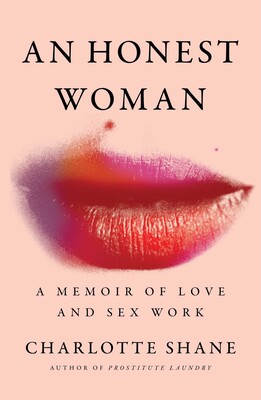
In retrospect, it was laughable for me to entertain the possibility that he would want to leave her for me after the diagnosis, since that was when he needed the stability and support of his family more than ever. But he’d just threatened to leave her when he thought he had decades of life left. I thought the shortening of the timeline might make seizing the day imperative, but it must have had the opposite effect; because he had less time left, there was no point in change. Maybe he was relieved that he’d not followed through with his ultimatum. Maybe he imagined what it would be like if he’d been separated from his wife when he discovered the tumor—living alone in a furnished local rental, buried in divorce paperwork, his children angry and confused, me dismissed from my post. I’m sure that vision would be almost too bleak to contemplate.

He had approached her with the idea of a brief and easy intrigue, such as he had so often heard described, but had never yet experienced, at least hardly in such a form as to be worthy of the name. She had dropped her sunshade just in time to provide him with an excuse for accosting her. and now that he was thus cunningly entangled in the pretty web of the young girl's life he felt no desire to free himself from it until he should have advanced much further into her intimacy.
But the amazing purity of her profile and her incomparable good health --- are not good health and corruption always assumed by the rhetorician to be incompatible? --- had subdued the ardor of his first onset and, overcome with a sudden reluctance to go further, he now found all his delight in marvelling at the mystery of her face, with its clear and delicate chiselling and infinite sweetness of expression. His happiness was complete, he was at rest.
just the physical descriptions of her
[...] They were walking along the seafront when they saw Angiolina coming towards them, all lit up by the midday sun which was playing in her fair curls. She had screwed up her face a little in the effort to keep her eyes open in the strong sunlight. Balli found himself suddenly face to face with his masterpiece and, disregarding its outline, saw it for the first time in all its details. She advanced towards them with that firm step of hers which did not in the least diminish the grace of her upright figure. Youth incarnate, clothed, would have walked like that in the sunlight.