
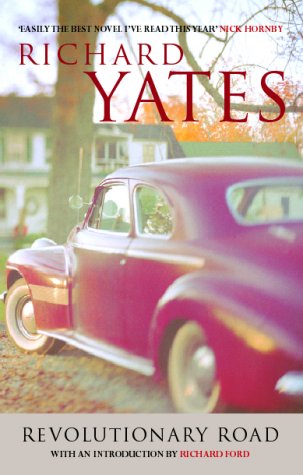
And indeed, a citizenry's urge to break away and form a community based on clear ideas of who the citizens are, what they need, and what they're up against is very much the model for correct deportment in Yates's view. Though in Revolutionary Road this is precisely the ideal that the suburbs-monotonous, anesthetized buffer zones between the two more vital life experiences of the country and the city-manage to trivialize and contaminate. Suburbanites themselves seem but hungry, aimless foragers in pursuit not of a better life, but only an easier, less responsible one. None of the characters glimpsed in Revolutionary Road has much of a clue about who it is they are.
They, in fact, can't admit it fast or often enough. All are walking paths laid out by forces and authorities other than their own personal senses of right and wrong: Convention. Habit.
Disengagement. Mammon. Escape. "He couldn't even tell whether he was angry or contrite, whether it was forgiveness he wanted or the power to forgive," Yates's narrator remarks caustically about Frank Wheeler. And as her life gets swept along toward the novel's withering climax, April Wheeler, in despair nearly unto death, peers at her neighbor, the feckless Shep Campbell, from within the gloom of a backseat where they've fallen upon one other in a drunken moment of befuddlement and sexual dismay: "Honestly," April says, stating no more than what's obvious. "It's just that I don't know who you are.... And even if I did... I'm afraid it wouldn't help, because you see I don't know who I am, either" (p. 262).