
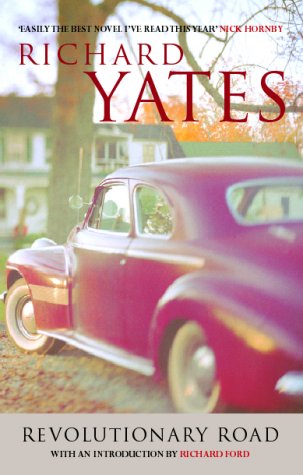
In 1961, Revolutionary Road must have seemed an especially corrosive indictment of the postwar suburban "solution," and of the hopeful souls who left the city in search of some acceptable balance between rough rural essentials and urban opportunity and buzz. Frank Wheeler, the novel's principal character, is twenty-nine, already a combat veteran, a Columbia graduate, and outwardly a man on the way up. Yet Yates depicts him sarcastically as a compromised, self-important "suit' with "the kind of unemphatic good looks that an advertising photographer might use to portray the discerning consumer of well-made but inexpensive merchandise" (p. I2). In the novel's close notice, Frank is a deluded, dissipated bore who imagines himself"as an intense, nicotine-stained, Jean-Paul-Sartre sort of man" (p. 23), but who is merely an adulterer spicing his talk with literary references while following work so stultifying and meaningless that he even laughs at himself.