
by
Joan Copjec
(editor)
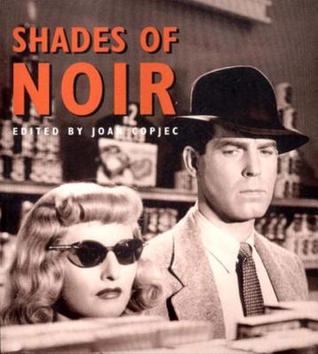
Shades of Noir: A Reader
Shades of Noir: A Reader
by
Joan Copjec
(editor)
by
Joan Copjec
(editor)
Shades of Noir: A Reader
by
Joan Copjec
(editor)
by
Joan Copjec
(editor)
Between film noir and the contemporary situation of the homeless there has been an absolute shift in what is commonly and implicity understood by the term 'society', a shift that remains unremarked by sociology and anthropology. The space of film noir was inclusive in ways that corresponded to an earlier theoretical ideal of society as promoted in classical sociological texts. Society contained, or made a place for, all its members from the highest-born to the lowest, from infancy until death and beyond, for the criminal, the infirm and the insane. This universal catalogue of places was also the mise en scene of film noir. After Goffman and Foucault we were forced to acknowledge that 'having a place' for some also meant bearing a radically stigmatizing label or a damaged identity. But under naive classical theoretical ground rules, no one could be left out; everyone had to live in society and to remake society together. There was something resembling consensus that whenever the economic terms of universal inclusion became visibly intolerable for large numbers in the 'disadvantaged' classes, wealth should be partly redistributed either via social programmes or, if the other party is in power, through riots and looting. That the poor, the insane or the criminal could simply be turned onto the streets, that the 'legitimate' members of society could retreat into gated and guarded communities, that the poorest of the poor could simply be excluded from 'society' and asked to 'keep moving along', these exclusionary societal 'solutions' were (and continue to be - even as they emerge as historical reality) theoretically unthinkable. The victory of capitalism over other economic forms has been accompanied by a new attitude, a casual indifference toward the socially excluded. Now that capitalism no longer has an audience, the homeless do not necessarily constitute an embarrassment.
damn