
by
Joan Copjec
(editor)
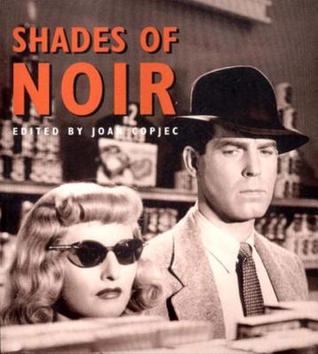
Shades of Noir: A Reader
Shades of Noir: A Reader
by
Joan Copjec
(editor)
by
Joan Copjec
(editor)
Shades of Noir: A Reader
by
Joan Copjec
(editor)
by
Joan Copjec
(editor)
This problem is distantly prefigured in film noir by the pseudo-expulsion of the hero from all 'viable temperate' human relationships. But unlike the homeless, expelled emphatically from the social order, the film noir hero always hangs onto hope that even a compromised democracy can continue to have a place for everyone and to guarantee fundamental freedoms. The hero moves through any and every situation liminally as a kind of cipher of the unrealized possibility of the coexistence of democratic openness and capitalistic closure. The hero abjures regular, ordinary, routine, normal, for-profit pursuits, does not have an evident class perspective, operates within the law only when it is convenient for him to do so, and has few institutional attachments or obligations. But he never really gives up his place in the social order. The hero demands a paradoxical combination of rights : to be completely detached from society and at the same time to be allowed total access to every part of it. The homeless would see his combination of attachment and detachment as manifestations of good fortune and bad faith. He holds himself external to and above specific class, domestic and institutional relations in order not to be marked by any specificity. He is thus free to enter into everything. If some heavy attempts to block his entry into a club or a back room where a deal is being made, he shoves the guy aside. Philip Marlowe walks freely through the mean streets of the city's underside in one scene and, in the next, strides with the Same nonchalance across the oriental carpets of the hot-house billionaire General Sternwood. In its most positive manifestation, film noir affirms the right of Democratic Everyman to go anywhere as a matter of principle. If he encounters a worthy adversary along the way, it can only be himself.