
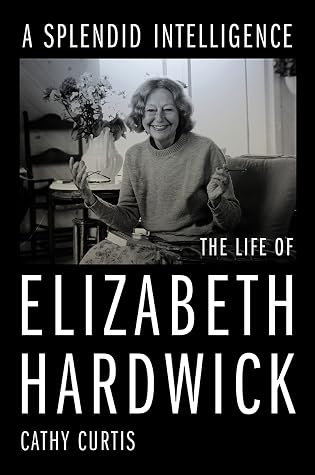
by
Cathy Curtis
“Writing a Novel,” the short story Elizabeth published in the New York Review in 1973, opens the same way the novel does: “It is June. This is what I am going to do with my life.” Among the many fascinations of this piece is her notion of “a short-wave autobiography, one that fades in and out, local voices mixing with the mysterious cadence of a stranger. Truth should be heightened and falsity adorned, dressed up to look like sociable fact.” She quotes Pasternak: “To live a life is not to cross a field”—life is no easy stroll.131 Memoirs were beset by “troubles large and small,” as a result of writers’ “defamed and libeled” self-portrayal. There was also the problem of a woman’s memoir, “because there isn’t enough sex, not even enough longing for consummation.” (She was apparently referring to potential negative opinions of the book she would write.) “In love,” she wrote, what really matters “is to discover whether we have experienced conquest or surrender—or neither. Courage under ill-treatment is a woman’s theme.” Of course, it is very much her theme.
ayyyy