
by
Joan Copjec
(editor)
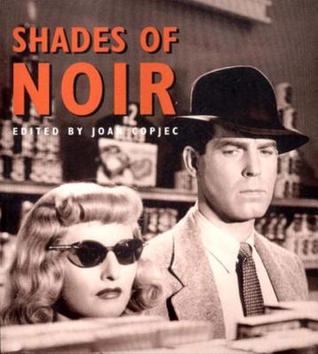
Shades of Noir: A Reader
Shades of Noir: A Reader
by
Joan Copjec
(editor)
by
Joan Copjec
(editor)
Shades of Noir: A Reader
by
Joan Copjec
(editor)
by
Joan Copjec
(editor)
In Bakhtinian criticism, the concept of the chronotope provides us with a useful tool for synthesizing and mediating all such features into a common image of a given narrative form, its quintessential phenomenal 'feel'. Vivian Sobchak's, 'Lounge Time: Post-war Crises and the Chronotope of Film Noir' usefully reconstructs film noir's chronotope:
The diacritical contrast that structures film noir . . . is between the impersonal, discontinuous rented space of cocktail lounge, nightclub, hotel, and roadside cafe, on the one hand, and the familiar, unfragmented secure space of domesticity on the other. The noir chronotope has no room for children or for rituals of family continuity: 'no weddings, no births, no natural deaths, no family intimacy and connection can be eventful here.' Even leisure is more suffered than enjoyed in the 'lounge-time' of the shadowed space of film noir. The characters generated by this chronotope are transient, without roots or occupation, in a world where murder is more natural than death. The chronotope of film noir . . . perversely celebrates the repressed hysteria of a postwar cultural moment when domestic and economic coherence were fractured, spatializing and concretizing a 'freedom' at once attractive, frightening, and ultimately illusory.