
by
Lucia Berlin
inspo/revelation
Richard Powers,
David Foster Wallace,
Karen Tei Yamashita,
Rachel Kushner,
Lucia Berlin,
Jonathan Franzen,
Jennifer Egan,
Sarah Polley,
Lauren Elkin
something crucial is revealed to the audience

The moon. There’s no other moon like one on a clear New Mexico night. It rises over the Sandias and soothes the miles and miles of barren desert with all the quiet whiteness of a first snow. Moonlight in Liza’s yellow eyes and the chinaberry tree.
The world just goes along. Nothing much matters, you know? I mean really matters. But then sometimes, just for a second, you get this grace, this belief that it does matter, a whole lot.
“Don’t tell me,” Cheryl said. “That must be Peter Pan and his ma.” She said, “Jon’s personal Bonnie and Clyde.”
“Shut up.”
I had never said that to her before. She stared straight ahead, as if she hadn’t heard me. We went to the elegant restaurant with our elegant, articulate liberal friends. The food was excellent, the wines perfect. We talked about films and politics and law. Cheryl was charming; I was witty. Something terrible had happened between us.
Cheryl and I are divorced now. I think our marriage began to end because of those Friday nights, not because she began having an affair. She was furious because I never took her to meet them. I’m not sure why I didn’t want to, whether I was afraid she would dislike them, or they would dislike her. Something else … some part of me that I was ashamed to let her see.

I went to this museum, and it's in this long hall of high-ceilinged old salons. And it starts with, I don't know whether they're Neolithic, but very old musical instruments, and it progresses through. Of course, most of their musical instruments are from the last couple of centuries in Western Europe. I didn't actually make it all the way through; I was like one or two salons from the end and I was standing there and here was a piano that had belonged to Leopold Mozart. And the piano that Brahms used for practicing. And the piano that Haydn had in his house.
And I had this little epiphany that the reason that I was having trouble finding another software project to get excited about was not that I was having trouble finding a project. It was that I wasn't excited about software anymore. As crazy as it may seem now, a lot of my motivation for going into software in the first place was that I thought you could actually make the world a better place by doing it. I don't believe that anymore. Not really. Not in the same way.
This little lightning flash happened and all of a sudden I had the feeling that the way—well, not the way to change the world for the better, but the way to contribute something to the world that might last more than a few years was to do music. That was the moment when I decided that I was going to take a deep breath and walk away from what I'd been doing for 50 years.

Maybe he didn't want that life after all, starting over broke, hailing a cab in a busy intersection filled with jockeying junior executives, arms aloft, bodies smartly spinning to cover every compass point. What did he want that was not posthumous? He stared into space. He understood what was missing, the predatory impulse, the sense of large excitation that drove him through his days, the sheer and reeling need to be.

She was wearing a wide-necked brown sweaterdress and thick gray socks. Seeing her as she was at home, not in one of her smart Sunday outfits, not in her Tuesday-circle tomboy attire, he had an unsettling strong hit of her reality—her independence as a woman, her thinking of thoughts and making of choices wholly unrelated to him. To glimpse how it must feel to be her, inhabiting her own life, round the clock, was exciting but also daunting. On the counter by the kitchen stove, she’d already set out an ashtray and a crudely fashioned marijuana cigarette.
Sadness made Bradley look even older. Talking about any subject but the two of them was all it took—all it had ever taken—to illuminate their unsuitability for each other. What was best and most essential in her had been wasted on him. The converse was probably also true. She’d been too disturbed in Los Angeles to even know what love was. The real love had come later, in Arizona, and she was pierced, now, by homesickness for New Prospect. For the dear, creaky parsonage. Daffodils in the yard, Becky steaming up the bathroom, Russ buffing his shoes for a funeral. It was worth it, after all, to have aged thirty years. It was worth it to have taken the arduous steps to arrive in Bradley’s house, because the reward was clarity: God had given her a way of being. God had given her four children, a role she was skilled at playing, a husband who shared her faith. With Bradley, there had really only ever been fucking.

I went to the kitchen and started frying the potatoes, then the eggs. I think Mirella was lying, and in any case, if she destroyed the diary, she did it after meeting Cantoni. Soon she joined me and asked if I needed help. She rarely offers, so I looked at her with amazement. She’s really a pretty girl, her hair cut so short is very becoming. The joy of the money earned made her more ardent, and yet unusually sweet. She smiled: “Mamma, why can’t you admit that I’m happy in my way?” I told her that happiness, at least as she imagines it, doesn’t exist, I know through experience. She objected: “But you have the experience of one life alone, yours. Why don’t you want to leave me at least the hope?” I told her to go ahead and hope, it costs nothing. Then I handed her a plate with the fried eggs and asked her to bring it to her brother. She asked me why he couldn’t come get it himself. “I’ll call him,” she said. I turned to her harshly: “Take it,” I commanded. “Riccardo is tired, he studied all day.” “And didn’t you work all day?” she said brusquely. “And didn’t I work all day?” Yet she brought it to him. When she returned, she said, “That is what disgusts me, mamma. You think you’re obliged to serve everyone, starting with me. So, little by little, the others end up believing it. You think that for a woman to have some personal satisfaction, besides those of the house and the kitchen, is a fault, that her job is to serve. I don’t want that, you understand? I don’t want that.” I felt a shiver run down my spine, a cold shiver that I can’t get rid of. Yet I pretended indifference to what she said. I asked her ironically if she wanted to start being a lawyer in her own home.
omg

D.L. is utterly silent throughout this exchange, watching the odometer begin slowly to lose its magic. There is a reason for her silence that is in a way parallel to the historical U.S. conflict in Vietnam. For her, Vietnam does not exist except as complicatedly cancelled letters and hissingly connected phone calls, a completely flat-eyed father whom she first met on a tarmac at nine. Who had a hook. Who dropped at automobile backfires (Datsuns never backfire--too little power), who gazed dully and accepting at the mosquito feeding at his one big bicep. Who's long gone, now. Who left a note.
hauntingly magical paragraph

‘Is it possible to make a work of art that is not embodied in an object?’
A ponderous silence.
‘Well?’ said Delia.
‘Is it the artist’s job to answer questions, or to ask them?’
In a classroom in Manhattan on a rainy day, my perception of art was changed forever. Vito Acconci’s pedagogy was a mixture of persistent enquiry, faith in the invisible and nudges toward the unknown. It struck me for the first time that art might exist beyond the realms of painting and sculpture. This was a mind-boggling revelation, like opening a door in your own house and discovering an entirely new room. My jaw went lax, my breathing deepened. The spirit of conceptualism had entered me, and I became a convert then and there.
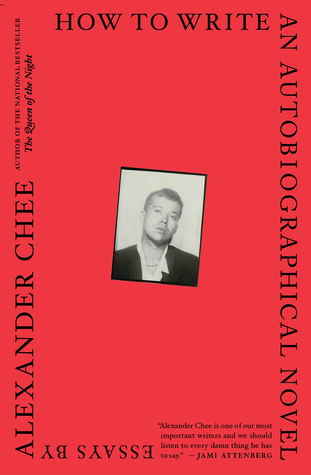
[...] He had called the station from inside the first tower to describe what was happening. The host quickly thanked him for calling in and then said, in a bit of a panic, Why are you on the phone with me? Why aren't you on your way down?
You don't understand, the man said. The whole center of the building is gone. I can't go down. That's why I'm calling.
I don't know how to describe the feeling I had in the silence that followed, except that it was approximately the length it would take you to read this sentence aloud.