
View all notes
Available query params: commented=1, untagged=1
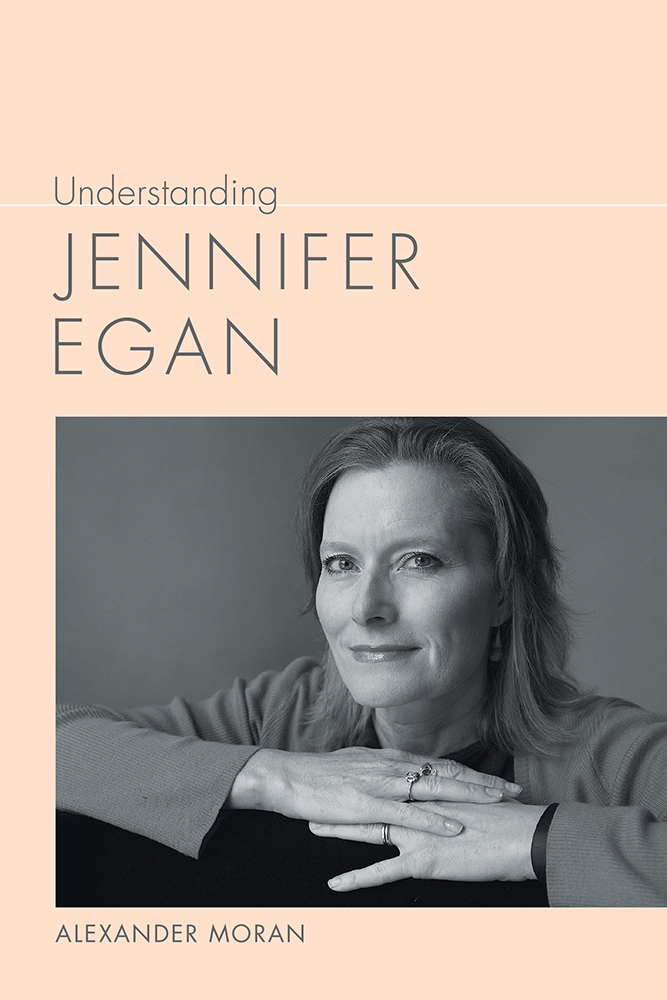
In 1987, aged 24, Egan moved to New York. She applied to the MFA program at Columbia but was rejected (von Arbin Ahlander). As she states to Dinnen: “I didn’t come through the system and I don’t teach in the system, so I’m an outsider really” (“Artificial”). Postwar fiction has been named “the Program Era” by Mark McGurl, and with good reason, with contemporary publishing symbiotically bound up with numerous university writing programs. Many of Egan’s peers followed the path from an MFA to a writing career, such as Michael Chabon (University of California, Irvine), David Foster Wallace (University of Arizona), Junot Diaz (Cornell), Lauren Groff (University of Wisconsin– Madison), and many more. But Egan was not without guidance or support: “I created an ad-hoc MFA by taking workshops people were teaching out of their living rooms in New York when I first got there. Every workshop I sat in gave me something really vital” (Dinnen “Artificial”). She particularly lauds the influence of Philip Schultz—whom she met while working the slush pile for The Paris Review—in helping her to develop her voice (von Arbin Ahlander). Egan was not outside the creative writing system, but beside it; it was in this context that she wrote the stories that form Emerald City, which is why many of them contain the particular stamp of epiphanic structures promoted by creative writing classes.
cool
Sam is particularly involved in “Brady bonds,” a type of restructured bank loan given to poorer countries, as well as investments in “emerging markets” (11). That Caroline’s sculpting career is built on the back of these ethically questionable activities suggests that any pretense that her art is authentically separate from the market is a stage that hides an unsavory funding source. Sam is troubled by what he does for a living throughout the story. He finds himself haunted by the Maasai children he worked with in Kenya and is “enraged” when comparing their struggles to the privileges he has purchased for his daughters (6). Throughout Egan’s writing there is a preoccupation with characters making compromises in their careers, and in particular how these compromises relate to their academic aspirations. For instance, Sam originally planned to make money and then return to studying anthropology or social work. Eve traces these depictions throughout Egan’s later work but does not quite account for the appearance of academic labor in “Why China?” and, as will be discussed later in the chapter, in “Letter to Josephine” (Eve “Structural”). In these early stories, academia is shown to be deeply connected to market forces, as Sam cannot quit to pursue the career he wants because their “overhead was so high” (8); he has compromised for financial gain, and he feels inauthentic to himself as a result.
The Keep is, like Melmoth, a book within a book; the scenes in the castle are a part of story being told by Ray to his prison writing class. These strands are then connected in a final section told from the perspective of Holly, Ray’s prison writing instructor, who visits the castle in which much of the novel is set. Egan describes the structure of The Keep as a romance: “The story of Ray and Holly, the love affair there, is a love of language. They each give each other the gift of writing. That’s a gift that I somehow got, and that I’m grateful for. It’s a very dewy-eyed book for me” (Yabroff ).

[...] The reality behind the microcredit hype is that the vast majority of those who took out a microloan to invest in some income-generating project ended up failing or else displacing other struggling informal microenterprises operating in the same sector.
But profitability is just one half of the explanation for the microcredit model’s widespread support among policymakers, politicians, and ordinary people. The issue of ideology is also central.
Microcredit is supremely attractive to the neoliberal development community and neoliberal politicians. Within these circles criticism of microcredit and the central role that individual entrepreneurship supposedly plays in the development process is simply not tolerated. Instead it is aggressively rebuffed, because such skepticism is, in essence, skepticism of capitalism itself.
This is the reason for the huge PR effort currently being mounted by the World Bank and others — and backed up by a range of like-minded politicians, foundations, and high-profile NGOs in the US and elsewhere — in support of “financial inclusion.” As Mader and Sabrow demonstrate, one of the financial inclusion project’s central goals is to physically rescue high-profile microcredit institutions from (deserved) obsolescence and closure.
However, Kiva’s emphasis on providing small microloans only semi-directly (that is, through microcredit institutions) to micro-entrepreneurs in developing countries has almost nothing to do with actually fighting poverty. The “Kiva experience” is much more about Kiva supporters seeking a form of personal gratification by donating a small sum, as well as validation that their ideology (capitalism) actually works.
the inevitable question is then: well, even if Kiva isn't perfect, surely it's better than doing nothing at all? surely an easy, passive donation to Kiva is better than nothing? the answer might just be: no. it's not better than nothing. there is no easy or passive way to legitimately feel like you're making a difference. this sort of personal gratification requires either difficult sacrifice (in terms of time, and ideology) or self-delusion. what would be better than nothing is neither easy nor passive, and it requires transforming the entire structure
[...] To take back the mantle of justice and equality, the Left must delegitimize private foundations and refute the centrality of charity in solving the world’s most pressing problems.
it's just govt redistribution/planning in terms of scale with none of the accountability
Membership in the BRICS is also key to China’s flexible geopolitical position. While the BRICS grouping has different meanings to different participants, for China it is part of a strategy to construct a counterpole to Western power — not through overthrowing the current global structures, but by bending them in China’s favor. Given the history of Western domination on their continent — and China’s (relative) lack of conditionalities and policy of non-interference — African political elites find this to be a relatively attractive alternative.
something I didn't really consider before but perhaps worth knowing
[...] Shoppers can donate their bag credits — the five-cent rebate they receive by forgoing plastic bags — to a microfinance fund.
Combining this with traditional donations, Whole Foods hopes to raise $5 million to fund 40,000 small loans to “impoverished entrepreneurs” around the globe. They say that these direct financial transfers, unmediated by government agencies, can “empower the poor and the communities around them.”
a couple of things
* kinda obvious, but: Whole Foods does NOT need shoppers to "donate" anything; they are perfectly capable of donating excess profits on their own if they so choose to, without involving the consumer at all. this is just so blatantly PR-focused that i wanna vomit. reminds me of when BA makes its flight attendants collect donations for some children's charity
* why on earth would anyone believe that direct financial transfers (which require repayment) from shareholder-beholden corporations are a way of EMPOWERING the poor, compared to governments that are at least theoretically accountable to the people? surely the govt is always the right org for the job here, and if it's not, the solution should be to fix that problem first of all? whence does this libertarian belief that an institution NOT beholden to the people it's trying to serve is the best way to serve those people come from??? i am dying
If community programs have consistently floundered, both in the past and today, what’s left? A return to the rule of experts? Bigger dams and better seeds? If faced with two approaches — that of the development expert, asking “What can we do for the poor?” and that of the community developer, asking “What can we do with them?” — then the grassroots approach seems at least less condescending.
Yet there is a third question that inhabitants of the Global North might ask, one that would be far more productive. “What have we been doing to them?”
That question implies a different framework, one that proponents of participatory development rarely consider. It raises the possibility that there might be some causal relationship between government policies in the Global North and the continued poverty of the Global South. Rather than focusing merely on poor people in poor places, it zooms out, capturing the North and South together through a wide-angle lens.
^^^^^