
View all notes
Available query params: commented=1, untagged=1
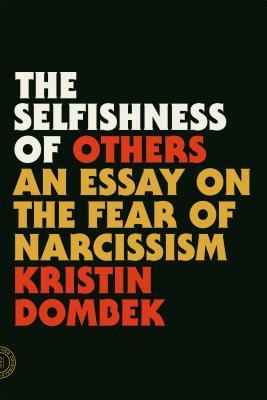
On the question of prevalence, this first DSM entry was cagey: “This disorder appears to be more common recently than in the past, but this may be due only to more professional interest in it.” But behind that neat list of narcissistic traits, within psychology’s ever-expanding and dividing fields and schools, the debates continued: How much self-regard is normal, and how much unhealthy or even evil? When someone is acting like a six-year-old, should you empathize with their view of reality or try to correct it? If someone doesn’t want to talk to you or fall in love with you, when is that because he is fundamentally an asshole? If someone turns suddenly away from treatment, or from a relationship, does that mean she is incapable of love? Are there really people who have no empathy? Can you help someone learn to love? And is this thing called narcissism something some people are, or something they do? These are questions you can ask forever, not only if you are a psychologist, but if you find yourself loving someone who turns away.
It is something you’ll come to months or years later, if at all: the possibility that the way he was with you was real, and that it was love; that the way he was with the other woman, real or imagined, was real, was love, as well. You might understand this in the middle of the next time you fall in love with someone else, and find yourself, still, in love with him. You’ve just spread your love out in time, and he has spread it out in space.
But that is exactly what you can’t get to, the perspective of time, when your gaze is frozen on the image of him turning away. You’re suffering from the same illusion as both Echo and Narcissus: only one person can be the center of another person’s world at any given time, and ideally, this would always be you. This is where all the narcissistic romance websites invite you to be: in the center of the world, stuck in time, assessing the moral status of others, until love is gone.
There’s a sentence of Alice Miller’s looping in my mind, about grandiose people and depressives, Narcissus and Echo: “Neither can accept the truth that this loss or absence of love has already happened in the past, and that no effort whatsoever can change this fact.” It’s the main thing I’ve learned from reading all this psychology: the future is always trying to feel like the past. When it does, it feels like selfishness, hurt, loss at the hands of others. The trick is to let it empty. Maybe this is another way to come unstuck in time.
For years, whenever he turned away, I filled in the blanks with the script, but now he is here all the time, he won’t leave, and even so close by, his mind—the other’s mind—can turn strange and blank. You can fill in the blank with stories about coldness and stories of evil. You can try to chase it down, rope it, you can make war on it, but it will still be blank. You can rage against your dependency, the absolute need for the other that can never be satiated, but the other is, in their own way and not through their own fault, the very center of their universe, and there is a part of that centrality that will always be empty of you. You can study it and theorize it, but if the blank were not still bottomless, love would not ever go on long.
Maybe it’s not something to run from, but one of the best things, the way no matter how hard we try to study them, the selves of others escape capture. It is something to turn toward, the selfishness of others, a kind of gift: the thing that can empty the future of your fears from the past.
The selfishness of others is the feeling of your dependence revealed, as their gaze turns away. Your independence laid bare as myth. The feeling of being the animal you are, born of other animals, made of mirroring them.

As I noted in The Joy of Revolution:
Much of the situationists' impact stemmed from the fact that they articulated things that most people had already experienced but were unable or afraid to express until someone else broke the ice. ("Our ideas are in everybody's mind.") If some situationist texts nevertheless seem difficult at first, this is because their dialectical structure goes against the grain of our conditioning. When this conditioning is broken they don't seem so obscure (they were the source of some of the most popular May 1968 graffiti). Many academic spectarors have floundered around trying unsuccessfully to resolve the various "contradictory" descriptions of the spectacle in The Society of the Spectacle into some single, "scientifically consistent" definition; but anyone engaged in contesting this society will find Debord's examination of it from different angles eminently clear and useful, and come to appreciate the fact that he never wastes a word in academic inanities or pointless expressions of outrage.
4
The spectacle is not a collection of images; it is a social relation between people that is mediated by images.
6
Understood in its totality, the spectacle is both the result and the project of the present mode of production. It is not a mere supplement or decoration added to the real world, it is the heart of this real society's unreality. In all of its particular manifestations -- news, propaganda, advertising, entertainment -- the spectacle is the model of the prevailing way of life. It is the omnipresent affirmation of the choices that have already been made in the sphere of production and in the consumption implied by that production. In both form and content the spectacle serves as a total justification of the conditions and goals of the existing system. The spectacle is also the constant presence of this justification since it monopolizes the majority of the time spent outside the modern production process.
11
In order to describe the spectacle, its formation, its functions, and the forces that work against it, it is necessary to make some artificial distinctions. In analyzing the spectacle we are obliged to a certain extent to use the spectacle's own language, in the sense that we have to operate on the methodological terrain of the society that expresses itself in the spectacle. For the spectacle is both the meaning and the agenda of our particular socio-economic formation. It is the historical moment in which we are caught.
13
The tautological character of the spectacle stems from the fact that its means and ends are identical. It is the sun that never sets over the empire of modern passivity. It covers the entire surface of the globe, endlessly basking in its own glory.
i just like the bombastic phrasing here
16
The spectacle is able to subject human beings to itself because the economy has already totally subjugated them. It is nothing other than the economy developing for itself. It is at once a faithful reflection of the production of things and a distorting objectification of the producers.
21
As long as necessity is socially dreamed, dreaming will remain necessary. The spectacle is the bad dream of a modern society in chains and ultimately expresses nothing more than its wish for sleep. The spectacle is the guardian of that sleep.