
by
Iris Murdoch
View all notes
Available query params: commented=1, untagged=1

My watch had stopped again, but the sky had an evening look with a lot of orange clouds pierced by holes of very cold very pale blue. I went downstairs and made some tea and then began drinking wine. I began to think about Hartley but cautiously, as if trying out the thoughts to see whether they would drive me mad with pain. They had to be thought, I had to take it in. I had seen the empty house, the postcard from Sydney. I contemplated her, seeing her young bland face looking at me, now removed as if behind a gauze curtain. She quietly invited me to suffer. There was a great space now, a great silent hall in which this suffering could take place. There was no urgency now, nothing to plan, nothing to achieve. What shall I do with it, I asked her, what shall I do now with my love for you which you so terribly revived by reappearing in my life? Why did you come back, if you could not content me? What can I do now with the great useless machine of my love which has no wholesome work to do? I can do nothing for you any more, my darling. I wondered if I would be fated to live with this love, making of it a shrine which could not now be desecrated. Perhaps when I was living alone and being everyone’s uncle like a celibate priest I would keep this fruitless love as my secret chapel. Could I then learn to love uselessly and unpossessively and would this prove to be the monastic mysticism which I had hoped to attain when I came away to the sea?
Of course this chattering diary is a façade, the literary equivalent of the everyday smiling face which hides the inward ravages of jealousy, remorse, fear and the consciousness of irretrievable moral failure. Yet such pretences are not only consolations but may even be productive of a little ersatz courage.
Clement was a long time dying. They had the headlines set up in type for weeks. I lay on the bed beside her and stroked her face, which had become, just very lately, so much more wrinkled with pain and fear. My fingers can still remember those soft wrinkles and the tears that quietly filled them. She said she wanted to die in a storm of noise and for days we had the hi-fi turned up playing Wagner and we drank whisky and together we waited. It was the strangest waiting I ever remember for it was and it was not waiting. There was a sort of intense timelessness in the way in which we kept each other company. Our fear divided us, her fear, my fear, of the event: two different sharp fears which we had to overcome by a constant force of mutual attention, laying our hands upon each other’s hearts. We became tired and we turned off the noise and we wept and still we waited. My God, Clement’s tears, how much I had seen of them before and how much they had sickened me. Now I felt they would make a saint of me, and perhaps for a month they almost did. In the end she died when I was asleep. Every morning I had thought I might find her dead, but had then seen her breathing, the little rhythmic rising and falling of the bedclothes that covered her body which had become so shrunken and small. Then one day there was no movement and I saw her eyes open and her face changed.
That time of attentive mourning for her death was quite unlike the black blank horror of the thing itself. We had mourned together, trying to soothe each other’s pain. But that shared pain was so much less than the torment of her vanishing, the terrible lived time of her eternal absence. How different each death is, and yet it leads us into the self-same country, that country which we inhabit so rarely, where we see the worthlessness of what we have long pursued and will so soon return to pursuing.
James said that I must re-enact my love for Hartley, and that then it would crumble to pieces like something in a fairy tale when the clock strikes twelve. Was it just a necessary charade and is such re-enacted love just a machinery for getting rid of an old resentment? Did I simply want to take her away from Ben, as I had wanted to take Rosina away from Perry? Of course Titus’s death made Hartley impossible for me, that part at least of the cold lesson, the revelation of human vanity, has remained. And am I now actually beginning to wonder how much I really loved her even at the start? The sad fact was that Hartley was not really very intelligent. What a dull humourless pair we seem, looking back, without spirit or style or a sense of fun. All those things were what I learnt from Clement. Did I after all mistake dullness for goodness because my mother hated Aunt Estelle?
Why have I written down these blasphemies all of a sudden? This is late night nonsense.
Sometimes I sit and wonder whom I should leave my money to. Perhaps I had better start giving it away now. I have sent a cheque to the Buddhist Society and another to the Arbelow Peace Foundation, and will shortly amaze young Erasmus Blick, who is getting married, by my generosity. His Hamlet is still running, I still haven’t seen it. I imagine I shall leave all the oriental stuff to the British Museum, in fact they can have the books now. And I shall leave James’s poems to Toby. Why this anxiety to tidy up? Do I imagine I am going to die soon? Not really—yet it is as if that fall into the sea did damage me after all, not with body damage but with some sort of soul damage. Perhaps James died of soul damage? I am perfectly healthy and do not feel that I am becoming an ‘elderly party’, but I notice that people are beginning to treat me as if I were one, and this must be a reflection of my own sense of myself. They give me presents, potted plants and tins of jellied chicken, and ask me if I am all right. Am I all right? Rosemary has given me some pottery soup bowls.
Last night someone on a BBC quiz did not know who I was.
Then I reappeared and made it, quite suddenly, abundantly clear to her that I did not hate her or blame her, that I had gone on loving her without resentment. Her first feeling was one of gratitude, and with this relief came a sense of a love revived. Perhaps this was what she felt on the night when she came to me about Titus. As I learnt in the case of myself and Peregrine, one often feels guilt not because one has sinned but because one has been accused! The withdrawal of the imagined accusation caused Hartley to feel gratitude, affection, at first. But as the guilt, and the vibrating explosive intensity which it had brought into our relationship, began to fade, the more deeply buried reality of her feelings for me became apparent. After all, it had been very hard to leave me and she must have had very compelling motives. It had required great courage to run away to her auntie at Stoke-on-Trent. Why did she go? Because I was in love and she was not; because she simply did not like me enough, because I was too selfish, too dominating, as she put it ‘so sort of bossy’. I had deluded myself throughout by the idea of reviving a secret love which did not exist at all. After her liberation from the tie of guilt, that old saving resentment returned to her, she regained that sheer basic indifference to my company which in the past had enabled her to go away, and take her hopes for life elsewhere. And perhaps in that elsewhere she had soon met with a sexual awakening which I had been unable to give her.
But these speculations are too nightmarish. Better to feel ‘I shall never know’.

The fact that technology brings both bounty and spread, and brings more of both over time, leads to an important question: Since there’s so much bounty, should we be concerned about the spread? In other words, we might consider rising inequality less of a problem if people at the bottom are also seeing their lives improve thanks to technology.
Income inequality and other measures of spread are increasing, but not everyone is convinced this is a problem. Some observers advance what we will call the ‘strong bounty’ argument, which essentially says that a focus on spread is misleading and inappropriate, since bounty is the more important phenomenon and exists even at the bottom of the spread. This argument acknowledges that highly skilled workers are pulling away from the rest—and that superstars are pulling so far away as to be out of sight—but then essentially asks, “So what? As long as all people’s economic lives are getting better, why should we be concerned if some are getting a lot better?” As Harvard economist Greg Mankiw has argued, the enormous income earned by the “one percent” is not necessarily a problem if it reflects the just deserts of people who are creating value for everyone else.2
Capitalist economic systems work in part because they provide strong incentives to innovators: if your offering succeeds in the marketplace, you’ll reap at least some of the financial rewards. And if your offering succeeds like crazy, the rewards can be huge. When these incentives are working well (and not doing things like providing huge, risk-free rewards to people taking inappropriate risks within the financial system), the benefits can be both large and broad: innovators improve the lives of many people whose purchases, in aggregate, make the innovator rich. Everyone benefits, even though not all benefits are the same.
The high-tech industry offers many examples of this happy phenomenon in action. Entrepreneurs create devices, websites, apps, and other goods and services that we value. We buy and use them in large numbers, and the entrepreneurs enjoy great financial success. This is not a dysfunctional pattern; it’s a beneficial one. As economist Larry Summers put it, “suppose the United States had 30 more people like Steve Jobs—. . . . [W]e do need to recognize that a component of this inequality is the other side of successful entrepreneurship; that is surely something we want to encourage.”3
lol. (guessing page)
Caveats aside, we do have some ideas about how to proceed, and how not to. We do not think the right policy would be to try to halt the march of technology, or to somehow disable the mix of exponential, digital, combinatorial innovation taking place at present. Doing so would be about as bad an idea as locking all the schools and burning all the scientific journals. At best, such moves would ensure the status quo at the expense of betterment or progress. As the technologist Tim O’Reilly puts it, they’d be efforts to protect the past against the future.1 So would attempts to protect today’s jobs by short-circuiting tomorrow’s technologies. We need to let the technologies of the second machine age do their work and find ways to deal with the challenges they will bring with them.
We are also skeptical of efforts to come up with fundamental alternatives to capitalism. By ‘capitalism’ here, we mean a decentralized economic system of production and exchange in which most of the means of production are in private hands (as opposed to belonging to the government), where most exchange is voluntary (no one can force you to sign a contract against your will), and where most goods have prices that vary based on relative supply and demand instead of being fixed by a central authority. All of these features exist in most economies around the world today. Many are even in place in today’s China, which is still officially communist.
These features are so widespread because they work so well. Capitalism allocates resources, generates innovation, rewards effort, and builds affluence with high efficiency, and these are extraordinarily important things to do well in a society. As a system capitalism is not perfect, but it’s far better than the alternatives. Winston Churchill said that, “Democracy is the worst form of government except for all those others that have been tried.”2 We believe the same about capitalism.
the churchill quote XD
While income taxes are not meant to discourage work and employment, they can still have this effect. Payroll taxes can lead to similar shifts, and by design mainly affect people with low and middle incomes.20 They can cause organizations to move away from hiring additional domestic employees, and instead outsource work or make use of part-time contractors. As digital technologies keep acquiring new skills and capabilities, these same organizations will increasingly have another option: they’ll be able to make use of digital laborers rather than humans. The more expensive human labor is, the more readily employers will switch over to machines. And since payroll taxes make human labor more expensive, they’ll very likely have the effect of hastening this switch. Mandates like employer-provided health care coverage have the same effect; they too appear as a tax on human labor and so discourages it, all other things being equal.21
We bring up these points not because we dislike Social Security or health care coverage. We like both of them a great deal and want them to continue. We simply point out that these and other popular programs are financed, in whole or in part, by taxes on labor. This might have been an appropriate idea when there were no viable alternatives to humans for most jobs, but that is no longer the case. The better machines become at substituting for human labor, the bigger negative effect any tax or mandate will have on human employment.
So in addition to subsidizing work via a negative income tax, we also support not taxing work as much in the first place and reducing burdens and mandates on employers. Like so much else at the intersection of economics and policy, this is easy to say and extremely hard to enact. How else, if not by taxes on labor, are expensive, popular, and important programs like Social Security and Medicare to be funded? How is health care coverage to be provided if not by employers?
lol
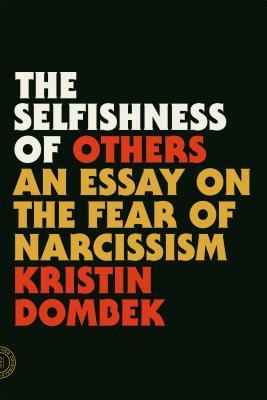
Perhaps the patients Freud called narcissists were people so lacking in empathy and capacity for love, so fraudulent and immature, that today they would be diagnosed with NPD. But one wonders whether any women and too-feminine men might have resisted making the mistakes transference demands—falling in love with the analyst, projecting their father-attachments onto him—for some other reason. From the perspective of Freud’s emerging “science,” if they didn’t need therapy, their self-sufficiency must be a case of arrested development; if their sexuality was not visible as healthy from the perspective of the analyst’s theories, they were immature. It’s not something Freud considers, the possibility that such resistance might actually have been exactly what it looks like: an aversion to the analytic situation, with its imbalance of power, its detached and disinterested analyst, its required performances of colossal mistakes, its falseness and its theatrical repetition of the past, and that such resistance might make some sense, in a room where the patient’s sexuality or gender is treated as something to overcome.