
View all notes
Available query params: commented=1, untagged=1

By then I think I could recite Don Pío’s story by heart, periturae parcere chartae, and still I understood nothing. My life seemed to be progressing through the same realms of mediocrity as usual, but I knew that I was walking in the land of destruction.
[...] Do you have relatives in Sonora? I said. No, I don’t think so, she said. So what will you do then? I said. Look for a job and a place to live, said Cesárea. And is that all? I said. Is that all fate has in store for you, Cesárea, my love? I said, although I probably didn’t say my love, I may just have thought it. And Cesárea gave me a look, a brief little sideways glance, and said that the search for a place to live and a place to work was the common fate of all mankind. Deep down you’re a reactionary, Amadeo, she said (but she said it fondly). And we carried on like that for a while. As if we were arguing, but not arguing. As if we were blaming each other for something, but not blaming each other. [...]
[...] I met dealers who were interested in my work. But I wasn’t very interested in my work. Around that time I painted three fake Picabias. They were perfect. I sold two and kept one. Painting the fakes, I saw a faint light, but it was a light, which is the important thing. With the money I made I bought a Kandinsky print and a batch of arte povera, possibly also forgeries. [...]
lol
When I went back to Paris, he stayed in Luanda and was planning to head for the interior, which still seethed with armed, lawless gangs. We had one final conversation before I left. His story didn’t really hang together. On the one hand, I got the sense that life meant nothing to him, that he’d taken the job so he could die a picturesque death, a death that was out of the ordinary, the usual bullshit. My generation all overdosed on Marx and Rimbaud. (I don’t mean this as an excuse, at least not the way you think, and I’m not here to judge anyone’s reading habits.) On the other hand, and this is what puzzled me, he took good care of himself. He took his little pills religiously each day. Once I went with him to a drugstore in Luanda in search of something resembling Ursochol, which is ursodeoxycholic acid, and which was more or less what kept his sclerotic bile duct functioning, as I understood it. When it came to these things, Belano behaved as if his health were extremely important to him. I watched him go into that drugstore speaking his abysmal Portuguese and scan the shelves, first in alphabetical order and then at random, and when we left, without the lousy ursodeoxycholic acid, I said to him che Belano, don’t worry (because he had such a dire look on his face), I’ll send you some as soon as I get to Paris, and then he said: you can’t without a prescription, and I started to laugh, and I thought this man wants to live, there’s no way he’s planning to die.
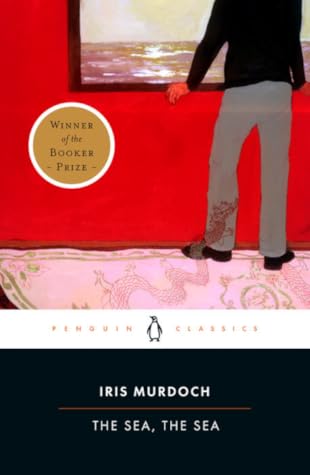
There is a contradiction built into the literary use of what we might see as the mode of Marsyas, the mode of lifelikeness or a realism of the physical as it leads to the edge of the spiritual: The catch is that although an artwork needs a shape, the ordinary world and our experiences within it are unformed and inartistic, an ill-sorted jumble of events and crisscrossing motives and roughly joined disguises—false and foolish integuments. Beauty of form is far removed from most lives. The texture of consciousness is sluggish when not venal (nobody really thinks in the shaped linguistic patternings of Hermann Broch’s Vergil or Beckett’s Watt or García Márquez’s patriarch or Coetzee’s magistrate), while the many occasions in literary art for tempting closure in the shaping of event are all too often triggered by fantasy or will. Paradoxically, it is this willed closure or neatness of finish that the true artist needs to resist, fending off the urge to smooth out the rough surfaces of pain, necessity, and accident. Instead, as in Shakespeare, exemplary in bearing witness to the terrible even in those plays most given over to a maniac tidying up of bodies in marriage and death, the goal is to render clearly and without flinching the truth of all the infinite varieties of untruth. Like Shakespeare, Murdoch canvasses the truth of untruth—human vanity, jealousy, idleness. “People lie so,” says James Arrowby to his cousin Charles, “even we old men do. Though in a way, if there is art enough it doesn’t matter, since there is another kind of truth in the art” (p. 173).
Does this model of the true art-of-the-untruth pertain in The Sea, the Sea? How far can Charles Arrowby, the scot-free predator upon other men’s women, theatrical Tartar and tyrannus tonans , enter into an understanding of the backwardness—the lies—of his own character? On the surface, he admits he has nothing extraordinary to show for his sixty-some-odd years, that he leaves nothing of lasting value behind (no offspring, for example), that he has not been generous or ever, really, courageous—and certainly not “good.” Yet he cannot seem to get up and move elsewhere with this recognition; he remains sanguine about his prospects, sunk in that self while lavish in his criticisms of traits in others that resemble his own bad ones. The hard, the necessary, and the fated truths of existence do not seem to affect or even brush against him—or when they do, they do so in beckonings of apparent reprieve or unanticipated blessing (as in his two visions of the starry night, the second ending with a visit from the selkies).
[...] I sold a great many things when I left the big flat in Barnes, and removed most of the remainder to a tiny pied-à-terre in Shepherd’s Bush where I pushed them in anyhow and locked the door. I rather dread going back there. I cannot now think why I bothered to keep a London base at all; my friends told me I ‘must’ have one.
I say ‘my friends’: but how few, as I take stock, they really are after a lifetime in the theatre. How friendly and ‘warm-hearted’ the theatre can seem, what a desolation it can be. The great ones have gone from me: Clement Makin dead, Wilfred Dunning dead, Sidney Ashe gone to Stratford, Ontario, Fritzie Eitel successful and done for in California. A handful remain: Perry, Al, Marcus, Gilbert, what’s left of the girls … I am beginning to ramble. It is evening. The sea is golden, speckled with white points of light, lapping with a sort of mechanical self-satisfaction under a pale green sky. How huge it is, how empty, this great space for which I have been longing all my life.
Still no letters.
It was early evident to me that my uncle (Abel) was more loved and more fortunate than my father (Adam). How does a child perceive such things, or rather how is it that they are so perceptible, so obvious, to a child, who perhaps, like a dog, reads signs which have become invisible amid the conventions of the grown-up world, and are thus overlooked in the adult campaign of deceit? I knew that my father, who was slightly the elder of the two, was some sort of luckless failure before I knew what ‘failure’ meant, before I knew anything about money, status, power, fame or any of those coveted prizes whose myriad forms have led me throughout my life that dervish dance which is now, I trust, over. And of course when I say that my dear father was a failure I mean it only in the grossest worldly sense. He was an intelligent good man, pure in heart.
Though described as an ‘experimentalist’ I am a firm friend of the proscenium arch. I am in favour of illusion, not of alienation. I detest the endless fidgeting on the surrounded stage which dissolves the clarity of events. Equally I abhor the nonsense of ‘audience participation’. Riots and other communal activities may have their value but must not be confused with dramatic art. Drama must create a factitious spell-binding present moment and imprison the spectator in it. The theatre apes the profound truth that we are extended beings who yet can only exist in the present. It is a factitious present because it lacks the free aura of personal reflection and contains its own secret limits and conclusions. Thus life is comic, but though it may be terrible it is not tragic: tragedy belongs to the cunning of the stage. Of course most theatre is gross ephemeral rot; and only plays by great poets can be read, except as directors’ notes. I say ‘great poets’ but I suppose I really mean Shakespeare. It is a paradox that the most essentially frivolous and rootless of all the serious arts has produced the greatest of all writers. That Shakespeare was quite different from the others, not just primus inter pares but totally different in quality, was something which I discovered entirely by myself when I was still at school; and on this secret was I nourished. There are no other plays on paper, unless one counts the Greek plays. I cannot read Greek, and James tells me these are untranslatable. After looking at a number of translations I am sure he is right.
lmao he is so impressively annoying
Was I sorry that I never became a first-rate actor? How often I have been asked that question! Well, of course. Directors always envy actors and I suspect that almost every great director would secretly prefer to be a great actor. Some people held the view that a more successful acting career awaited me in films and television and they tried to lure me in; but in spite of many amusing excursions I never cared much for these media. I always felt real drama belonged to the live theatre. I had my ambitions, especially of course in Shakespeare; but I always funked Lear and the less said about my Hamlet the better. I think I was a good Prospero, that time when Lizzie was Ariel. That was my last great part, and now so long ago. After that I laid a certain vanity aside. Vanity receives such a battering in the theatre, one would imagine that it would tend to vanish, but most actors manage to retain theirs: not only as an occupational ailment, but perhaps actually as a necessary instrument of survival. Genuine generous admiration, and there is plenty of it, always helps and heals. I looked at the good actors and the great actors, at Wilfred, at Sidney Ashe, at Marcus Henty (also one of Clement’s lovers), at Fabian Ginsberg, even at Perry, even at Al. And, as an actor, I quietly took a backseat. This was easier to do by then as I was fully absorbed in directing. I amused myself and the public by playing tiny parts in my own productions and once nearly stole the show as Jacob in The Seagull.
cute