
by
Anne Lamott
View all notes
Available query params: commented=1, untagged=1
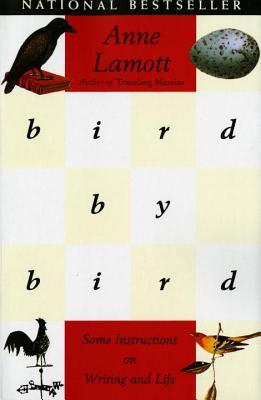
You are going to love some of your characters, because they are you or some facet of you, and you are going to hate some of your characters for the same reason. But no matter what, you are probably going to have to let bad things happen to some of the characters you love or you won’t have much of a story. Bad things happen to good characters, because our actions have consequences, and we do not all behave perfectly all the time. As soon as you start protecting your characters from the ramifications of their less-than-lofty behavior, your story will start to feel flat and pointless, just like in real life. Get to know your characters as well as you can, let there be something at stake, and then let the chips fall where they may. [...]
Lastly: I heard Alice Adams give a lecture on the short story once, one aspect of which made the writing students in her audience so excited that I have passed it along to my students ever since. (Most of the time I give her credit.) She said that sometimes she uses a formula when writing a short story, which goes ABDCE, for Action, Background, Development, Climax, and Ending. You begin with action that is compelling enough to draw us in, make us want to know more. Background is where you let us see and know who these people are, how they’ve come to be together, what was going on before the opening of the story. Then you develop these people, so that we learn what they care most about. The plot—the drama, the actions, the tension—will grow out of that. You move them along until everything comes together in the climax, after which things are different for for the main characters, different in some real way. And then there is the ending: what is our sense of who these people are now, what are they left with, what happened, and what did it mean?
I honestly think in order to be a writer, you have to learn to be reverent. If not, why are you writing? Why are you here?
Let’s think of reverence as awe, as presence in and openness to the world. The alternative is that we stultify, we shut down. Think of those times when you’ve read prose or poetry that is presented in such a way that you have a fleeting sense of being startled by beauty or insight, by a glimpse into someone’s soul. All of a sudden everything seems to fit together or at least to have some meaning for a moment. This is our goal as writers, I think; to help others have this sense of—please forgive me—wonder, of seeing things anew, things that can catch us off guard, that break in on our small, bordered worlds. When this happens, everything feels more spacious. [...]
Annie Dillard has said that day by day you have to give the work before you all the best stuff you have, not saving up for later projects. If you give freely, there will always be more. This is a radical proposition that runs so contrary to human nature, or at least to my nature, that I personally keep trying to find loopholes in it. But it is only when I go ahead and decide to shoot my literary, creative wad on a daily basis that I get any sense of full presence [...]
Two things put me in the spirit to give. One is that I have come to think of almost everyone with whom I come into contact as a patient in the emergency room. I see a lot of gaping wounds and dazed expressions. Or, as Marianne Moore put it, "The world’s an orphan’s home." And this feels more true than almost anything else I know. But so many of us can be soothed by writing: think of how many times you have opened a book, read one line, and said, "Yes!" And I want to give people that feeling, too, of connection, communion.
The other is to think of the writers who have given a book to me, and then to write a book back to them. This gift they have given us, which we pass on to those around us, was fashioned out of their lives. You wouldn’t be a writer if reading hadn’t enriched your soul more than other pursuits. So write a book back to V. S. Naipaul or Margaret Atwood or Wendell Berry or whoever it is who most made you want to write, whose work you most love to read. Make it as good as you can. It is one of the greatest feelings known to humans, the feeling of being the host, of hosting people, of being the person to whom they come for food and drink and company. This is what the writer has to offer.
All that I know about the relationship between publication and mental health was summed up in one line of the movie Cool Runnings, which is about the first Jamaican bobsled team. The coach is a four-hundred-pound man who had won a gold in Olympic bobsledding twenty years before but has been a complete loser ever since. The men on his team are desperate to win an Olympic medal, just as half the people in my classes are desperate to get published. But the coach says, "If you’re not enough before the gold medal, you won’t be enough with it." You may want to tape this to the wall near your desk.
[...] I said that I was all over the place, up and down, scattered, high, withdrawing, lost, and in the midst of it all trying to find some elusive sense of serenity. "The world can’t give that serenity," he said. "The world can’t give us peace. We can only find it in our hearts."
"I hate that," I said.
"I know. But the good news is that by the same token, the world can’t take it away."

Tensions between Watts residents and the police ran high. While the vast majority of Watts residents in 1965 were black, only 4 percent of the sworn personnel of the Los Angeles Police Department and 6 percent of the Los Angeles County Sheriff’s Department were black. Police Chief William Parker used analyses of crime data to develop and justify a policy that explicitly targeted Watts and other black neighborhoods for heavy police coverage, including intrusive techniques such as routine frisking of people on the street. “I don’t think you can throw the genes out of the question when you discuss the behavior patterns of people,” Parker wrote in 1957. [...]
genes ... lmao
Watts exploded. On August 12, at 9:30 P.M., a group identifying itself as “followers of Malcolm X” arrived on Avalon Boulevard shouting “Let’s burn . . . baby, burn!” The next day, at 3:30 P.M., the Emergency Control Center journal recorded “6 male Negroes firing rifles at helicopter from vehicle, 109th & Avalon.” Governor Edmund “Pat” Brown cut short an aerial tour of South Los Angeles because of “sniper fire.” Delta Airlines rerouted flights over the city because rebels were “shooting at planes.”
this owns
The rebellion spread out over 46.5 square miles. All told, 34 people—almost all black—were killed, many by police, and more than 1,032 were wounded; 3,952 people were arrested. The rebellion caused more than $40 million in property damage to over six hundred buildings, completely destroying two hundred of them.
damn