
View all notes
Available query params: commented=1, untagged=1

Shelley, in her flowery, uncertain voice, began to explain herself. I looked at her wavy blond hair, linen skirt, and pink tank top. It must be a kind of suicide to love a person like this, a person so edgeless. It must be like drowning. Shelley explained to me how they met, how close they were, how immediate that closeness was. She told me the places they went and the things they did, but her affair—like all such affairs—was simply boring; she was stupid enough to believe she is the only person who has ever known such a thing, as if she alone had discovered the intensity of deceptive love. I considered telling her.
“I want you to know I’m sorry. I’m sorry for what you’re going through,” she whispered.
But no one has any use for consolation from a young woman in love, a pretty young woman who is probably always in love, both with herself and with others who always return that love, always reflect it brightly back in her direction. Without thinking, I pushed a teal vase from the side table to let it shatter on the floor. A moment passed. I did not apologize.
I turned to Shelley, who was facing away from me as if I were a stranger getting undressed. The line dipped down sharply at the end of the graph for Depth of Love. I wanted to know why, but unlike the other points of ascent and decline there was no explanation, no paragraph detailing an inciting incident with a date and time. Perhaps it takes something to receive love, I thought as I felt my jaw lock and stay there. Perhaps your ability to feel it waned, perhaps you are the one who ruins things, it was you, you—and there it was again, that useless, human blame two people will toss between each other when they become too tired or weak to carry the weight of love.
I stalked down the road as if I had been physically beaten, stepping unevenly. A dreadful, deadly feeling. I have no choice but to put it here, to put it somewhere, to translate it into language so it won’t hang around my neck like a locket filled with poison.
In moments that year I thought I saw X relax a little, as if this achievement had really changed her, but I found several pages of handwritten notes picking apart a single essay that the writer Elvia Wilk published in Future Looks Magazine just weeks before the retrospective opened. One line in particular seemed to have driven X mad: “The problem with her oeuvre, which is also a problem with her personas—her oeuvre and personas cannot be dissociated—is that it fights a merciless battle against complicity with the existing culture, against the incomprehension that accompanies each social and professional recognition, beginning with X’s own.”* All her notes amounted to a single question that Wilk raised and X was unable to resolve—could she both disdain the state of this country’s culture as a whole and still reasonably desire or accept its approval?
the perennial question
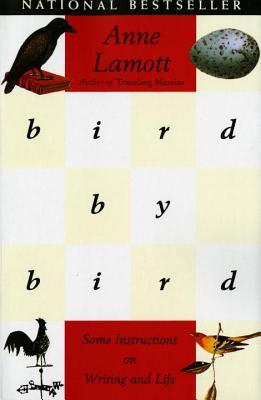
[...] Writing has so much to give, so much to teach, so many surprises. The thing you had to force yourself to do - the actual act of writing - turns out to be the best part. It's like discovering that while you thought you needed the tea ceremony for the caffeine, what you really needed was the tea ceremony. The act of writing turns out to be its own reward.
[...] they may even go from wanting to have written something to just wanting to be writing, wanting to be working on something, like they'd want to be playing the piano or tennis, because writing brings with it so much joy, so much challenge. It is work and play together. When they are working on their books or stories, their heads will spin with ideas and invention. They'll see the world through new eyes. Everything they see and hear will become grist for the mill. At cocktail parties or in line at the post office, they will be gleaning small moments and overheard expressions: they'll sneak away to scribble these things down. They will have days at the desk of frantic boredom, of angry hopelessness, of wanting to quit forever, and there will be days when it feels like they have caught and are riding a wave.
[...] when my writer friends are working, they feel better and more alive than they do at any other time. And sometimes when they are writing well, they feel that they are living up to something. It is as if the right words, the true words, are already inside them, and they just want to help them get out. [...]
And then the miracle happens. The sun comes up again. So you get up and do your morning things, and one thing leads to another, and eventually, at nine, you find yourself back at the desk, staring blankly at the pages you filled yesterday. And there on page four is a paragraph with all sorts of life in it, smells and sounds and voices and colors and even a moment of dialogue that makes you say to yourself, very, very softly, "Hmmm." You look up and stare out the window again, but this time you are drumming your fingers on the desk, and you don’t care about those first three pages; those you will throw out, those you needed to write to get to that fourth page, to get to that one long paragraph that was what you had in mind when you started, only you didn’t know that, couldn’t know that, until you got to it. And the story begins to materialize, and another thing is happening, which is that you are learning what you aren’t writing, and this is helping you to find out what you are writing. Think of a fine painter attempting to capture an inner vision, beginning with one corner of the canvas, painting what he thinks should be there, not quite pulling it off, covering it over with white paint, and trying again, each time finding out what his painting isn’t, until finally he finds out what it is.
E. L. Doctorow once said that "writing a novel is like driving a car at night. You can see only as far as your headlights, but you can make the whole trip that way." You don’t have to see where you’re going, you don’t have to see your destination or everything you will pass along the way. You just have to see two or three feet ahead of you. This is right up there with the best advice about writing, or life, I have ever heard.