
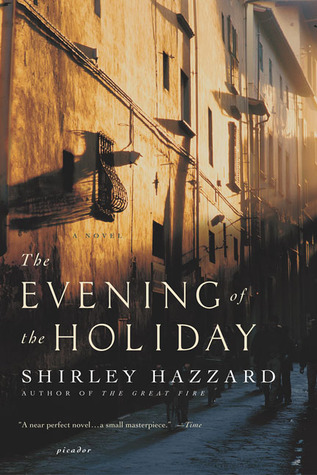
For Tancredi, it was the time of year when the seasons ceased to have meaning. Now, try as he would, he could not imagine a cold day, a storm, a shower of rain. There were days in winter when the narrow spiralling streets of this town were reduced to slippery channels banked with snow; when, viewed from the foot of its hill, the city rose up like a symmetrical, frosted fir tree, branching into great terraces of church, palace, and piazza. But every spring Tancredi pardoned all this - with true forgiveness, since he could not even remember it. The summer light, the predominant light of the countryside, restored all the true shapes and colours; he got up earlier to enjoy the sight of them. Not that he forgot the complications of his life - the wife he no longer loved, the children from whom he was often separated - but these became more bearable in the light of June. Not that in his office he suffered fools gladly or forgave his enemies - but he was prepared to let them off more lightly than usual. This afternoon he could think of himself, here in the piazza, as a personable man with a woman who did him credit - his vanity was satisfied with an occasional glimpse of this kind. (He would have preferred, perhaps, someone less distraught, more companionable; and if she had belonged to him he would never have let her wear that particular shade of green. However, one could not always have exactly what one liked.)