
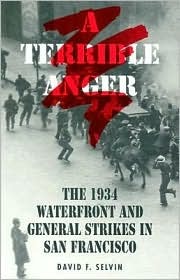
No one was exempt who came within range of the battle. Joe Rosenthal, a newspaper photographer who later won worldwide fame for his World War II photo of the flag raising at Iwo Jima, was beaten on the Embarcadero. He told Bridges biographer Charles P. Larrowe he had been "stoned by strikers, tear gassed by police, and beaten so badly that he was hospitalized for a week." Two passengers on a Market Street streetcar were wounded by stray bullets. Many injured were treated at ILA headquarters (where a doctor was on duty) but, when it came under police attack, were removed to a number of places, including headquarters of the Communist Party on Haight Street. George Hedley, an official of the Pacific School of Religion, had spent some ten days at this point on the waterfront talking with union officers, strikers, passersby. He insisted that the police were invariably the aggressors; he never saw a weapon in the hands of a striker. "Such rioting as occurred," he argued, "was the direct product of their own aggression." Chief Quinn said later that "at times it looked quite bad . . . we were faced by from five to seven thousand infuriated men bent on" wreaking havoc with the nonunion men, then the steamship companies' property; "after that, only the imagination can determine what they would have done in the way of sacking San Francisco."