
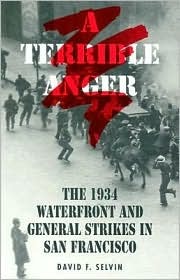
THROUGH THE MORNING of Monday, July 2, thousands of longshoremen, seamen, teamsters -- strikers, sympathizers, the merely curious -- clustered on the Embarcadero. By early afternoon, a dense crowd (the Chronicle said 1,500; the ILA strike bulletin, 20,000) expectantly faced the docks around Pier 38. "Huddled four deep, approximately 4,000 strikers along the waterfront eyed the Matson and other docks, waiting for the port to open," the News reported. A few clutched clubs or stones. The outnumbered police "grinned at the strikers." Mounted police stirred restlessly as their horses fidgeted. From Rincon Hill above the Embarcadero a gallery of hundreds looked down on the tense scene. Doors of the dock were partly open, motorcycle cops waiting on each side. Overhead two planes circled. One bore the letters S.F.P.D., the police department's one-plane air patrol. (It had only a one-way radio; it could receive orders, hear alarms, but its only communication with the ground was by a handwritten note, weighted with a rock and dropped as near as possible to the closest policeman.) The other belonged to Universal News Service. On the ground, news photographers and newsreel cameramen cruised slowly by. From his seat on the crowded top of a freight car, one striker wondered, "Will they try to move the trucks?" and realized that the same question was on everybody's mind. What do we do? he asked an older man, a squad captain. "Use your own judgment," the man replied, "but I reckon we'll try to storm those trucks."
Word of the Industrial Association's intention to open the port that afternoon was spread wide. The newspapers, radio stations, and word of mouth had alerted the entire city. At 3:00 P.M., they announced, a parade of trucks, under heavy police protection, would enter Pier 38, load, then deliver the merchandise to the Atlas warehouse on King Street.