
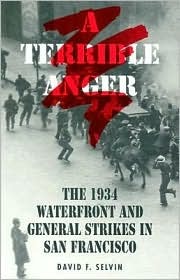
A week later, the general strike was a reality. By that astonishing day, the strike was no longer a surprise but its dimensions as well as its substance, especially in the light of the newspapers' doomsday predictions, amazed the watching Western world. Workers by the thousands, in San Francisco and the East Bay, union and nonunion, left their jobs. Hundreds of businesses, factories, and ware- houses closed, many when their employees failed to show up, some out of sympathy, some from uncertainty and fear. Public services halted, then slowly, piecemeal, resumed. The newspapers had warned of hunger and riot but there was neither. By the end of the fourth day, it was over.
But the general strike opened the way, finally, after eighty-two bitter days, to end the longshoremen's and the maritime workers' strikes. They ended under an agreement to arbitrate the issues in dispute; the resulting changes encompassed more than the revised wage scales and changed working conditions handed down by the arbiters. The real settlement, as it turned out, produced radical, fundamental, and permanent changes in the economic relations between employer and employee in the then-massive and powerful Pacific Coast maritime industry. The settlement raised the curtain on a vigorous and aggressive drive by longshoremen and seamen to take charge of their jobs. The movement went beyond the blackand-white of new contracts to exert decisive control over the distri- bution of jobs, the pace of the work, the conditions on the job, safety-the very job control that employers had exercised unilaterally, without consultation or conscience. The settlement also pro- duced a long-desired but short-lived coastwide federation of maritime workers.