
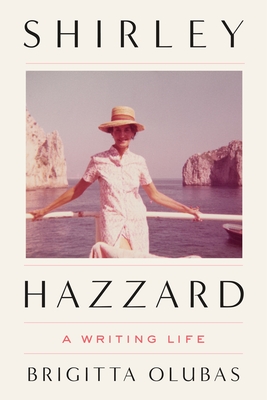
Aligned with that project of feeling, observing, imagining—the novelist’s work—is the human and poetic matter of love. She explained that she had wanted to write “a story of falling in love,” to tell truthfully “the accidental meeting of man and woman and a sense of destined engagement that would possibly last out their lives. This, to serve as a counterweight to the huge disillusion of a ravaged world. I will let myself in for derision, whatever I say on this theme, I suppose. Yet I think that such a story is not necessarily idealized, and that the dream, at least, of such love still supplies the poetry of all manner of unpoetic lives.” This statement of large belief in romantic and sexual love stands behind all Shirley Hazzard’s writing. It is aligned with her sense of human connectedness and above all with poetry, which is at heart for her a way of being human. She put it like this in one of her last public appearances: “Poetry comes in different forms, it can come in mere feeling, I think, people realize within themselves that they have deeper feelings than language always allows them to express. And poetry can save very much the souls of people who feel that way—who feel cut off from a deeper thing within themselves and having to fit in with much more daily forms of expression.” Some years earlier, she had recorded in her diary how after a performance, “stupendously beautiful,” of Lucia di Lammermoor, with Joan Sutherland and Alfredo Kraus, her friend the art historian John Pope-Hennessy had observed, “It treats Romantic love as an ideal,” and how she had responded, in words that expressed her sense of the irreducible and necessary power of love, “A principle, almost. Something elevated and supreme, transcendent over reason, ambition, loyalty, even decency.”
<3