
by
Mary Karr
advice/writing
Patricia Highsmith,
Ursula K. Le Guin,
Mary Karr,
Anne Lamott,
David Foster Wallace,
Martin Amis,
Vijay Prashad,
Annie Dillard,
Syd Field
tips

The most skillful writers either package facts so they hold this kind of psychological interest, or the data get palmed off in carnal scenes the reader can imagine and engage with on a physical level. In these books, you often don’t notice you’re being fed a string of facts. They’re sprinkled into other writing like pepper—there when you need them, but otherwise invisible.
My own first drafts start with information, then I try to herd that information out of my head into a remembered or living scene. I often interview myself about how I came to an opinion. Then, rather than present an abstract judgment (“She was a thief”), I try to re-create how I came to that opinion. “She was a thief” becomes “I stared into the computer’s big green eye, inside which sat the web site where my diamond bracelet was being sold, Lydia’s email contact in the corner.”
Some data, you may think you need to blurt out—the year, for instance. But saying, “On the news that summer, I watched the president resign before helicopters on the White House lawn” says “Nixon administration” to the reader in a slightly more fetching way. One cheap way writers try to strap on character is with T-shirt slogans and brand-name clothing. I encourage my students to work a little harder than this. Try to find something singular and dramatic a person does, instead of just gluing on a label that limits meaning to present-day fashion and won’t make sense fifty years hence.
Take data about a speaker’s age and size. “Standing under the orange hoop, I was the only freshman who could lift one ape-long arm and brush net.” This says age and size and basketball prowess while being evocative. “I tried to hunch inside the new letter jacket, but my bony wrists stuck out.” This adds an element of psychology—self-consciousness.
Most memoirs fail because of voice. It’s not distinct enough to sound alive and compelling. Or there are staunch limits to emotional tone, so it emits a single register. Being too cool or too shrill can ruin the read. The sentences are boring and predictable, or it’s so inconsistent you don’t know who’s speaking or what place they come from. You don’t believe or trust the voice. You’re not curious about the inner or outer lives of the writer. The author’s dead in the water.
We live in the age of the image, and it’s too easy to learn carnal writing for a memoirist to sketch a foggy physical world sans evocative sensory detail. A lot of instruction manuals beam in on the physical, simply because you can master it. But few textbooks take up how the inner life manifests itself in a memoir’s pages. In the more spectacular visual media like action films, say, the inner life fails to get much airplay—at most a scene in a shrink’s office or a snippet of voiceover here and there. But memoir can compete against the pyrotechnics of visual imagery in film and TV only by excelling where those media fail: writing a deeper moment from inside it.
You’re looking for that inner enemy that’ll help you to structure the book. I always have inklings of it, but tend to find it by writing interior frets and confessions and yearnings as I recall them. Maybe it’s only manifest after a first draft. Once I’ve found it, I’ll revise with it as the spine—how the self evolves to reconcile its inner conflicts over time. Your attendant setbacks and jackpots should lead up to a transformed self at the end.
So right off, he readies us for voices weaving together and for radical shifts in tone from light to dark. As a writer you can’t just start jamming stuff together, hoping the reader will magically know what’s in your mind. You have to start out slowly, by laying transitions—like leaving breadcrumbs for the reader. Then the transitions get quicker through the book. As you get used to the method, the breadcrumbs grow fewer and eventually vanish. By the end, it’s all sped-up jump cuts with invisible connections the reader’s already mastered.

The third is wordplay. Wallace doesn't bend grammar, but he bends English. He loves Germanic compounds like "shingle-sized" (describing pizza slices), "Rice-Krispie-squarish" (describing Krakkles), and "pubic-hair-shaped" (describing Curly Fries). If no existing adjective can do exactly what he wants, he invents one--for instance, "Jetsonian" (describing DIPPIN DOTS). The students, ecumenical scholars of pop culture, all get the reference.
[...]
The fifth is multisensory description. We all have noses, ears, tongues, and skin, but most people write as if they had only eyes. Not Wallace. That's how he makes us feel we're at the fair, not just reading about it. I ask for examples of each sense. Everyone speaks at once. Sound-carpet of deep fryers! Air spicy with antiperspirant and Coppertone! Yummy Elephant Ears! The weird, abstract texture of DIPPIN DOTS! I ask how they'd characterize "the green reek of fried tomatoes" and "bright-yellow popcorn that stinks of salt". It's Yale. At least four students cry out, Synesthesia!
other aspects of the essay: the section about the fair's food offerings is super jumbled and disorganized to represent the actual fair; his maximalist sentence structure is still nevertheless highly meticulous and precise (his SNOOTitude shows); when he lists sweets, the items get longer/funnier near the end

What is now being celebrated, we’re told, is the system’s newfound commitment to greater inclusiveness. But there is a sharp distinction to be made between celebrating the appearance of new talent in filmmaking and celebrating the continued box office success of the blockbuster form itself. For moviegoers it is not always so easy to tell the difference, but every film executive understands it.
Criticism’s function is separate from that. “All that is required of the embattled critic as a test of his courage is that he never lose faith in his own judgment,” the film critic Andrew Sarris wrote in 1970. That kind of critical courage has waned in the age of the blockbuster. Jonathan Rosenbaum’s retirement from the Chicago Reader in 2008 left a vacuum in critical conscience that was filled by a strange, renewed interest in the opinions of the top critics at major media outlets, even as their opinions became more wishy-washy and noncommittal. No critic wants to get owned by Samuel L. Jackson on Twitter, like one did when the Avengers movie before last came out. It’s easier and safer for critics to embrace the style of feeble criticism that has emerged alongside the blockbusters they would prefer to avoid. For all the anger at critics, film criticism is very gentle these days.

In great novels we always feel that the writer, at the time of the writing, knows as much as anyone around can know, and is struggling to make sense of what is perceived somewhere in the nerve endings if not yet in clarified consciousness. When a novel gives us less than many of us know -- and is content with what is being given -- we have middlebrow writing. Such writing -- however intelligent its author, however excellent its prose -- is closer to the sentimental than to the real. The reader senses that the work is sentimental because the metaphors are inaccurate: approximate, not exact. To get to those nerve endings a metaphor must be exact, not approximate. The exact metaphor is writer's gold.

[...] At last I understood that the way over, or through this dilemma, the unease at writing about "petty personal problems" was to recognise that nothing is personal, in the sense that it is uniquely one's own. Writing about oneself, one is writing about others, since your problems, pains, pleasures, emotions -- and your extraordinary and remarkable ideas -- can't be yours alone. The way to deal with the problem of "subjectivity," that shocking business of being preoccupied with the tiny individual who is at the same time caught up in such an explosion of terrible marvellous possibilities, is to see him as a microcosm and in this way to break through the personal, the subjective, making the personal general, as indeed life always does, transforming a private experience [...] into something much larger: growing up is after all only the understanding that one's unique and incredible experience is what everyone shares.
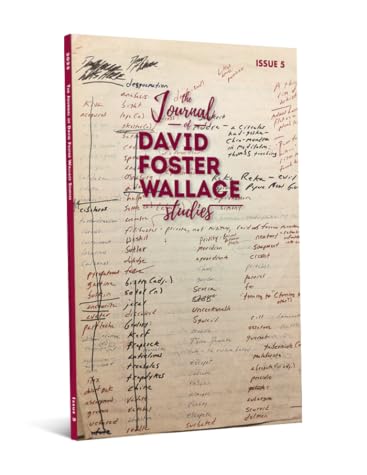
Wallace chose philosophical fiction over philosophy because he saw fiction as the better chance to connect with his readers. He wanted to confront philosophical problems by making them concrete. He counted on fiction's "ability to talk meaningfully to us." Because of this intent, his fiction exists in inextricable relationship with his nonfiction, and his overall work is characterized by consistency in subject matter and variation in perspective, weaving fiction, nonfiction, literature, philosophy, sociology, psychology, and science to try to find the truth and in it salvation from despair.
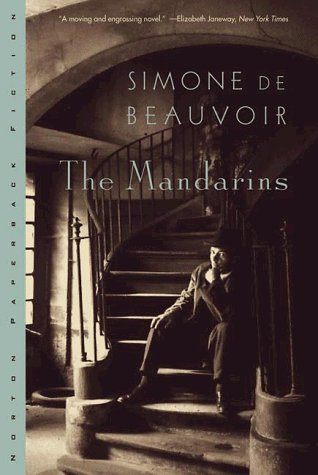
He climbed-the stairs. He was anxious to get back to his writing, and he was happy at the thought that his novel, at least, wasn't going to be the slightest bit edifying. He still had no exact idea of what he was going to do; the only assignment he had set himself was to enjoy himself fully in being sincere. He spread his notes in front of him — almost a hundred pages. It was good to have put them away for a month; now he would be able to reread them with a fresh eye. He plunged into them joyfully, happy to rediscover memories and impressions formed into careful and smooth-flowing sentences. But after a while he began to worry. What was he going to do with all this stuff? These scribblings had neither head nor tail, even though they did have something in common — a certain feeling, a climate, the climate of the pre-war era. And that suddenly bothered him. He had thought vaguely, 'I shall try to give the flavour of my life.' As if such a thing were a perfume, labelled, trade-mark-registered, always the same, year after year. But the things he had to say about travelling, for example, were all in terms of a young man of twenty-five, the young man he had been in 1935; they had nothing at all to do with what he had experienced in Portugal. The story of his affair with Paula was equally dated; neither Lambert, not Vincent, nor any of the boys he knew would have any similar reactions today. And besides, with five years of living under the German occupation behind her, a young woman of twenty-seven would be very different from Paula. There was one solution: deliberately to place the book around 1935. But he had no desire to write a 'period' novel recreating a world that no longer was.. On the contrary, what he had hoped for in jotting down those lines was to throw himself life and whole on to paper. Well then, he would have to write the story in the present, transposing the characters and events. Transpose — what an annoying word! what a stupid word!' he said to himself. 'It's preposterous, the liberties one takes with the characters in a novel. They're transported from one century to the next, pulled out of one country and pushed into another, the present of one person is glued to the past of a second. And all of it is larded with personal fantasies. If you look closely enough, every character in a novel is a monster, and all art consists in preventing the reader from looking too closely. All right then, let's not transpose. Let's make up characters out of whole cloth, characters who have nothing at all in common with Paula, with Louis, with myself. I've done it before. Only this time it was the truth about my own experiences that I wanted to tell...' He pushed aside the stack of notes. Yes, it was a bad idea, this setting things down haphazardly. The best way was to proceed as usual, to begin with an outline, with a precise purpose. 'But what purpose? What truth do I want to express? My truth. But what does that really mean?' He looked dully at the blank page. 'It's frightening, plunging into empty space with nothing to clutch at. Maybe I have nothing more to say,' he thought. But instead it seemed to him that he had never really said anything at all. He had everything to say, like everyone else, always. But everything is too much. He remembered an old couplet painted on a plate: 'We enter, we cry, and that is life; we cry, we leave, and that is death.' What more was there to add? 'We all live on the same planet, we are born from a womb, and one day we'll serve to fatten worms. Yes, we all have the same story. Why then should I consider it mine alone and decide that it's up to me to tell it?' He yawned; he had had too little sleep, and that blank page made him feel dizzy. He was sunk in apathy. You can't write anything apathetically; you've got to climb back to the surface of life where the moments and individuals count, individually. [...]
ahhhh
'That's just what I ought to do.' There was a brief silence and then suddenly Henri decided the moment had come to unburden himself. 'I brought back your stories,' he said. He smiled at Lambert. 'It's funny, you've had lots of interesting experiences, you've lived them hard, and I've often been fascinated hearing you tell about them. Your articles are always full of meat. And yet in these stories nothing seems to happen. I've been wondering why.'
'You don't think they're any good, do you?' Lambert said. He shrugged his shoulders. 'Well, I warned you.'
'The trouble is you haven't put anything of yourself into them,' Henri said.
Lambert hesitated. 'The things that really affect me wouldn't be interesting to anyone else.'
Henri smiled. 'But it's all too obvious that the ones you do talk about don't affect you at all. You get the feeling that you wrote these stories as if you were writing a hundred lines for punishment.'