
topic/heartbreak
Simone de Beauvoir,
Rachel Kushner,
Michael Ondaatje,
Taffy Brodesser-Akner,
Jay McInerney,
Helen Garner,
Catherine Lacey,
Liv Ullmann,
Jenny Erpenbeck
don't ask
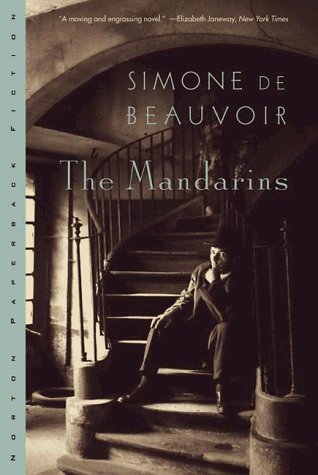
When I found myself back in Paris, in my house, with things to do, I thought, 'I've got to pull myself together.' Pull oneself together the way one salvages a sauce that has turned - it can be done, it's feasible. You step back and, with the knowing eye of a connoisseur, you look at your worries, your troubles. I would sit down beside Robert and we would talk; or I would drink Scotch with Paula and pour out my heart to her. Besides, I was quite capable of studying my lesson, all by myself. Lewis was merely an episode in my existence, an episode to which circumstances had made me attach an exaggerated value. After years of abstinence, I had been hoping for a new love, and I had very deliberately brought this one about. I had magnified it out of all proportion because I knew my life as a woman was drawing to a close. But actually, I could get along very well without it. If Lewis should give me up, I could easily return to my old austerity; or I could seek other lovers — and they all say that when one looks, one finds. My mistake was to take my body so seriously; I needed an analysis that would teach me to be more easy-going. Ah, it's difficult to suffer without giving way! Once or twice, I tried to tell myself, 'One day this affair will end and I'll be left with a beautiful memory; I might just as well make up my mind to it straight away.' But I rebelled. What a ridiculous farce! To maintain that I alone hold our affair in my hands is to substitute a puppet for Lewis, to transform myself into a ghost and our past into anaemic memories. Our love isn't a story I can pull out of the context of my life in order to tell it to myself. It exists outside of myself; Lewis and I bear it together. Closing one's eyes isn't enough to do away with the sun; disavowing that love is only blinding myself. No, I rejected cautious thinking, and false solitude, and sordid consolations. And I realized immediately that that rejection was still another sham; the truth is I was in no way master of my heart. I was powerless against that anguish which gripped me each time I opened one of Lewis's letters, and my sensible speeches would never fill the emptiness inside of me. I was without recourse.
He walked away and disappeared into the bathroom. It was always that way: as soon as I tried to approach him, he would run off. Doubtless, he was afraid I might demand warmth from him or lies or promises which he was unable to give me. I began undressing. I had known in advance that that little tete-a-tete would be disappointing; I was, however, no less disappointed for having known it. At least I had one small bit of luck: my body was so precisely attuned to Lewis's that it had no trouble matching his indifference. We slept in our twin beds, separated by an icy crevasse, and I didn't even understand the meaning of the word 'desire' any more.

Apparently Seneca believed widows should be permitted to mourn their husbands for ten months maximum, a precept meant to counteract the stubbornness of female grief, but what had any ancient man ever really known about any female anything? How could any of them have been so sure that it wasn’t all an act, that she wasn’t a bit pleased, that it wasn’t just relief that led a widow to dwell in her black? What says leave me alone better than a veil?
Still, sure, I could see how there might be value in putting time limits—though not prohibitions—on mourning:
For to be afflicted with endless sorrow at the loss of someone very dear is foolish self-indulgence, and to feel none is inhuman callousness. The best compromise between love and good sense is both to feel longing and to conquer it.
I tried to watch the flight attendant explain what to do in case of an emergency, but I had seen it too many times to see her. The oxygen masks, the exit rows, the seat cushion that can float. We know this. We all know this by now.
The pandemic was still drizzling on, so there were not many on that flight, just the people who really needed (or wanted or were being forced) to go somewhere, to leave somewhere, to flee. None of us were listening.
We know more about how to attempt to survive an aerial disaster than we know about meeting the end of love, the former being highly unlikely while the latter is close to certain.
Over lunch on a quiet street a married friend told me that her husband had asked her for a postnuptial agreement. It seemed humane, perhaps, but too late, as they were already getting separated, trying to read the informational brochure in the seat-back pocket as the plane was hurdling down in flames.
But she was not alone in being willing to prepare for imaginary disasters while refusing to imagine the commonplace ones.

She told me about American men who wanted Asian wives. If I can cook, clean, and take care of my American husband, he’ll give me a good life. It was the only hope I had. And that was how I got into the catalog with all those lies and met your father. It is not a very romantic story, but it is my story.
In the suburbs of Connecticut, I was lonely. Your father was kind and gentle with me, and I was very grateful to him. But no one understood me, and I understood nothing.
But then you were born! I was so happy when I looked into your face and saw shades of my mother, my father, and myself. I had lost my entire family, all of Sigulu, everything I ever knew and loved. But there you were, and your face was proof that they were real. I hadn’t made them up.
Now I had someone to talk to. I would teach you my language, and we could together remake a small piece of everything that I loved and lost. When you said your first words to me, in Chinese that had the same accent as my mother and me, I cried for hours. When I made the first zhezhi animals for you, and you laughed, I felt there were no worries in the world.
You grew up a little, and now you could even help your father and I talk to each other. I was really at home now. I finally found a good life. I wished my parents could be here, so that I could cook for them and give them a good life too. But my parents were no longer around. You know what the Chinese think is the saddest feeling in the world? It’s for a child to finally grow the desire to take care of his parents, only to realize that they were long gone.
Son, I know that you do not like your Chinese eyes, which are my eyes. I know that you do not like your Chinese hair, which is my hair. But can you understand how much joy your very existence brought to me? And can you understand how it felt when you stopped talking to me and won’t let me talk to you in Chinese? I felt I was losing everything all over again.
Why won’t you talk to me, son? The pain makes it hard to write.
As I say, it was a relief to my sister and me that my parents still loved each other. But one way of seeing the problem is that their loves no longer had to do with each other in the right way. My dad didn’t have the strength to conceal from us for long that he hadn’t wanted the divorce. One morning, I don’t remember exactly when, on his bed, with, again, his now baggy arm draped over his eyes, he told me he was still in love with her. Meanwhile he plunged precipitously into needing help. When he got this help from her, he did not have his own love’s homecoming, an answered appeal and arousal. Instead he just had her real compassion. He just had her heartfelt care and commitment, forthcomingly.
This is one way in which two people can be unwed. His love was meant for hers, and hers was merely meant for his well-being; and all his red blood leaked out of that asymmetry.
</3

[...] I think it was then that everything ended between Arturo and me. At night we used to write. He was writing a novel and I was writing my journal and poetry and a movie script. We would write facing each other and drink lots of cups of tea. We weren’t writing for publication but to understand ourselves better or just to see how far we could go. And when we weren’t writing we talked endlessly about his life and my life, especially mine, although sometimes Arturo told me stories about friends who had died in the guerrilla wars of Latin America, I knew some of them by name, because they’d been on their way through Mexico when I was with the Trotskyites, but most of them I’d never heard of. And we kept making love, although each night I distanced myself a little more, involuntarily, without meaning to, without knowing where I was going. It was the same thing that had already happened to me with Abraham, more or less, except now it was a little worse, now that I didn’t have anything.

And yet of course it was also at the same time a scene of carnage. (Why do I so much enjoy writing this down?) I told her from the start that I had no conception of marrying her. Was it blind stupid hope nevertheless which made her so infinitely kind to me? An ungrateful thought: I am sure she had no hope. I told her that the affair was temporary, that my love for her was temporary, and doubtless her love for me was temporary. I spoke of mortality and the fragile and shadowy nature of human arrangements and the jumbled unreality of human minds, while her large light brown eyes spoke to me of the eternal. She said, I want to be perfect for you so that you can leave me without pain, and this perfect expression of love simply irritated me. She said, I will wait forever, although I know … I am not … waiting for … anything. What a love duet, and how much I enjoyed it although in her suffering I suffered a little too. Certainly she concealed her pain as much as she could; but towards the end it was impossible. She cried before me with wide open eyes, not staunching the tears. Her tears fell on my sleeve, on my hand like storm rain. And when at last I told her to go she went like a shadow, with silent swift obedience. After that I went on my second visit to Japan. The taste of sake still makes me remember Lizzie’s tears.
:(
I wanted a wife once when I was young, but the girl fled. Since then I have never really seriously thought of marriage. My observation of the state never made me fancy it. The only happily married couples I know at all well are my Cambridge friends Victor and Julia Banstead, and, in the theatre, Sidney and Rosemary Ashe; and even they, who knows … People are so secretive. I might also count Will and Adelaide Boase, but they only survive because she gives in all the time, which I suppose is one method. What suits me best is the drama of separation, of looking forward to assignations and rendezvous. I cannot prefer the awful eternal presence of marriage to the magic of meetings and partings. I do not even care for sharing a bed, and I rarely want to spend the whole night with a woman I have made love to. In the morning she looks to me like a whore. Marriage is a sort of brainwashing which breaks the mind into the acceptance of so many horrors. How untidy and ugly and charmless married people often let themselves become without even noticing it. I sometimes reflect on these horrors simply in order to delight myself by thinking how I have escaped them!

[...] With an unbearable force, I relived (or so it now seems to me) all that had ever been between us beginning with a similar kiss; and I said (substituting for our cheap, formal “thou” that strangely full and expressive “you” to which the circumnavigator, enriched all around, returns), “Look here—what if I love you?” Nina glanced at me, I repeated those words, I wanted to add … but something like a bat passed swiftly across her face, a quick, queer, almost ugly expression, and she, who would utter coarse words with perfect simplicity, became embarrassed; I also felt awkward.… “Never mind, I was only joking,” I hastened to say, lightly encircling her waist. From somewhere a firm bouquet of small, dark, unselfishly smelling violets appeared in her hands, and before she returned to her husband and car, we stood for a little while longer by the stone parapet, and our romance was even more hopeless than it had ever been. [...]