
topic/heartbreak
Simone de Beauvoir,
Rachel Kushner,
Michael Ondaatje,
Taffy Brodesser-Akner,
Jay McInerney,
Helen Garner,
Catherine Lacey,
Liv Ullmann,
Jenny Erpenbeck
don't ask
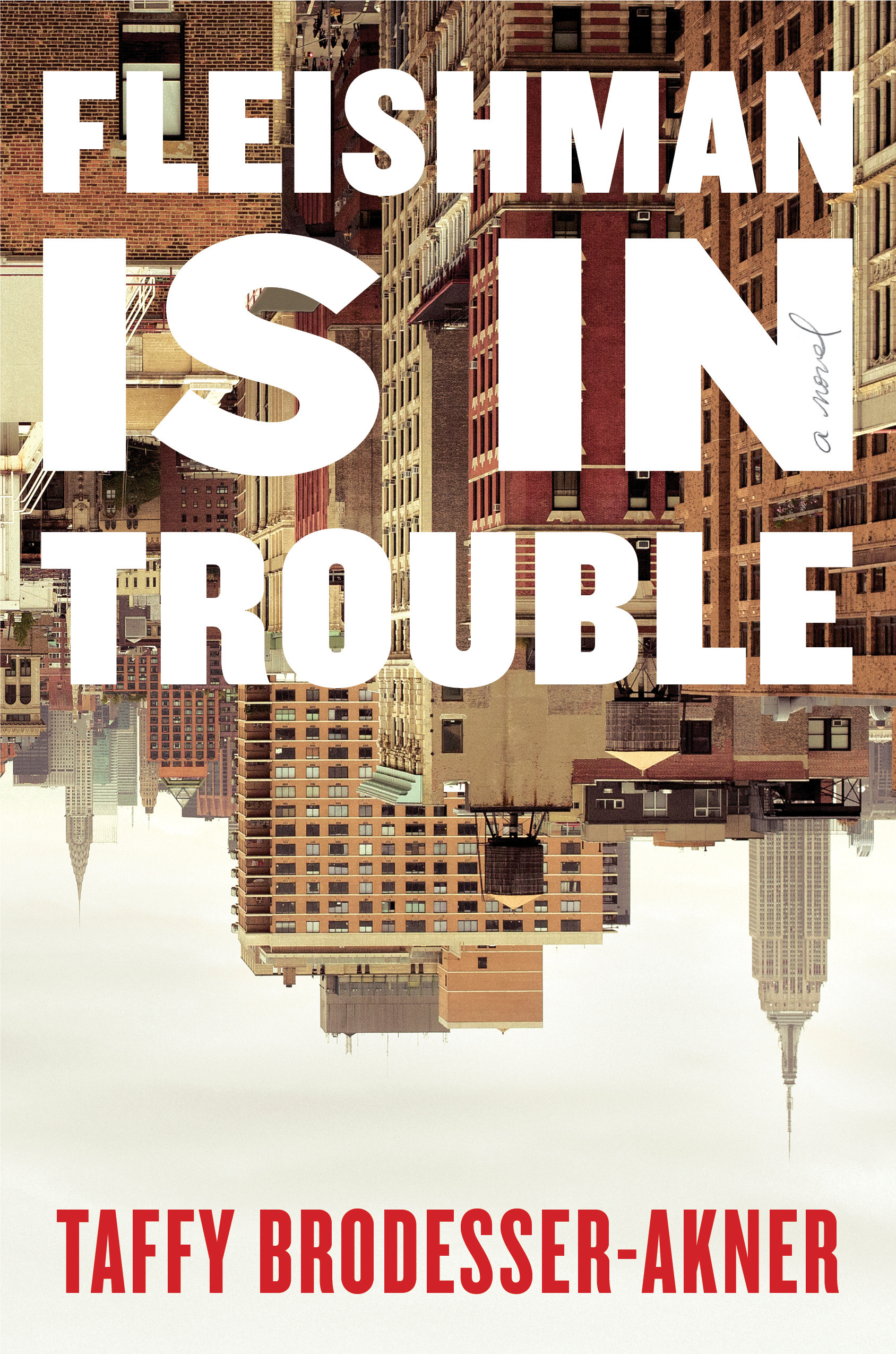
[...] anyone who has ever been to just one session of couples therapy could tell you that beyond your point of view lies an abyss with a bubbling cauldron of fire, and that just beyond that abyss lies your spouse’s point of view. If he were to be a real scientist about this, would he be able to find empirical evidence that Rachel had a point in rejecting him? That Rachel was right to hate him this much? Yes, right then, for the first time, he could see it. He could make his way across the abyss, and just for a minute, he could see that he was the same vile, fat, needy piece of shit he always was.
[...] This was fair? That he would smile and take it up the ass during mediation so that they could present their children with a peaceful and amicable thing, and then the minute it was almost done, she would do the worst thing she could possibly do—a thing so bad that it wasn’t even close on a list of horrible things she had done prior to this? That was fair? If it were fair, and you weighed Toby’s sins against his punishments, you would find that he’d gotten some real kind of raw deal. What did he do so wrong but be devoted? What did he do so wrong but try? But love? But come home on time? But figure that his wife would be a partner to him the way he was to her? But maybe throw a few glasses and maybe say the wrong things?
God, he was so tired of trying to figure out how it had been wrong, what the micromaneuver that set Rachel free from him was. She had abandoned him. She’d been cruel to him. She had denied him love and respect and self-esteem. She had diminished him to become someone who nearly disintegrated into suspicion and then sorrow at the mere affectionate touch of someone. She’d been cruel to their children—their children! She’d left them! She knew what it was to be without parents and still she’d left them!
"abandoned" really gets me. also "denied"
“I never misrepresented myself,” he’d say.
That was a favorite, as if people weren’t supposed to evolve and change and make requests of each other to bend and grow and expand.
At some point, she accepted it. It was up to her to make the kind of living that would allow them to participate in the life they’d signed up for. He accepted it, too. He pretended to be apathetic to the money, but you should have seen how he liked the car. You should have seen how he liked the club—the pool on the rooftop, way above the city, both metaphorically and actually. So Toby adjusted his schedule to be home a little early to relieve Mona, the babysitter. He stood back and allowed her to try for this big thing she wanted to do. She did it, not out of bravery, but out of two parts no choice and three parts because to see Matt Klein again would have been to commit a failure she couldn’t have come back from.
So she did her work and Toby made the noises of someone who was stepping back, but he didn’t really do it. He came home on time, sure. He made dinner when Mona didn’t. But he didn’t adjust his expectations of her, or leave room for how tired she could get or how harried or busy. He loved taking those long walks. No matter how late they were, he wanted to walk. Across the park, across the city. She kept trying to explain to him that time functioned in units. For all his love of physics, he never quite grasped that one: If you use this time to walk to dinner that is thirty-five blocks away instead of letting me finish this email in a cab on the way there, I will be finishing the email at the table. The email isn’t optional. The email is the entire thing.
[...] Somewhere, deep down, he had chosen her because he knew that meant he could do what he wanted with his life and not be obligated to do anything exclusively for money. And somewhere deep down, maybe she chose him because she knew that absent the hunger he clearly didn’t have, she would be permitted to be the animal she always was.
And still: “You’re always angry,” he’d say to her. And then finally she could admit that she was, particularly after those therapy sessions where she saw just how disgusted both Toby and the therapist were by her annoyance at even having to be there. As if you had to celebrate going to couples therapy! As if you had to rejoice over the time and money you were spending not to make things better, but to get them back to bearable. It always struck her as ironic that the revelation of her anger would come not from the therapy itself but from the fact of it. Still, after all those accusations, Toby never wondered why she was angry. He just hated her for being so. The anger was a garden that she kept tending, and it was filled with a toxic weed whose growth she couldn’t control. He didn’t understand that he was a gardener to the thing, too. He didn’t understand that they’d both planted seeds there.
You must be logged in to see this comment.
[...] I would try not to put too much weight on the moments that are the worst in marriage: when one of you is in a good mood and the other can’t recognize it or rise to its occasion and so leaves the other dangling in the loneliness of it; when one of you pretends to not really understand what the other person is saying and instead holds that person to a technicality they don’t deserve.

On the train back from Marseille I read a passage from Calvino’s If on a Winter’s Night a Traveler, the passage about the “Japanese book on a carpet of leaves,” etc., and all at once I’m filled with burning desire, an incredible longing to make love, though since S left, I’ve been all but frozen. I could weep from the memories, the lack, all the vanished sweetness. To lose a man is to age several years in one fell swoop, grow older by all the time that did not pass when he was there, and the imagined years to come. This desire also means I might be ready to fall back into the same kind of favola with someone else.
aww

'And then all of a sudden it's like he suddenly wasn't there.'
'At this point she'd bring up how I seemed suddenly distant. I would explain in response that I had gotten, suddenly, over champagne, an idea for a truly central piece on the application of state variable techniques to the analysis of small-signal linear control systems. A piece that could have formed the crux of my whole senior year's thesis, the project that had occupied and defined me for months.'
'He went to his Dad's office at the University and I didn't see him for two days.'
'She claims that's when she began to feel differently about things. No doubt this new Statistics person comforted her while I spent two sleepless, Coke-and-pizza fueled days on a piece that ended up empty and unfeasible. I went to her for comfort and found her almost hostile. Her eyes were dark and she was silent and trying with every fiber to look Unhappy. She practically had her forearm to her forehead. It was distressed-maiden/wronged-woman scenario."
[...]
'She regarded the things that were important to me as her enemy, not realising that they were, in fact, the "me" she seemed so jealously to covet.'
just a cool idea (different priorities - inspiration for MC and his wife)

The weekend her father left – left the house, the town, the country, everything, packing so lightly I believed he would come back – he had said, ‘You can raise Nickie by yourself. You’ll be good at it.’
And I had said, ‘Are you on crack?’
And he had replied, continuing to fold a blue twill jacket, ‘Yes, a little.’
the line in the subject kills me

Did I want children, David? I know I always told you I didn’t, but did I, secretly? If not, why did I continue sobbing all the way back to the hotel, all the way through the dose, to the point of addressing the question to you, imaginary you? Are you glad we didn’t? Are you going to do it with . . . Philippa? Can that really be her name? Are you going to have a little Silverlake family? Are you going to wear a Baby Bjorn at the co-op? Are you going to name the girl Hyacinth and the boy Elderflower? Is there any way to reclaim the time we’ve lost? Is there a place where our days aren’t numbered? What is your worst fear? What is mine? And are you even reading this?

In the kitchen, the water in the kettle shakes, creaks toward boiling, and outside the wind blows. Somewhere, in another street, a roofslate slides and falls. Roger has taken Jessica's cold hands in to warm against his breast, feeling them, icy, through his sweater and shirt, folded in against him. Yet she stands apart, trembling. He wants to warm all of her, not just comic extremities, wants beyond reasonable hope. His heart shakes like the boiling kettle.
It has begun to reveal itself: how easily she might go. For the first time he understands why this is the same as mortality, and why he will cry when she leaves. He is learning to recognize the times when nothing really holds her but his skinny, 20-pushup arms. ... If she leaves, then it ceases to matter how the rockets fall. But the coincidence of maps, girls, and rocketfalls has entered him silently, silent as ice, and Quisling molecules have shifted in latticelike ways to freeze him. If he could be with her more ... if it happened when they were together— in another time that might have sounded romantic, but in a culture of death, certain situations are just more hep to the jive than others—but they're apart so much. . . .