
346
A Fated Connection: 1980–1985
0
terms
2
notes
382
The critic Don Anderson dismissed the lectures as “a speech-day address by the headmistress of a girls’ private school, of, dare I say, Queenwood” (Shirley’s old school) and criticised her “apparent ignorance of contemporary Australian thought and letters” and of “current social and political events.” In this last point he was mostly correct, although her correspondence with Elizabeth Harrower reveals a sustained and detailed discussion of Australian political and cultural affairs, and her 1977 New Yorker essay about Australia is detailed and informed about the contemporary Australian scene. Beyond this, critics of her lectures also disregarded her belief that writers must challenge and criticise nationalistic assertions. These were matters already encountered in her battles with Murray Bail and others. In the moment, it was the ferocity of Anderson’s comments, and their implicit misogyny, that hurt most. It is worth noting that this was not an isolated instance. In 1980, amid the glowing international reception and extraordinary success of The Transit of Venus, another Australian critic, Peter Pierce, had dismissed the novel as “the best-dressed women’s magazine fiction of its year.” Two decades later, another Australian critic, John Docker, wrote of Greene on Capri: “The book claws at its reader, calling admire me, admire me. Get away, I thought. I responded to the book’s preciousness by (as it were) manhandling it; I underlined, wrote in the margins and notated ‘fuck’ next to particularly studied phrases (like ‘cold evenings of Rilkean stars’).”
rude
The critic Don Anderson dismissed the lectures as “a speech-day address by the headmistress of a girls’ private school, of, dare I say, Queenwood” (Shirley’s old school) and criticised her “apparent ignorance of contemporary Australian thought and letters” and of “current social and political events.” In this last point he was mostly correct, although her correspondence with Elizabeth Harrower reveals a sustained and detailed discussion of Australian political and cultural affairs, and her 1977 New Yorker essay about Australia is detailed and informed about the contemporary Australian scene. Beyond this, critics of her lectures also disregarded her belief that writers must challenge and criticise nationalistic assertions. These were matters already encountered in her battles with Murray Bail and others. In the moment, it was the ferocity of Anderson’s comments, and their implicit misogyny, that hurt most. It is worth noting that this was not an isolated instance. In 1980, amid the glowing international reception and extraordinary success of The Transit of Venus, another Australian critic, Peter Pierce, had dismissed the novel as “the best-dressed women’s magazine fiction of its year.” Two decades later, another Australian critic, John Docker, wrote of Greene on Capri: “The book claws at its reader, calling admire me, admire me. Get away, I thought. I responded to the book’s preciousness by (as it were) manhandling it; I underlined, wrote in the margins and notated ‘fuck’ next to particularly studied phrases (like ‘cold evenings of Rilkean stars’).”
rude
384
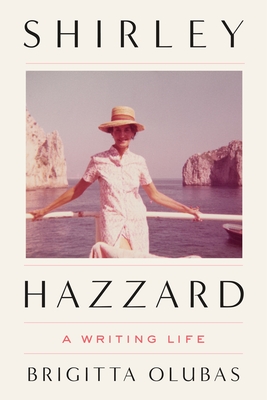
On Capri, Shirley grieved for her mother’s life as much as for her death: “One of her tragedies—as I do believe she had tragedy—was the inability to believe that other people appreciated her best qualities and had goodwill towards her; that she did not need to keep testing affection till it collapsed under the strain.” She wrote to Elizabeth—“You were so good—immeasurably good—to her. What was bearable in her latter life was in great part thanks to you”—and she thought long about her mother’s life and qualities:
What almost no one could know was that her trouble was more than just an exaggeration of the unleashed Mother of her own balked generation; but a real instability that was sometimes madness. Yes, I’m relieved of course that the last prolonged twilight finally ended. Most of the strongest feelings I might experience have been used up, at least for the time being, and only come in twinges. I chiefly feel—“Rest, perturbed spirit”; and the waste; and sadness when I think of childhood times when MM was clearly, as I now see, more often than not a lively and practical woman, not yet tipping her imbalances in dread directions. Reading the letters about her, I’m reminded too of what so often appeared in her life—that she could not really believe in the goodwill of others, and in her process of testing used it up, wore it down, and scared it off.
On Capri, Shirley grieved for her mother’s life as much as for her death: “One of her tragedies—as I do believe she had tragedy—was the inability to believe that other people appreciated her best qualities and had goodwill towards her; that she did not need to keep testing affection till it collapsed under the strain.” She wrote to Elizabeth—“You were so good—immeasurably good—to her. What was bearable in her latter life was in great part thanks to you”—and she thought long about her mother’s life and qualities:
What almost no one could know was that her trouble was more than just an exaggeration of the unleashed Mother of her own balked generation; but a real instability that was sometimes madness. Yes, I’m relieved of course that the last prolonged twilight finally ended. Most of the strongest feelings I might experience have been used up, at least for the time being, and only come in twinges. I chiefly feel—“Rest, perturbed spirit”; and the waste; and sadness when I think of childhood times when MM was clearly, as I now see, more often than not a lively and practical woman, not yet tipping her imbalances in dread directions. Reading the letters about her, I’m reminded too of what so often appeared in her life—that she could not really believe in the goodwill of others, and in her process of testing used it up, wore it down, and scared it off.