
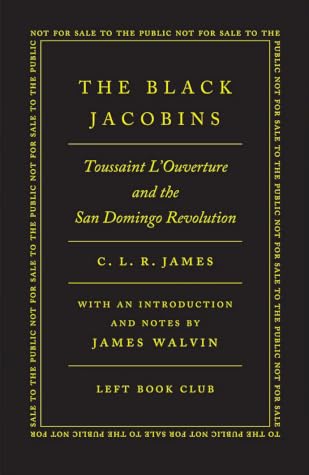
by
C.L.R. James
235
13. The War of Independence
1
terms
7
notes
tergiversation
(en)
(noun) evasion of straightforward action or clear-cut statement; equivocation / (noun) desertion of a cause, position, party, or faith
235
His tergiversations, his inability to take the firm and realistic decisions which so distinguished his career and had become the complete expression of his personality
notable
8 months, 1 week ago
His tergiversations, his inability to take the firm and realistic decisions which so distinguished his career and had become the complete expression of his personality
notable
8 months, 1 week ago
237
The hamartia, the tragic flaw, which we have constructed from Aristotle, was in Toussaint not a moral weakness. It was a specific error, a total miscalculation of the constituent events. Yet what is lost by the imaginative freedom and creative logic of great dramatists is to some degree atoned for by the historical actuality of his dilemma. It would therefore be a mistake to see him merely as a political figure in a remote West Indian island. If his story does not approach the greater dramatic creations, in its social significance and human appeal it far exceeds the last days at St Helena and that apotheosis of accumulation and degradation, the suicide in the Wilhelmstrasse. The Greek tragedians could always go to their gods for a dramatic embodiment of fate, the dike which rules over a world neither they nor we ever made. But not Shakespeare himself could have found such a dramatic embodiment of fate as Toussaint struggled against, Bonaparte himself; nor could the furthest imagination have envisaged the entry of the chorus, of the ex-slaves themselves, as the arbiters of their own fate. Toussaint’s certainty of this as the ultimate and irresistible resolution of the problem to which he refused to limit himself, that explains his mistakes and atones for them.
The hamartia, the tragic flaw, which we have constructed from Aristotle, was in Toussaint not a moral weakness. It was a specific error, a total miscalculation of the constituent events. Yet what is lost by the imaginative freedom and creative logic of great dramatists is to some degree atoned for by the historical actuality of his dilemma. It would therefore be a mistake to see him merely as a political figure in a remote West Indian island. If his story does not approach the greater dramatic creations, in its social significance and human appeal it far exceeds the last days at St Helena and that apotheosis of accumulation and degradation, the suicide in the Wilhelmstrasse. The Greek tragedians could always go to their gods for a dramatic embodiment of fate, the dike which rules over a world neither they nor we ever made. But not Shakespeare himself could have found such a dramatic embodiment of fate as Toussaint struggled against, Bonaparte himself; nor could the furthest imagination have envisaged the entry of the chorus, of the ex-slaves themselves, as the arbiters of their own fate. Toussaint’s certainty of this as the ultimate and irresistible resolution of the problem to which he refused to limit himself, that explains his mistakes and atones for them.
248
But Toussaint’s soldiers and generals, illiterates and ex-slaves, had been moulded by the same revolution. An army is a miniature of the society which produces it. If the black army had wobbled before the French, it was because San Domingo society as a whole did not know what to think of Leclerc’s expedition, could not believe its vile purpose. But the few thousand who remained faithful to Toussaint were the advance-guard of the revolutionary army fighting a revolutionary war. They were for the moment outnumbered. If Toussaint had the help of some of the labourers, thousands of Mulattoes and the former free were joining Leclerc. But the liberty and equality which these blacks acclaimed as they went into battle meant far more to them than the same words in the mouths of the French. And in a revolutionary struggle these things are worth many regiments.
But Toussaint’s soldiers and generals, illiterates and ex-slaves, had been moulded by the same revolution. An army is a miniature of the society which produces it. If the black army had wobbled before the French, it was because San Domingo society as a whole did not know what to think of Leclerc’s expedition, could not believe its vile purpose. But the few thousand who remained faithful to Toussaint were the advance-guard of the revolutionary army fighting a revolutionary war. They were for the moment outnumbered. If Toussaint had the help of some of the labourers, thousands of Mulattoes and the former free were joining Leclerc. But the liberty and equality which these blacks acclaimed as they went into battle meant far more to them than the same words in the mouths of the French. And in a revolutionary struggle these things are worth many regiments.
257
The dishonest political position of the French Army was now taking its toll. The soldiers still thought of themselves as a revolutionary army. Yet at nights they heard the blacks in the fortress singing the Marseillaise, the Ça Ira, and the other revolutionary songs. Lacroix records how these misguided wretches as they heard the songs started and looked at the officers as if to say, ‘Have our barbarous enemies justice on their side? Are we no longer the soldiers of Republican France? And have we become the crude instruments of policy?’
A regiment of Poles, remembering their own struggle for nationalism, refused to join in the massacre of 600 blacks, ordered by Leclerc, and later, when Dessalines was reorganizing the local army, he would call one of his regiments the Polish regiment.
The dishonest political position of the French Army was now taking its toll. The soldiers still thought of themselves as a revolutionary army. Yet at nights they heard the blacks in the fortress singing the Marseillaise, the Ça Ira, and the other revolutionary songs. Lacroix records how these misguided wretches as they heard the songs started and looked at the officers as if to say, ‘Have our barbarous enemies justice on their side? Are we no longer the soldiers of Republican France? And have we become the crude instruments of policy?’
A regiment of Poles, remembering their own struggle for nationalism, refused to join in the massacre of 600 blacks, ordered by Leclerc, and later, when Dessalines was reorganizing the local army, he would call one of his regiments the Polish regiment.
280
All that the old gang would do was to threaten Leclerc. Some of the blacks who had been slaves attempted to purchase their freedom from their former masters. These refused, and singled out as their private property high officials and officers, men who had shed their blood on the battlefield and served with distinction in the administration. Christophe told General Ramel that if he thought slavery was to be restored, he would burn the whole of San Domingo to the ground. A black general dining with Lacroix pointed to his two daughters and asked him, ‘Are these to go back to slavery?’ It was as if they could not believe it. So your liberal or social-democrat hesitates and dithers until the sledge-hammer of Fascism falls on his head, or a Franco launches his carefully prepared counter-revolution.
wow
All that the old gang would do was to threaten Leclerc. Some of the blacks who had been slaves attempted to purchase their freedom from their former masters. These refused, and singled out as their private property high officials and officers, men who had shed their blood on the battlefield and served with distinction in the administration. Christophe told General Ramel that if he thought slavery was to be restored, he would burn the whole of San Domingo to the ground. A black general dining with Lacroix pointed to his two daughters and asked him, ‘Are these to go back to slavery?’ It was as if they could not believe it. So your liberal or social-democrat hesitates and dithers until the sledge-hammer of Fascism falls on his head, or a Franco launches his carefully prepared counter-revolution.
wow
287
Leclerc, through illness or bitterness, never wrote this news to his brother-in-law or to the Minister. He sent to beg Christophe to come back, promising him honours and riches. Christophe replied that he was rich and honoured enough in possessing liberty himself and in securing the liberty of his colour. On the night of November 2nd Leclerc died. But before he died he knew that he had failed, and that San Domingo was lost to France. Of 34,000 French soldiers who had landed, 24,000 were dead, 8,000 were in hospital, and 2,000 exhausted men remained. Thousands of brave black soldiers were dead for no other crime than that of refusing to be slaves once more. The colony was devastated, and blacks and whites were murdering each other with a growing ferocity, in what was called a race war, but whose origin was not in their different colours but in the greed of the French bourgeoisie. Leclerc knew that, whatever reinforcements were sent, all was over. Before he died he confessed his grief over an enterprise undertaken on men and by men worthy of a better fate, on account of the services they had rendered and still would have been able to render to France. We owe him no thanks for the admission. It did not in any way mitigate the blood that would yet be shed and the suffering still to be borne before the people of San Domingo freed themselves from this abomination of murder, greed, cruelty, sadism, inhumanity, let loose upon them by Napoleon and his government, in the name of a superior civilization.
jesus
Leclerc, through illness or bitterness, never wrote this news to his brother-in-law or to the Minister. He sent to beg Christophe to come back, promising him honours and riches. Christophe replied that he was rich and honoured enough in possessing liberty himself and in securing the liberty of his colour. On the night of November 2nd Leclerc died. But before he died he knew that he had failed, and that San Domingo was lost to France. Of 34,000 French soldiers who had landed, 24,000 were dead, 8,000 were in hospital, and 2,000 exhausted men remained. Thousands of brave black soldiers were dead for no other crime than that of refusing to be slaves once more. The colony was devastated, and blacks and whites were murdering each other with a growing ferocity, in what was called a race war, but whose origin was not in their different colours but in the greed of the French bourgeoisie. Leclerc knew that, whatever reinforcements were sent, all was over. Before he died he confessed his grief over an enterprise undertaken on men and by men worthy of a better fate, on account of the services they had rendered and still would have been able to render to France. We owe him no thanks for the admission. It did not in any way mitigate the blood that would yet be shed and the suffering still to be borne before the people of San Domingo freed themselves from this abomination of murder, greed, cruelty, sadism, inhumanity, let loose upon them by Napoleon and his government, in the name of a superior civilization.
jesus
290
Rochambeau drowned so many people in the Bay of Le Cap that for many a long day the people of the district would not eat fish. [...] It was not only hatred and fear, but policy. ‘If France wishes to regain San Domingo she must send hither 25,000 men in a body, declare the negroes slaves, and destroy at least 30,000 negroes and negresses - the latter being more cruel than the men. These measures are frightful, but necessary. We must take them or renounce the colony. Whoever says otherwise lies in his throat and deceives France.’ This was the general opinion of the whites. Kill them all off and get new ones who know nothing about liberty and equality. They chained sixteen of Toussaint’s generals to a rock where they wasted away seventeen days. They drowned old Pierre Baptiste. The wife and children of Maurepas were drowned before his eyes, while the sailors nailed a pair of epaulettes into his naked shoulders. Some of the French, it is fair to say, turned in horror from this barbarism. A few captains of boats refused to drown the blacks handed over to them, but sold them into slavery instead. Some others landed them on deserted beaches in San Domingo or on other islands. Allix, Commander of Port-Républicain, would not accept 10,000 shot sent him to tie to the feet of those to be drowned. Rochambeau banished him. Mazard, another sea-captain, worked as hard to save blacks as most of his colleagues to drown them. But these were drops in the ocean. It was the policy of the Tories that the British followed in Ireland, in 1921, not the remonstrances of the Manchester Guardian or the Society of Friends. So it is, so it always has been.
damn
Rochambeau drowned so many people in the Bay of Le Cap that for many a long day the people of the district would not eat fish. [...] It was not only hatred and fear, but policy. ‘If France wishes to regain San Domingo she must send hither 25,000 men in a body, declare the negroes slaves, and destroy at least 30,000 negroes and negresses - the latter being more cruel than the men. These measures are frightful, but necessary. We must take them or renounce the colony. Whoever says otherwise lies in his throat and deceives France.’ This was the general opinion of the whites. Kill them all off and get new ones who know nothing about liberty and equality. They chained sixteen of Toussaint’s generals to a rock where they wasted away seventeen days. They drowned old Pierre Baptiste. The wife and children of Maurepas were drowned before his eyes, while the sailors nailed a pair of epaulettes into his naked shoulders. Some of the French, it is fair to say, turned in horror from this barbarism. A few captains of boats refused to drown the blacks handed over to them, but sold them into slavery instead. Some others landed them on deserted beaches in San Domingo or on other islands. Allix, Commander of Port-Républicain, would not accept 10,000 shot sent him to tie to the feet of those to be drowned. Rochambeau banished him. Mazard, another sea-captain, worked as hard to save blacks as most of his colleagues to drown them. But these were drops in the ocean. It was the policy of the Tories that the British followed in Ireland, in 1921, not the remonstrances of the Manchester Guardian or the Society of Friends. So it is, so it always has been.
damn
301
The massacre of the whites was a tragedy; not for the whites. For these old slave-owners, those who burnt a little powder in the arse of a Negro, who buried him alive for insects to eat, who were well treated by Toussaint, and who, as soon as they got the chance, began their old cruelties again; for these there is no need to waste one tear or one drop of ink. The tragedy was for the blacks and the Mulattoes. It was not policy but revenge, and revenge has no place in politics. The whites were no longer to be feared, and such purposeless massacres degrade and brutalize a population, especially one which was just beginning as a nation and had had so bitter a past. The people did not want it – all they wanted was freedom, and independence seemed to promise that. Christophe and other generals strongly disapproved.89 Had the British and the Americans thrown their weight on the side of humanity, Dessalines might have been curbed. As it was Haiti suffered terribly from the resulting isolation. Whites were banished from Haiti for generations, and the unfortunate country, ruined economically, its population lacking in social culture, had its inevitable difficulties doubled by this massacre. That the new nation survived at all is for ever to its credit for if the Haitians thought that imperialism was finished with them, they were mistaken.
The massacre of the whites was a tragedy; not for the whites. For these old slave-owners, those who burnt a little powder in the arse of a Negro, who buried him alive for insects to eat, who were well treated by Toussaint, and who, as soon as they got the chance, began their old cruelties again; for these there is no need to waste one tear or one drop of ink. The tragedy was for the blacks and the Mulattoes. It was not policy but revenge, and revenge has no place in politics. The whites were no longer to be feared, and such purposeless massacres degrade and brutalize a population, especially one which was just beginning as a nation and had had so bitter a past. The people did not want it – all they wanted was freedom, and independence seemed to promise that. Christophe and other generals strongly disapproved.89 Had the British and the Americans thrown their weight on the side of humanity, Dessalines might have been curbed. As it was Haiti suffered terribly from the resulting isolation. Whites were banished from Haiti for generations, and the unfortunate country, ruined economically, its population lacking in social culture, had its inevitable difficulties doubled by this massacre. That the new nation survived at all is for ever to its credit for if the Haitians thought that imperialism was finished with them, they were mistaken.