
View all notes
Available query params: commented=1, untagged=1

Let no alcoholic say he cannot recover unless he has his family back. This just isn’t so. In some cases the wife will never come back for one reason or another. Remind the prospect that his recovery is not dependent upon people. It is dependent upon his relationship with God. We have seen men get well whose families have not returned at all. We have seen others slip when the family came back too soon.
Since the home has suffered more than anything else, it is well that a man exert himself there. He is not likely to get far in any direction if he fails to show unselfishness and love under his own roof. We know there are difficult wives and families, but the man who is getting over alcoholism must remember he did much to make them so.
FOR MOST normal folks, drinking means conviviality, companionship and colorful imagination. It means release from care, boredom and worry. It is joyous intimacy with friends and a feeling that life is good. But not so with us in those last days of heavy drinking. The old pleasures were gone. They were but memories. Never could we recapture the great moments of the past. There was an insistent yearning to enjoy life as we once did and a heartbreaking obsession that some new miracle of control would enable us to do it. There was always one more attempt—and one more failure.
You must be logged in to see this comment.
I remember the day when I decided to drink myself to death quietly, without bothering anyone, because I was tired of having been a dependable, trustworthy person for about thirty-nine years without having received what I thought was a proper reward for my virtue. [...]
lmao
One morning, however, I realized I had to get rid of it, for my reprieve was running out, and if I didn’t get rid of it I was going to get drunk—and I didn’t want to get drunk anymore. In my prayers that morning I asked God to point out to me some way to be free of this resentment. During the day, a friend of mine brought me some magazines to take to a hospital group I was interested in. I looked through them. A banner across one featured an article by a prominent clergyman in which I caught the word resentment.
He said, in effect: “If you have a resentment you want to be free of, if you will pray for the person or the thing that you resent, you will be free. If you will ask in prayer for everything you want for yourself to be given to them, you will be free. Ask for their health, their prosperity, their happiness, and you will be free. Even when you don’t really want it for them and your prayers are only words and you don’t mean it, go ahead and do it anyway. Do it every day for two weeks, and you will find you have come to mean it and to want it for them, and you will realize that where you used to feel bitterness and resentment and hatred, you now feel compassionate understanding and love.”
It worked for me then, and it has worked for me many times since, and it will work for me every time I am willing to work it. Sometimes I have to ask first for the willingness, but it too always comes. And because it works for me, it will work for all of us. As another great man says, “The only real freedom a human being can ever know is doing what you ought to do because you want to do it.”
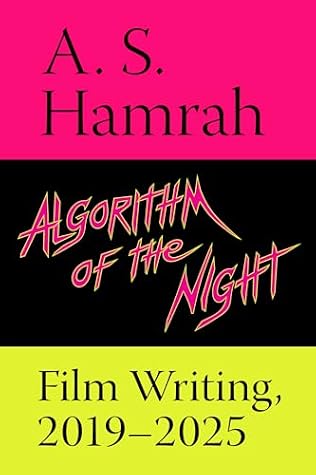
As many literal-minded people pointed out, 2019 was not in fact the last year of movies. Many good films have been made since then. Last year great films from all over the world were released in the US. A random list of disparate and original films seen on American screens in 2024 includes La Chimera, About Dry Grasses, Christmas Eve in Miller’s Point, The Settlers, A Different Man, Universal Language, and, yes, Megalopolis. One of the best movies of the year summed it all up, not just in its title but in subject matter and style—in its whole approach to what a movie is and can be in the mid-2020s: Radu Jude’s Do Not Expect Too Much from the End of the World. It’s a film about a certain kind of filmmaking being done under certain conditions that seem, in their way, more perilous than the ones under which Furiosa: A Mad Max Saga was made.
I think 2019 will come to be seen in film history as a golden year and an inflection point, the same the way 1939 and its movies exist in the popular imagination as a series of classics constantly open to new investigation and debate—not just The Wizard of Oz and Gone with the Wind and Mr. Smith Goes to Washington, but also The Rules of the Game (of course), Only Angels Have Wings, Ninotchka, Love Affair, Stagecoach and Young Mr. Lincoln, and at least a couple dozen others. The 2019 version of this inventory includes Parasite, The Irishman, Uncut Gems, Tarantino’s Once Upon a Time in Hollywood, The Souvenir, Ash Is Purest White, Portrait of a Lady on Fire, and as in 1939, a number of other films whose reputations will grow and wane and grow again—Peterloo, Atlantics, La Flor, Midsommar. The films of 1939 arrived at a time of burgeoning right-wing authoritarianism, and 2019 was similarly set on a precipice.
The difference between 2019 and now is that films from six years ago already seem the product of a different world. As it says onscreen in a film made at another turning point in history, “That era has passed. Nothing that belongs to it exists anymore.”
couldnt find ebook so using the original magazine source for these essays. this one is from nyrb. slightly different, tried to correct for that
In Franz Kafka’s story “In the Penal Colony,” which is about an automated torture device, Kafka writes that “we used to have to adjust a few things by hand, but from now on the machine will work all by itself.” I think this is exactly what people dread about AI and why they recoil from it, and also why large corporations are so excited about it. It is an aspect of the kind of fascism Kafka predicted. It removes the human element from the cinema just as the tech industry in general is removing showbiz from entertainment.
Here the news, entertainment, and the government all merge into a pool of toxic sludge. Because of AI, we could already picture a future in which another pandemic happens while we, as a species on lockdown, pass the hours in isolation viewing subpar art made by hallucination-prone nonentities. Today, videos of ICE raids scored to AI-generated nü-metal songs follow AI-generated jpegs of Donald Trump as Colonel Kilgore in Apocalypse Now, calling to mind “Ride of the Valkyries” from that film’s score, solidifying the connection to the Wagner-loving Third Reich. We live under a mode of dehumanized production where the most human element is the images of dead Palestinians that show up in our feeds between the latest iterations of the official slop.
The confluence of digital projection, streaming channels, AI, and the alleged death of criticism often makes it seem like we are dealing with the destruction of a worldview. I believe that this is indeed the goal of the corporations that control the studios and publishers. I don’t think it means that people don’t want to read criticism. What they don’t want to read are writers who are afraid of their editors, who curry favor with Hollywood, and who want to be influencers. Critics like that don’t consider one of the most important and necessary things about criticism today, that “struggle,” as Noam Chomsky put it, is always a matter of fighting “the business world.”
That should be foundational. The novelist Don DeLillo said the same thing in 2005, in an interview with a French horror-film magazine:
Writers must oppose systems. It’s important to write against power, corporations, the state, and the whole system of consumption and of debilitating entertainments…. I think writers, by nature, must oppose things, oppose whatever power tries to impose on us.
<3
Crazy Rich Asians
If you go to a bachelorette party on an island and the other guests put a huge bloody fish head on your pillow, you are in a horror movie, not a rom-com. Maybe at this point in the history of capitalism there’s not much difference. Crazy Rich Asians looks more like a glossy tourist magazine produced for an international economics summit than a movie.
While Henry Golding just misses the mark at being an actual Anglo-Asian Cary Grant (maybe next time), Constance Wu, playing an Asian American everywoman, comes off generic, a paper doll dressed first as a professor, then as a Disney princess. Among the too numerous cast, Ronny Chieng and Victoria Loke stand out as a sarcastic, mean-spirited young husband and wife who despise each other, unlike the unmemorable Gemma Chan and Pierre Png, who play a more prominent, unfunny version of the same thing. I would gladly watch an entire movie about Chieng and Loke’s shallow, disrespectful, well-dressed irritants wasting their fortune while struggling to maintain their status.
lol
Taste of Cherry uses the cinema to figure out if life is worth living, a hard question that seems superficial because so many films so easily reach the conclusion that it is. They show us a wedding, a happy family, a good job, a lottery winner. They indulge our desire to see things work out for the best. Kiarostami does none of that. Taste of Cherry excludes, cutting away plot and backstory, two things that can bog down a film. It goes in circles and meanders, the concision of its ninety-nine minutes becoming clear only in retrospect. It is meant to conceal, even to frustrate. Instead of tying the story up neatly, its ending does something else.