
by
n+1
View all notes
Available query params: commented=1, untagged=1
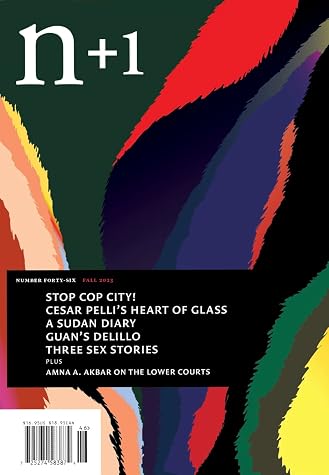
As if in compensation for how politics today amounts to little more than slow-mo sumo between liberal and reactionary capitalist parties, people have more access to great art than ever. The problem, however, is that we possess more Jack Gladneys than ever as well. Jack is a creature constituted by his insecurities, and neoliberalism means nothing if not insecurity for all. After many decades of the white man in America losing ground—in society quite slowly, in culture much faster—DeLillo’s latent archetype, his patient zero of American secular fascism, has spawned into real life, is becoming a nation of millions. Jack’s ludicrous symptoms, his ghoulish temptations now grow ever more common and prominent. His fantasies of a transcendent death, framed as the closing shots of a TV biography of Attila the Hun, are moronic; yet insipid holograms of a historical fantasy held up as glorious ideals (the Bronze Age, Tolkien, traditionalist Catholicism, the cold war) are intellectual currency in general circulation now. “Not everyone spoke English at the cash terminals, or near the fruit bins and frozen foods, or out among the cars in the lot”—coming from a late-middle-aged Hitler scholar terrified of his impending permanent demise, this already encapsulated, decades in advance, the future politics of neoliberal immigration. Jack’s unwarranted wariness in front of Asian kids, professionals, and industrial products is absurd; still, it presages all the envious, whinging hostility toward “the Chinese” typical of fascist ideologues today. (Why can’t we have an efficient dictator to battle theirs?) It’s beyond preposterous when Jack attempts to take shelter from his own inadequacies by kneeling at the image of a garrulous secular racist celebrity who’s also a historically proven, capital-L Loser. Fashioning facsimiles of cool through allusions to Nazi insignia. Reconciling liberty and structure through sadistic plots. Blending faith and secular identity in a materialist cult of personality. Hiding from death by inflicting it. It’s all too hysterical to make up real life, and still part of our world.

The only thing the Stoic should invest any emotion in is his own choice, which determines that “greatness of soul.” He will feel pride when he remains absolute master of his choice and of his desire and aversion. He feels displeasure when he fails temporarily to be master of himself. Stoic reason makes a man absolute master of his judgments and eradicates everything that is bad while clarifying the only thing that is truly good: the right use of choice.
Sometimes I find myself thinking about those high school and collegiate and postcollegiate figures, the “stoners.” What were their futures? They might have had their only natural social existence, without penalties, while still in school. But it seemed a plausible existence, like that of a creature who had found the right ecological niche. This penaltyless stoner was someone who would rise in the morning and take a hit from the bong, smoke through the day, take all experience (classes, social interactions) with a hazy anaesthesia that made it not quite experience, yet not quite anything so positive as “fun”—then finish off a bowl before going to sleep, to start the next day in the same way. It seemed a life of anti-experience, different from physical addiction. No doubt there is something myopic in a nostalgia for what the stoner proved was possible, if only for a few short years. No one thinks it ends well. But there was something about his manner, wreathed in smoke, that made him seem not like an adventurer but a symbol of a bizarre but real reaction to something we can’t name.

I do think that millions of other teens (who, like me, never even what Sassy was, let alone that they should ask for a subscription for it) suffered without access to feminism. But there’s also the unique and poignant and enduring suffering of the women who become fodder for its formation and sustenance: postfeminism made them villains, and in so doing, made itself stronger.
I talk about this like postfeminism is a living entity, or a side in a war, with generals captaining it. Ideologies are never that coherent, that distinguishable, even if they do have people who benefit and profit from them. But there is no “outside” of ideology: We are all participants in a given ideology’s formation. Those who push against it can inadvertantly codify and reinforce its tenets. Those who ignore it nonetheless internalize it messages. The most effective and insidious of ideologies are those that make themselves invisible: it’s not a stance, it’s not political, it’s just the way things are.