
View all notes
Available query params: commented=1, untagged=1
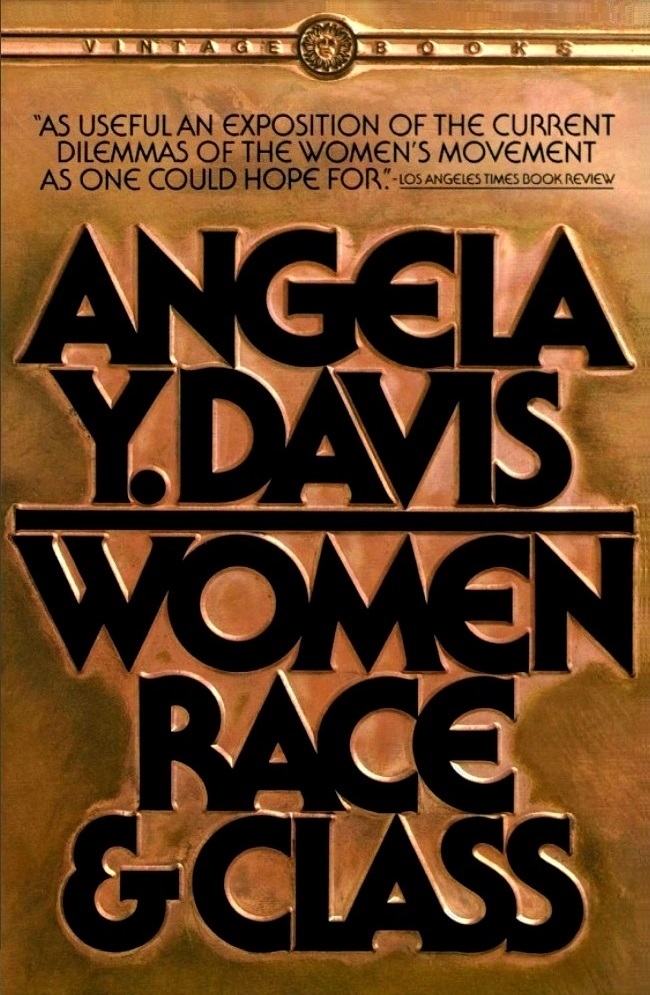
Early in her career as a women’s rights leader, Susan B. Anthony concluded that the ballot contained the real secret of women’s emancipation, and that sexism itself was far more oppressive than class inequality and racism. In Anthony’s eyes, “(T)he most odious oligarchy ever established on the face of the globe” was the rule of men over women.
An oligarchy of wealth, where the rich govern the poor; an oligarchy of learning, where the educated govern the ignorant; or even an oligarchy of race, where the Saxon rules the African, might be endured; but this oligarchy of sex which makes father, brothers, husband, sons, the oligarchs over the mother and sisters, the wife and daughters of every household; which ordains all men sovereigns, all women subjects—carries discord and rebellion into every home of the nation.
Anthony’s staunchly feminist position was also a staunch reflection of bourgeois ideology. And it was probably because of the ideology’s blinding powers that she failed to realize that working-class women and Black women alike were fundamentally linked to their men by the class exploitation and racist oppression which did not discriminate between the sexes. While their men’s sexist behavior definitely needed to be challenged, the real enemy—their common enemy—was the boss, the capitalist, or whoever was responsible for the miserable wages and unbearable working conditions and for racist and sexist discrimination on the job.
lol, dis bitch
Now, so Leonora O’Reilly and her working-class sisters proclaimed, they were going to fight for the ballot—and indeed they would use it as a weapon to remove all those legislators from office whose loyalties were with big business. Working-class women demanded the right to suffrage as an arm to assist them in the ongoing class struggle. This new perspective within the campaign for woman suffrage bore witness to the rising influence of the socialist movement. Indeed, women socialists brought a new energy into the suffrage movement and defended the vision of struggle born of the experiences of their working-class sisters.
With the emancipation of the slaves, Black people no longer possessed a market value for the former slaveholders, and “… the lynching industry was revolutionized.”33 When Ida B. Wells researched her first pamphlet against lynching, published in 1895 under the title A Red Record, she calculated that over ten thousand lynchings had taken place between 1865 and 1895.
[...]
In connection with these lynchings and their countless barbarities, the myth of the Black rapist was conjured up. It could only acquire its terrible powers pf persuasion within the irrational world of racist ideology. However irrational the myth may be, it was not a spontaneous aberration. On the contrary, the myth of the Black rapist was a distinctly political invention. As Frederick Douglass points out, Black men were not indiscriminately labeled as rapists during slavery. Throughout the entire Civil War, in fact, not a single Black man was publicly accused of raping a white woman. If Black men possessed an animalistic urge to rape, argued Douglass, this alleged rape instinct would have certainly been activated when white women were left unprotected by their men who were fighting in the Confederate Army.
damn
Working-class men, whatever their color, can be motivated to rape by the belief that their maleness accords them the privilege to dominate women. Yet since they do not possess the social or economic authority—unless it is a white man raping a woman of color—guaranteeing them immunity from prosecution, the incentive is not nearly as powerful as it is for the men of the capitalist class. When working-class men accept the invitation to rape extended by the ideology of male supremacy, they are accepting a bribe, an illusory compensation for their powerlessness.
The class structure of capitalism encourages men who wield power in the economic and political realm to become routine agents of sexual exploitation. The present rape epidemic occurs at a time when the capitalist class is furiously reasserting its authority in face of global and internal challenges. Both racism and sexism, central to its domestic strategy of increased economic exploitation, are receiving unprecedented encouragement. It is not a mere coincidence that as the incidence of rape has arisen, the position of women workers has visibly worsened. So severe are women’s economic losses that their wages in relationship to men are lower than they were a decade ago. The proliferation of sexual violence is the brutal face of a generalized intensification of the sexism which necessarily accompanies this economic assault.
damn what a nice turn of phrase
For Black women today and for all their working-class sisters, the notion that the burden of housework and child care can be shifted from their shoulders to the society contains one of the radical secrets of women’s liberation. Child care should be socialized, meal preparation should be socialized, housework should be industrialized—and all these services should be readily accessible to working-class people.
i feel like this part is undertheorized. what exactly does 'society' mean here. i dont disagree with it necessarily but this whole chapter is kinda superficial

Indeed, it is worth our while to run through just what kinds of genres Wong’s films belong to. As Tears Goes By is a gangster movie in the mould of Scorsese and John Woo; it is also a romance melodrama. Days of Being Wild is an ‘Ah Fei’ movie-cum-romance (‘Ah Fei’ being a distinctive Cantonese genre, and slang for young ruffian or discontented punk). Chungking Express is a light romance with touches of noir intrigue (at least in the first part of the movie featuring Brigitte Lin, whose iconic presence evokes more the romantic melodramas of the 1970s with which she made her name). Ashes of Time is a wuxia (martial chivalry) movie with characters culled from a popular martial arts novel. Fallen Angels starts off as a movie about a profes- sional killer and changes direction into various strands of melodrama (including a father-and-son relationship movie). Happy Together is a gay road movie romance trailing a pre-1997 anomie theme. In the Mood for Love is a wenyi film in the classic style, indicating a melodrama with Chinese characteristics, fundamentally a love story about repressed desire.
From these descriptions, while it is true that all these films are essentially genre films that fall within the traditions of Hong Kong cinema, it is equally true that they are transformed by Wong’s iconoclastic approach, such that it is possible to insist that they are not genre films, although they may be implicit tributes to the forms and conventions of genre film-making in the Hong Kong cinema. [...]
The shape of the industry has changed from King Hu’s time, when an
artist of Hu’s calibre could not be accommodated by the system, to one
where an artist of Wong’s ability can call the shots and play the game adroitly
within the industry. The reality is that since Wong came into critical promi-
nence in the early 1990s, the film industry has been plagued by a shrinking
regional market that resulted from the financial meltdown in the economies
of the area. It is easy to dismiss Wong’s long shooting schedules and his
impromptu working style as irresponsible in the light of this economic cri-
sis, but he is a director who goes against the grain of slipshoddiness, seven-
day wonders (or the practice of shooting a film quickly, as fast as a week in
the old days) and a system dominated by producers and compromised by
powerful big-name stars. Aesthetically, Wong set the standards of painstak-
ing craftsmanship in mise en scène, production design, cinematography,
editing and music. He also sets another standard by blending literature and
cinema through the evocative use of voiceover monologues, giving each
character an interior voice and a point of view that makes them stakehold-
ers in the narrative – singling him out as a rare literary stylist as well as a
visual one.
It is perhaps best to see Wong’s slow and protracted production sched-
ules through the looking-glass of a style of film-making that has a time-
honoured line: one could cite Erich von Stroheim and the making of Greed
(1925), Orson Welles’s Othello (1952) and Don Quixote (1957), and King Hu’s
A Touch of Zen (1969), as well as the fastidious methods of Terrence Malick,
Martin Scorsese, Michael Powell and David Lean. One could also point to
the experimental avant-garde cinema: for example, Harry Smith’s
Mahagonny (1980), a massive visual translation of Weill and Brecht’s opera
The Rise and Fall of the City of Mahagonny, which was constructed from eleven
hours of footage shot over a period of ten years. On the intimate scale,
Wong’s style may be likened to the Dogme school without the dogma; the
minimalism of Suzuki, Antonioni, Godard, Bresson, Ruiz and Jarmusch;
and the free improvisatory style of independent film-makers like John
Cassavetes and Rob Nilsson.
[...] Wong had his own rationale for the emotional relationships in the film:
It’s very difficult to describe why a man likes a woman, and the deep feelings
between two brothers, and so on. They are all very subtle. But I wanted to put
forward the proposition that time is the biggest factor. The relationship between
people is like opening a calendar. You leave your trace on each day. Emotions
come without your being aware of them. I don’t know why I want to help you,
but I’ve done it. (my emphasis)
Wah decides to chase after Ngor by making the trip to Lantau, where he discovers that she is being courted by a young doctor. Disheartened, he waits to depart on the ferry. But Ngor then leaves a message on his pager (a marker of the times before mobile phones became the norm) asking him to wait at the pier. She returns; there is a brief moment of suspense as the pier seems to be deserted; then suddenly, Wah grabs her hand from behind and runs towards a phone booth, where they kiss passionately, to the strains of the Canto-pop version of ‘Take My Breath Away’ that overlays the whole sequence. Their affair comes rather late in the picture, and the dialogue illustrates this awareness of the time dimension: ‘Why did you leave it so late?’ Ngor asks Wah. ‘Because I know myself,’ Wah replies, ‘and I don’t want to make any promises. If I didn’t miss you, I won’t look for you.’
ugh so good