
View all notes
Available query params: commented=1, untagged=1

They tried to get away from Sfax, from its dreary streets and emptiness, so as to find vistas, sights and ruins which perhaps would dazzle or bowl them over, some glowing marvel which would even the score. The remains of a palace, or a temple, or an amphitheatre, a verdant oasis seen from a peak near Kairouan, a long strip of fine sand forming a curved beach as far as the eye could see, sometimes rewarded their search. But more often they escaped from Sfax only to find, a few dozen or a few hundred miles further on, identically dreary streets, identically incomprehensible and bustling bazaars, identical inlets and ugly palms, an identical desert.
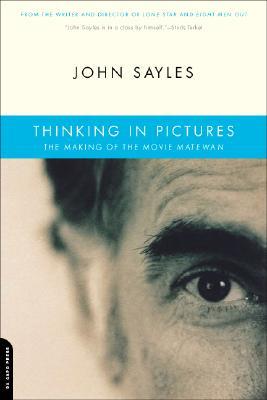
I "started" as a fiction writer, publishing some short stories and a novel called Pride of the Bimbos in 1975. The novel was originally a movie in my head. I started with a couple scenes that I saw dramatically, saw the setting, imagined a certain graininess to the image, heard a country Western soundtrack compressed through a tinny jukebox speaker. But in 1975 I was working in hospitals and factories or was on unemployment, had no track record as a writer or movie-maker, had no connections whatsoever in the movie business. I hadn't even gone to film school. A practical look at the situation told me any screenplay I wrote was going to sit on the shelf for a long time, especially one about a white-trash kid, a midget shortstop and a six-foot-six black hustler with violent revenge on his mind. I began to rethink the story as fiction, mentally adapting it into a long, episodic short story that eventually became a novel. But the pictures and sounds were there first, and in the writing I did my best to give the reader the idea and the feeling of what I had first "seen."
<3
I eventually got to make movies through writing. I had to get a literary agent to sell my second novel, and his literary agency had a connection with a Hollywood talent agency that handled books as potential film "properties." I contacted that agency, wrote a screenplay to show them what I could do, and they agreed to represent me if I'd move to the West Coast for a while. I got my first assignment, rewriting a movie called Piranha for Roger Corman, at least partly because Roger's story editor, Frances Dael, read fiction for pleasure (a rarity in Hollywood) and had actually read some of mine. I got to direct Return of the Secaucus Seven because I made enough money writing screenplays for other people to finance the movie myself. The budget was so low ($60,000 out of pocket to get to a first print) that I had to back up a bit and stop thinking in pictures, as I had been able to do in writing for others, and start thinking in budget.
When thinking in pictures it's important to consider whether a certain image will have the same meaning to someone else as it does to you. No matter what your experience of the Vietnam War, Platoon is a rugged movie to enter into, a meaningful assault on the senses. But the images in it are bound to have a different resonance for people who have been in combat than for people who haven't. The trick is not to ignore one group and concentrate on the other, to become either a caterer to the elite or a panderer to the masses, but to pick and build your images so that anybody can get into the story on some level, so that maybe people are drawn in deeper than they thought they could or would want to go. And you have to do all this without lying to them.
The first step in making Joe's pacifism acceptable, maybe even attractive, was to make him seem a familiar rather than exotic character. So I made him a Wobbly. The Industrial Workers of the World (IWW) was a very home-grown, American, populist, working-stiff kind of organization. It had little of the rarefied ideological bent and European influence of the Socialist and Communist parties of the time. Lumberjacks, longshoremen, railroad men, farmworkers—the salt of the earth joined in a kind of global idealism. They struck hard and often, lived constantly on the front lines, advocated noncompliance and sabotage of the World War I effort and were broken as a major force in only a few years by the federal government and their own lack of political infighting skills. But the Wobbly spirit remained alive in fact and fiction, in the Tom Joads and Woody Guthries of the Depression, in the rhetoric of Huey Long and the selling copy of the New Deal. Joe Kenehan is not a slogan-spouting Marxist with a book education, not a little Indian guy in white robes preaching a kind of mystic Eastern acceptance, not a stranger at all but just about the most regular fella you'd want to meet, a railroad worker who's had it up to here with the bosses and their bullshit and has started to do something about it. My hope for Joe Kenehan was that the audience would be halfway down the road with him, identifying with him, rooting for him, before they could stop and realize this sucker doesn't carry a gun. What gives?
In the screenplay there are both fictional characters based on composites of people I've read about and known and characters based on actual historical figures who were involved in the Matewan Massacre. Mixing the historical and the fictional is something that has been done numerous times, but it's something you always have to do carefully. Well-known historical figures become a kind of public property and over the years lots of writers take a crack at them—think of the wildly different movie interpretations of Custer or Jesse James or Napoleon. You feel that if one interpretation does them an injustice they'll get another day in court, the record will be gone back to. Since the historical figures I was dealing with were not widely known, I felt a responsibility to stick pretty close to the verifiable accounts of their actions and shied away from their personal lives. The burden of personalizing the story then fell on the fictional characters. I didn't want the audience to be able to feel this was a story of long ago and far away, about people they could never be or know. In some sorts of movies you want the exact opposite, you want a kind of generic simplicity that can become mythic if you do it well enough. In Sergio Leone's Westerns he stripped away the specifics of place, personal history and even name, until he could make a movie appropriately titled The Good, the Bad, and the Ugly. But while the mythic is stirring, it can make you think "this really doesn't have anything to do with me, those are allegorical figures up there on the screen." So I tried to particularize, to humanize, to provide historical and domestic detail. The nature of the detail is often not so important as the fact of it—the dollars-and-cents amounts miners had to pay for heat and housing in 1920 may be hard to translate into modern prices but we recognize the reality of being concerned with a raise in the rent and a drop in the paycheck—we've been there counting pennies.
The characters have an archetypal outer appearance—Joe is the stranger in town, Sid the representative of brooding violence, Few Clothes the John Henry of coal, Turley the company man—but they also have to work on a merely human level, to seem to have a life outside of the story, other fish to fry. One thing I've tried to do in all the movies I've written for myself to direct is have the world populated by more than one or two people, to present a community. The norm in star-vehicle screenwriting is to have a couple of leads and the rest of the characters there only to provide background and plot advancement. "A love story set against the turbulent backdrop of the Hundred Years War" and so on. I'm more interested in how individual or political acts affect communities of people—parents, friends, children, co workers. To pull this off, to have all these characters seem three-dimensional, they need not only more screen time than is usually provided but also more depth of character.
In Matewan I try to give even the most negative of characters something else to play besides evil. At one point we learn that Hickey, one of the Baldwin agents sent to town to stir up trouble, is a war hero with a traumatic past in the trenches. This information is meant not as an excuse or a Freudian explanation for his actions but to give him some room to breathe, to remind us that the man's life is not contained by this one incident in it, as well as to establish him as a guy familiar with killing.
Similarly, Bass, James and Doolin, three of the Baldwins brought to town for the final confrontation, are introduced as a trio of working stiffs horsing around rather than as poker-faced grim reapers bent on murder. I didn't want the bad guys shot down at the end to be totally faceless, to be easily written off as human beings.
The casting of Few Clothes seems to have been our reward for surviving all the ones who got away, all the actors who got cold feet or lastminute conflicts on our previous movies and sent us back into casting only days before we started shooting. Few Clothes is mentioned in the history books as a giant of a black miner who was rumored to be a good shot from his days in the army during the Spanish-American War, kind of the John Henry of the coal fields. We needed somebody not only big but with the kind of power that could keep him walking head up and alive through the treacherous racial minefield of the rural South in 1920. We saw lots of ood actors, but the combination of size and the kind of power that comes across even when held in restraint was hard to find. Now and then we'd consider making an offer to James Earl Jones, but after three-and-a-half-movies' worth of dealing with name actors and their agents it seemed so unlikely, he seemed so clearly out of our league, that we never took any action on it.
We were already in West Virginia, doing preproduction work, when we decided what the hell and contacted Jones's agent. We sent a script and a litany of warnings about the low budget and modest nature of our production, and in a few days we got a simple yes. James Earl turned out to be one of the best prepared, most helpful actors I've ever gotten to work with. He understood the mixture of strength and savvy Few Clothes needed to help his men survive in a deadly confrontation far from home, and brought even the moments where he just sits and listens to life.
Sometimes you just get lucky.
yayyy
Time and again an actor would walk onto one of Nora's sets and say "Okay, now I get it.” The mood of the place would help feed their acting, help them inhabit the character. And in the natural settings—in the woods at night, inside the coal mine—there were moments of eerie identification. The cold mist really was cold mist, mud and cutting wind supplied free of charge, and the dark and the damp of the mine left us all cramped and shivering after a few hours underground. We could only push on and hope that we could just catch it all on film, that somehow the experience could be passed through the movie to the audience.