
View all notes
Available query params: commented=1, untagged=1
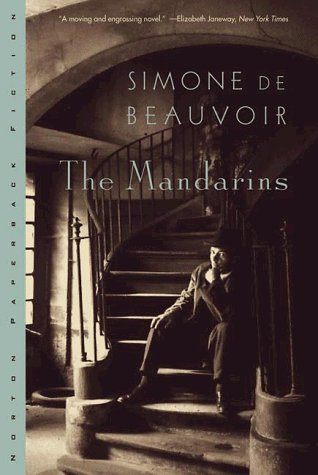
'I felt as if I were back in school writing a composition: Describe your impressions while visiting a concentration camp,' he said ironically. 'I think there were more than twenty of us there writing on the same subject.' Suddenly his face brightened. 'Do you want to know something that's really good? Your book. I started it after driving a whole night and day without sleep, and believe me I was really beat. But I read it straight through, couldn't go to sleep until I finished it.'
'You make me happy,' Henri said.
Compliments always embarrassed him. Yet what Lambert said gave him real pleasure. It was precisely the way he had dreamed of being read — straight through in a single night by an impatient young man. That alone made writing worthwhile. Especially that.
'How can I get it through your thick skull?' Dubreuilh said, shrugging his shoulders. 'Being on the side of the Resistance doesn't constitute a political programme nowadays.'
'No, I don't have a programme,' Henri admitted. 'But whenever the occasion demands it, L'Espoir does choose sides.'
'No, it doesn't, not any more so than all the other papers. You argue about trifles, but when it comes to the big things, all of you somehow manage to agree on covering up the truth.' There was anger in Dubreuilh's voice. 'From Figaro to L'Humanite, you're all nothing but a bunch of humbugs. You say yes to de Gaulle, yes to Yalta, yes to everything; you act as if you believe there's still a Resistance and that we're heading steadily towards socialism. Your friend- Luc has really been going to town with that hogwash in his recent editorials. All we're doing, really, is marking time; in fact, we're even beginning to retreat. And not a one of you has the guts to tell the truth!'
'I always thought you agreed with L'Espoir,' Henri said. He was stunned; his heart began beating rapidly. During the past four days, he had meshed with that paper as one meshes with one's own life. And then all of a sudden L'Espoir was being indicted. And by Dubreuilh!
'Agree with what?' Dubreuilh asked. 'L'Espoir has no line. You're constantly complaining that nothing's been nationalized. And what do you do about it? Nothing. Now what would be interesting would be to tell who's putting on the brakes, and why.'
ohhh wow this feels so real
[...] 'My God!' he said to himself with a sharp feeling of anxiety. 'How ignorant we really are!' He read a great deal, but he had little real knowledge excepting in the field of literature. And even in literature ... Until now it hadn't bothered him — no need for any specialized knowledge to fight in the Resistance or to found a clandestine newspaper. He had believed that that was the way it would continue to be. Obviously he had been wrong. What is an opinion? What is an idea? What power do words have? On whom? And under what circumstances? If you publish a newspaper, you have to be able to answer those questions. And what with one thing leading to another, you eventually question everything. 'You have to decide in ignorance,' Henri said to himself. 'Even Dubreuilh often acts blindly — Dubreuilh, with all his learning.' Henri sighed; he was unable to resign himself to this defeat. There are degrees of ignorance, and the simple fact was that he was particularly ill-equipped for the political life. 'Well, I'll just have to start working at it,' he said to himself. But if he really wanted to extend his knowledge, it would require years of study. Economics, history, philosophy — he would never be done with it! What a job! And all that just to come to terms with Marxism!
'Oh, I always manage to find something to do,' she said gaily.
'By that you mean you have nothing at all to do,' Henri said. He looked at Paula severely. 'I've been doing a lot of thinking about you during the last month. I think it's a crime for you to spend your days vegetating inside these four walls.'
'You call this vegetating!' Paula said. She smiled gently, the way she used to long ago, and there was all the wisdom of the world in that smile. 'When you love someone, you're not vegetating.'
'But loving isn't a vocation.'
She interrupted him. 'You're wrong. For me, it is a vocation.'
nooooo
'Listen,' she said in a voice suddenly grown hard, 'even if all those vanities — success, fame — still meant something to me, I wouldn't start out on a second-rate career at the ripe age of thirty-seven. When I sacrificed that tour in Brazil for you, it was a final retirement. I have no regrets. Let's just forget the whole thing.'
Henri opened his mouth to protest. Without consulting him, she had only too willingly decided to make that sacrifice, and now she seemed to be holding him responsible for it! He held his tongue and gave Paula a perplexed look. He had never been able to decide whether she really scorned fame or whether she was afraid of not being able to attain it.
He climbed-the stairs. He was anxious to get back to his writing, and he was happy at the thought that his novel, at least, wasn't going to be the slightest bit edifying. He still had no exact idea of what he was going to do; the only assignment he had set himself was to enjoy himself fully in being sincere. He spread his notes in front of him — almost a hundred pages. It was good to have put them away for a month; now he would be able to reread them with a fresh eye. He plunged into them joyfully, happy to rediscover memories and impressions formed into careful and smooth-flowing sentences. But after a while he began to worry. What was he going to do with all this stuff? These scribblings had neither head nor tail, even though they did have something in common — a certain feeling, a climate, the climate of the pre-war era. And that suddenly bothered him. He had thought vaguely, 'I shall try to give the flavour of my life.' As if such a thing were a perfume, labelled, trade-mark-registered, always the same, year after year. But the things he had to say about travelling, for example, were all in terms of a young man of twenty-five, the young man he had been in 1935; they had nothing at all to do with what he had experienced in Portugal. The story of his affair with Paula was equally dated; neither Lambert, not Vincent, nor any of the boys he knew would have any similar reactions today. And besides, with five years of living under the German occupation behind her, a young woman of twenty-seven would be very different from Paula. There was one solution: deliberately to place the book around 1935. But he had no desire to write a 'period' novel recreating a world that no longer was.. On the contrary, what he had hoped for in jotting down those lines was to throw himself life and whole on to paper. Well then, he would have to write the story in the present, transposing the characters and events. Transpose — what an annoying word! what a stupid word!' he said to himself. 'It's preposterous, the liberties one takes with the characters in a novel. They're transported from one century to the next, pulled out of one country and pushed into another, the present of one person is glued to the past of a second. And all of it is larded with personal fantasies. If you look closely enough, every character in a novel is a monster, and all art consists in preventing the reader from looking too closely. All right then, let's not transpose. Let's make up characters out of whole cloth, characters who have nothing at all in common with Paula, with Louis, with myself. I've done it before. Only this time it was the truth about my own experiences that I wanted to tell...' He pushed aside the stack of notes. Yes, it was a bad idea, this setting things down haphazardly. The best way was to proceed as usual, to begin with an outline, with a precise purpose. 'But what purpose? What truth do I want to express? My truth. But what does that really mean?' He looked dully at the blank page. 'It's frightening, plunging into empty space with nothing to clutch at. Maybe I have nothing more to say,' he thought. But instead it seemed to him that he had never really said anything at all. He had everything to say, like everyone else, always. But everything is too much. He remembered an old couplet painted on a plate: 'We enter, we cry, and that is life; we cry, we leave, and that is death.' What more was there to add? 'We all live on the same planet, we are born from a womb, and one day we'll serve to fatten worms. Yes, we all have the same story. Why then should I consider it mine alone and decide that it's up to me to tell it?' He yawned; he had had too little sleep, and that blank page made him feel dizzy. He was sunk in apathy. You can't write anything apathetically; you've got to climb back to the surface of life where the moments and individuals count, individually. [...]
ahhhh
He was quite fond of Nadine and seeing her didn't, as she put it, give him a pain in the neck. But that wasn't the point. The thing was that he had to organize his life as efficiently as possible. And there was simply no place in it for Nadine.
lol. relatable
She shrugged her shoulders. 'All right then, at nine-thirty. But what's the use of being famous and everything if you don't take any time out to live?'
'To live!' he thought as she turned on her heels and walked briskly away. 'To them that always means only one thing; to spend your time with them. But there's more than one way of living!'
idk why this speaks to me so much but it does. it also feels very misguided - he sees women as enemies in some way, sees their demands on his time as an attack
[...] Despite all his resolve, he was still back where he started from; he didn't know enough, he didn't know anything. 'It would certainly be more logical to learn first, and to talk afterwards,' he said to himself.. But that's not the way things happen. First, you've got to speak, because the matter is urgent; afterwards, events prove you right or wrong. 'And that's precisely what's known as bluffing,' he said to himself unhappily. 'Yes, even I bluff my readers.' He had promised himself to speak the truth, to tell his readers things that would enlighten them, that would help them think. And now he was bluffing them. What to do? He couldn't shut down the newspaper, fire everyone, lock himself up in a room for a year with his books. The paper had to live, and to keep it alive Henri was forced to give himself to it completely, day after day. He stopped in front of the Scribe. He was glad he was dining with Lambert, but it disturbed him a little to have to speak to him about his short stories. He hoped Lambert didn't take them too seriously. He pushed through the revolving door; once inside, it seemed to him as if he had suddenly been transported to another continent. It was warm here, the men and the women wore American uniforms, the air smelled of mild tobacco, luxurious trinkets were on display in glass show cases. Lambert, smiling and dressed in a lieutenant's uniform, came to meet him. In the dining-room, reserved for the use of war correspondents, butter and very white bread were on every table.
i think about this sort of thing frequently
'That's just what I ought to do.' There was a brief silence and then suddenly Henri decided the moment had come to unburden himself. 'I brought back your stories,' he said. He smiled at Lambert. 'It's funny, you've had lots of interesting experiences, you've lived them hard, and I've often been fascinated hearing you tell about them. Your articles are always full of meat. And yet in these stories nothing seems to happen. I've been wondering why.'
'You don't think they're any good, do you?' Lambert said. He shrugged his shoulders. 'Well, I warned you.'
'The trouble is you haven't put anything of yourself into them,' Henri said.
Lambert hesitated. 'The things that really affect me wouldn't be interesting to anyone else.'
Henri smiled. 'But it's all too obvious that the ones you do talk about don't affect you at all. You get the feeling that you wrote these stories as if you were writing a hundred lines for punishment.'