
View all notes
Available query params: commented=1, untagged=1

This is why Cobbett (and John Fielden, his friend and fellow Member for Oldham after 1832) came so close to being spokesmen of the working class. Once the real condition of the working people – for Cobbett, the labourer, for Fielden, the factory child – is made, not one, but the test of all other political expedients, then we are close to revolutionary conclusions. Concealed within the seemingly ‘nostalgic’ notion of the ‘historic rights of the poor’, which, in different ways, was voiced by Cobbett, Oastler and Carlile, there were also new claims maturing, for the community to succour the needy and the helpless, not out of charity, but as of right.2 Cobbett loathed the ‘comforting system’ of charity and moral rescue, and, in his History of the Protestant ‘Reformation’, he was chiefly intent upon giving historical backing to his notion of social rights. The lands of the medieval Church had been held in trust for the poor. Wrongfully misappropriated or dispersed, nevertheless the poor still had a claim upon them, which (in Cobbett’s eyes) was recognized through the mediation of the old Poor Laws. The repeal of those laws constituted the last act in a shameful series of robberies by which the poor had been cheated of their rights:
[...] the rules of a society formed in 1832 in Ripponden, a weaving village in the Pennines:
From the astonishing changes which the course of a series of years have produced to the labouring classes… from competition and the increase of machinery which supersedes hand labour, combined with various other causes, over which, as yet, the labouring classes have no control – the minds of thinking men are lost in a labyrinth of suggestions what plan to adopt in order to better, if possible, their conditions….
By the increase of capital the working classes may better their condition, if they only unite and set their shoulder to the work; by uniting we do not mean strikes and turning out for wages, but like men of one family, strive to begin to work for ourselves….
The plan of cooperation which we are recommending to the public is not a visionary one but is acted upon in various parts of the Kingdom; we all live by the produce of the land, and exchange labour for labour, which is the object aimed at by all Cooperative Societies. We labourers do all the work and produce all the comforts of life; – why then should we not labour for ourselves and strive to improve our conditions?
Fundamental Principles
First. – That, labour is the source of all wealth; consequently the working classes have created all wealth.
Secondly. – That the working classes, although the producers of wealth, instead of being the richest, are the poorest of the community; hence, they cannot be receiving a just recompense for their labour.
This vision was lost, almost as soon as it had been found, in the terrible defeats of 1834 and 1835. And, when they had recovered their wind, the workers returned to the vote, as the more practical key to political power. Something was lost: but Chartism never entirely forgot this preoccupation with social control, to the attainment of which the vote was seen as a means. These years reveal a passing beyond the characteristic outlook of the artisan, with his desire for an independent livelihood ‘by the sweat of his brow’, to a newer outlook, more reconciled to the new means of production, but seeking to exert the collective power of the class to humanize the environment: – by this community or that cooperative society, by this check on the blind operation of the market-economy, this legal enactment, that measure of relief for the poor. And implicit, if not always explicit, in their outlook was the dangerous tenet: production must be, not for profit, but for use.
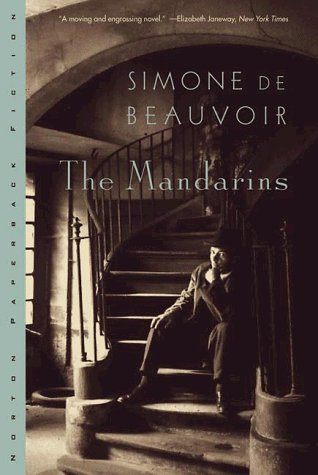
Paula came down the stairs with soft, silken steps. 'You uncorked all the bottles!' she exclaimed. 'That was sweet of you.'
'You're so positively dedicated to violet!' he said, smiling.
'But you adore violet!' she said.
He had been adoring violet for the past ten years; ten years was a long time.
'You don't like this dress?' Paula asked.
'Yes, of course,' he said hastily. 'It's very pretty. I just thought that there were some other colours which might become you. Green, for example,' he ventured, picking the first colour that came to mind.
She looked at herself in one of the mirrors. 'Green?' she said, and there was bewilderment in her voice. 'You really think I'd look well in green?'
It was all so useless, he told himself. In green or yellow he would never again see in her the woman who, that day ten years earlier, he had desired so much when she had nonchalantly held out her long violet gloves to him.
DEVASTATING
Henri looked at him cheerfully. Eighteen or eighty, Dubreuilh, with his huge, laughing eyes that consumed everything in sight, would always look just as young. What a zealot! By comparison, Henri was often tempted to think of himself as dissipated, lazy, weak. But it was useless to drive himself. At twenty, he had had so great an admiration for Dubreuilh that he felt himself compelled to ape him. The result was that he was constantly sleepy, loaded himself with medicines, sank almost into a stupor. Now he had to make up his mind once and for all. With no time for himself he had lost his taste for life and the desire to write. He had become a machine. For four years he had been a machine, and now he was determined above all else to become a man again.
You must be logged in to see this comment.
She walked towards the bathroom. It was impossible not to weaken from time to time and speak a few kind words to her, smile gently at her. She stored those treasured relics in her heart and extracted miracles from them whenever she felt her faith wavering. 'But in spite of everything, she knows I don't love her any more,' he said to himself for reassurance. He undressed and put on his pyjamas. She knew it, yes. But as long as she didn't admit it to herself it meant nothing. He heard a rustle of silk, then the sound of running water and the clinking of glass, those sounds which once used to make his heart pound. 'No, not tonight, not tonight,' he said to himself uneasily. Paula appeared in the doorway, grave and nude, her hair tumbling over her shoulders. She was nearly as perfect as ever, but for Henri all her splendid beauty no longer meant anything. She slipped in between the sheets and without uttering a word, pressed her body to his. Paula withdrew her lips slightly, and, embarrassed, he heard her murmuring old endearments he never spoke to her now.
brutal
She uttered a long moan of satisfaction. He embraced her violently, smothered her mouth with his lips, and to get it over with as quickly as possible immediately penetrated her. Inside it was red, a deep dark red as in the too-red living room. She began to groan and to utter words and phrases the way she used to. But in those days, Henri's love shielded her; her cries, groans, laughs, bites were sacred offerings. Tonight he was lying atop a frenzied woman who spoke obscene words and whose scratches hurt. He was horrified by her and by himself. Her head bent back, her eyes half-closed, her teeth bared, she had given herself so totally to love, was so frightfully lost, that he felt like slapping her to bring her back to earth, felt like saying, "It's just you and I and we're making love, that's all." It seemed to him as if he were raping a dead woman, or a lunatic, and yet he could not keep himself from enjoying it.
When finally he fell limp on Paula, he heard a triumphant moan.
'Are you happy?' she murmured.
'Of course.'
'I'm so terribly happy!' Paula exclaimed, looking at him through shining tear-brimmed eyes. He hid her unbearably bright face against his shoulder. 'The almond trees will be in bloom ...' he said to himself, closing his eyes. 'And there'll be oranges hanging from the orange trees.'
oh my god
[the ebook is missing most of this paragraph; i had to type it up]
No question about it, I had too much to drink. After all, it wasn't I who created heaven and earth; no one's asking me to give an accounting of myself. Why must I forever be worrying about others? I'd do better to worry a little about myself for a change. I press my cheek against the pillow; I'm here, it's I. The trouble is there's nothing about me worth giving much thought to. Oh, if someone asks who I am, I can always show him my case history; to become an analyst, I had to be analysed. It was found that I had a rather pronounced Oedipus complex, which explains my marriage to a man twenty years my elder, a clear aggressiveness towards my mother, and some slight homosexual tendencies which conveniently disappeared. To my Catholic upbringing I owe a highly developed superego — the reason for my puritanism and my lack of narcissism. The ambivalent feelings I have in regard to my daughter stem from my aversion to my mother as much as to my indifference concerning myself. My case is one of the most classic types; its segments fall neatly into a predictable pattern. From a Catholic point of view, it's also quite banal: in their eyes I stopped believing in God when I discovered the temptations of the flesh, and my marriage to an unbeliever completed my downfall. Politically and socially, Robert and I were left-wing intellectuals. Nothing in all this is entirely inexact. There I am then, clearly catalogued and willing to be so, adjusted to my husband, to my profession, to life, to death, to the world and all its horrors; me, precisely me, that is to say, no one.
too real
'I'm not attacking your husband,' Scriassine said, with a little smile that reduced my heated words to nothing more than an expression of conjugal loyalty. 'As a matter of fact,' he continued, 'I consider Robert Dubreuilh and Thomas Mann to be the two greatest minds of this age. But that's precisely it; if I predict that he'll give up literature, it's only because I have confidence in his lucidity.'
I shrugged my shoulders. If he was trying to soften me up, he was certainly going about it the wrong way. I detest Thomas Mann.
lmao
Scriassine sighed. 'So be it,' he said. 'Let's be optimists. Let's admit that Europe has a chance of remaining independent. But we can't keep her that way except by waging a constant, interminable battle. Working for oneself will be entirely out of the question.'
I did not attempt to answer him. All that Scriassine wanted was to reduce French writers to silence, and I clearly understood why. There was nothing really convincing in his prophecies, and yet his tragic voice awakened an echo in me. 'How shall we live?' The question had been painfully pricking me all evening and for God knows how many days and weeks.
Scriassine looked at me intently. 'One of two things can happen. If men like Dubreuilh and Perron look the situation square in the face, they'll become involved in things that will demand all their time, all their energies. Or if they cheat and obstinately continue to write, their works will be cut off from reality, and deprived of any future; they'll be like the words of blind people, as distressing as Alexandrine poetry.'
It's difficult to engage in a discussion with someone who, while talking of the world and of others, talks constantly of himself. I was unable to speak my mind without hurting him. Nevertheless I said, 'It's useless trying to imprison people in dilemmas; life always causes them to break out.'
'Not in this case. Alexandria or Sparta, there's no other choice. It's far better to admit a thing like that today than to put it off,' he said rather gently. 'Sacrifices are no longer painful when they're behind you.'
'I'm sure Robert won't sacrifice anything.'
'We'll talk about it again a year from now,' Scriassine said. 'A year from now he'll either have, deserted politics or he'll have stopped writing. I don't think he'll desert.'